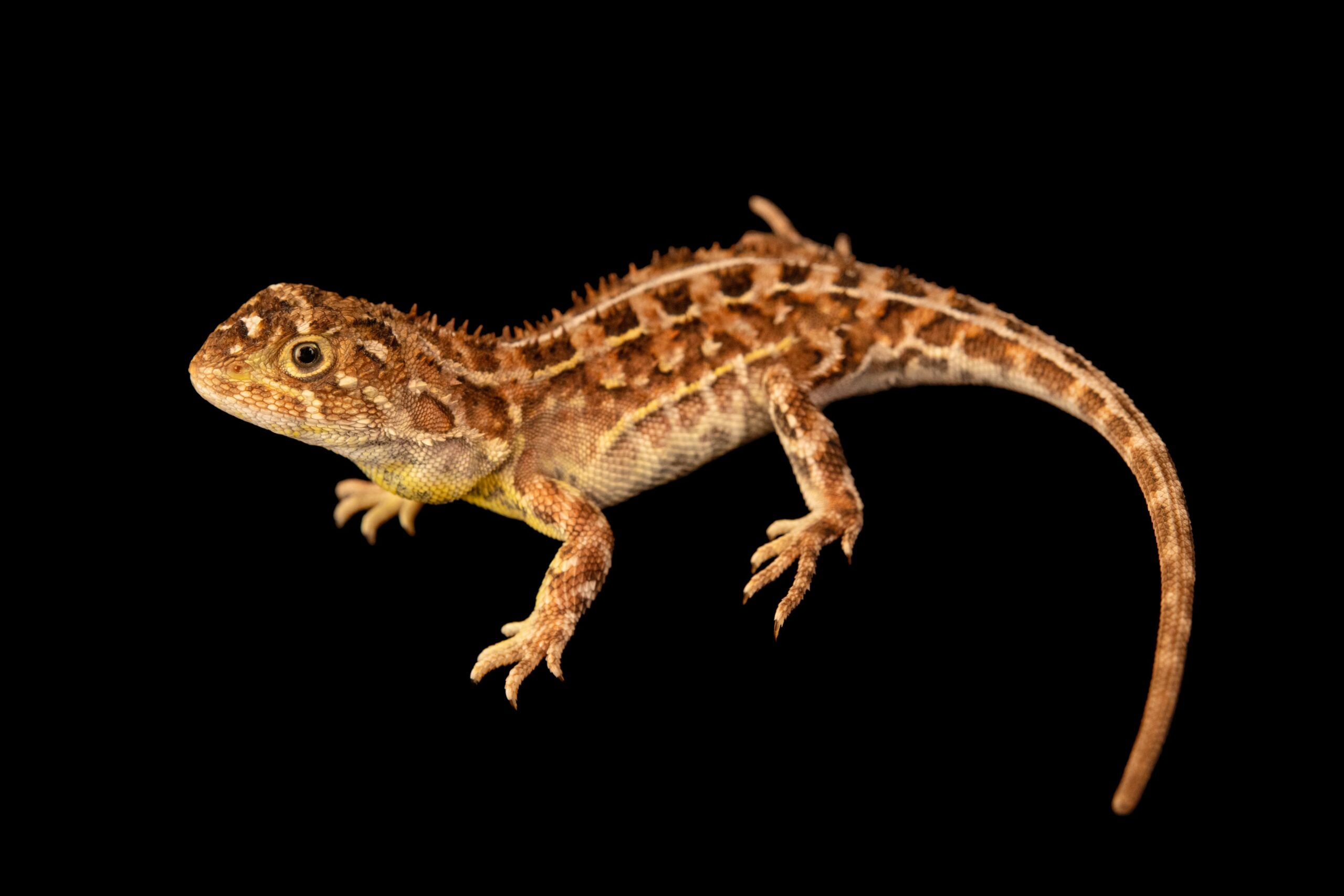
The Victorian Grassland Earless Dragon isn’t quite like giant mythical dragons in storybooks, but it’s just as impressive! This little lizard, which is about six inches long (15 centimeters), was thought to be extinct, since it had not been spotted in the wild since 1969, until it was rediscovered in 2023 in Wadawurrung Country in Australia. The species historically lived in temperate grasslands in Victoria ranging from Melbourne westward to Geelong, but less than 1% of its habitat remains today. Nearly all of the grasslands where the dragon once lived have been destroyed for agriculture or by urbanization. The remaining patches of grassland are fragmented and mostly unprotected, with much of it at risk from invasive weeds and grazing livestock.
A striking and cute little lizard, the Victorian Grassland Earless Dragon has three white stripes and bold dark bands across its body. These tiny reptiles live in abandoned spider burrows, which offer essential protection from predators and extreme heat. They feed on small invertebrates and are highly sensitive to changes in their environment. The population only has a limited time to recover from things like fires, droughts and extended heat waves because they typically only live for about two to four years in the wild, and it makes them more vulnerable to climate change.
At a glance
Taxa
Reptiles
Geography
Australia
Status
Critically Endangered
Habitat
Temperate grasslands
Estimated Population
Fewer than 200 individuals in the wild
Threats
Habitat loss from urban expansion, agriculture, infrastructure development, habitat fragmentation, invasive weeds, altered fire regimes, livestock grazing and non-native predators
Potential Recovery Actions
Protecting its only known habitat, restoring and managing native temperate grassland, conservation breeding, reintroductions and intensive monitoring