At a Glance
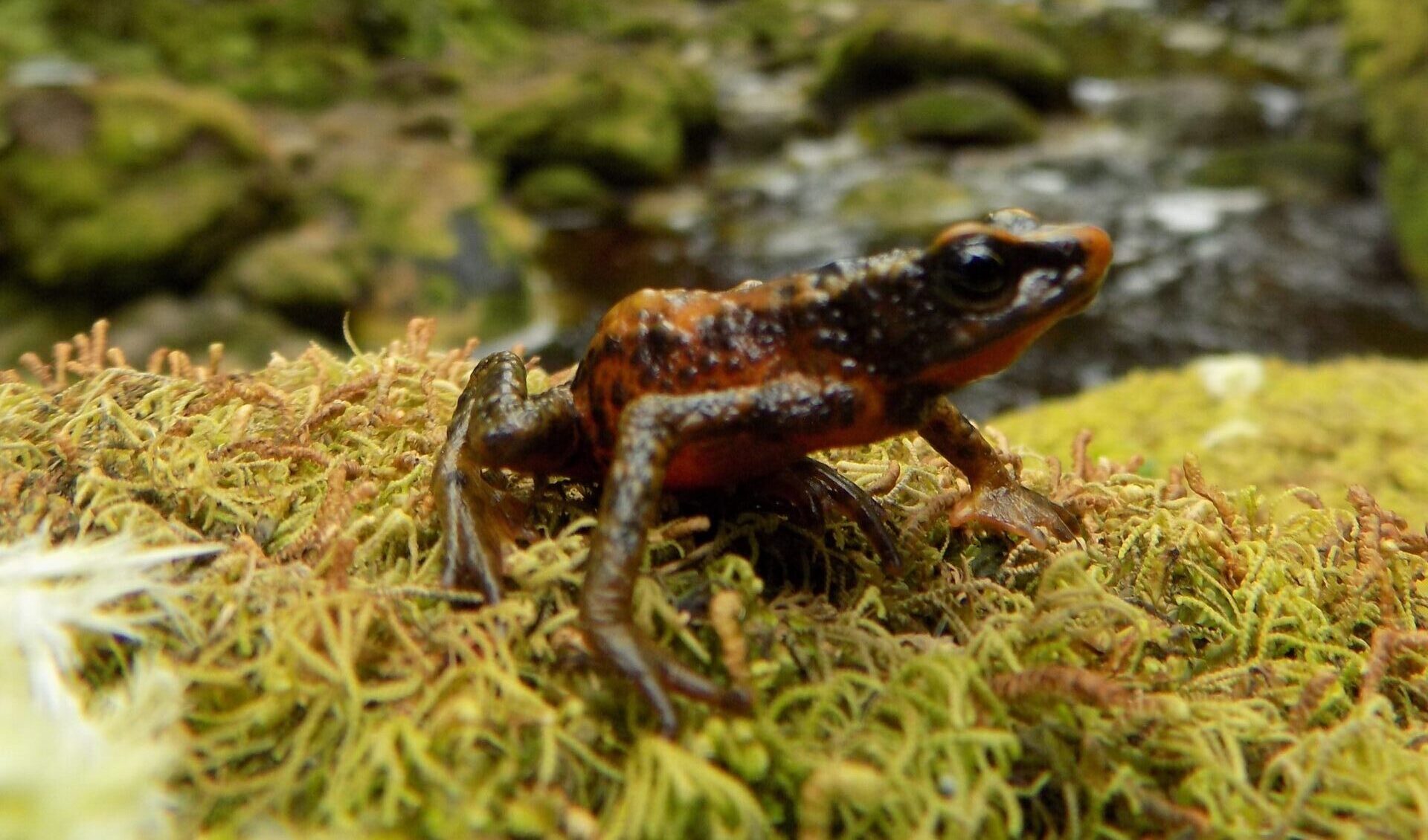
The Bogotá Harlequin Toad was once commonly seen in the cloud forests of the Colombian Andes southwest of the country’s capital. Then after 1993, the species mysteriously disappeared and was feared extinct. While habitat destruction, degradation and water pollution likely impacted this decrease in numbers, this sudden decline may indicate the emergence of the chytrid fungus, which causes chytridiomycosis, a disease that has caused amphibian populations across the globe to plummet in recent decades. Colombia is home to 42 species within the Atelopus genus — also known as harlequin toads — but as a result of the deadly spread of chytrid as well as habitat loss and water pollution, approximately seven of those species are currently thought to have stable populations.
Luckily, in 2017 two university students made an unexpected discovery while surveying frogs in a park in the department of Tolima: a group of tadpoles later confirmed to be Bogotá Harlequin Toads. The longtime presence of armed groups in the area may have deterred other people from entering the area and pursuing destructive activities such as logging, inadvertently protecting the habitat and giving the toads a lifeline.
Even more promising, the individuals were found outside the narrow range where the species had been known to live, indicating that its range was once larger than expected and therefore other isolated populations could still be undiscovered. However, the Bogotá Harlequin Toad remains among Colombia’s most threatened species.
At a glance
Taxa
Amphibians
Geography
Colombia
Status
Critically Endangered
Habitat
Andean montane forest and cloud forest streams
Estimated Population
50 individuals
Threats
Disease; habitat degradation; water pollution; extremely small and restricted populations
Potential Recovery Actions
Conservation breeding; habitat recovery; disease risk management