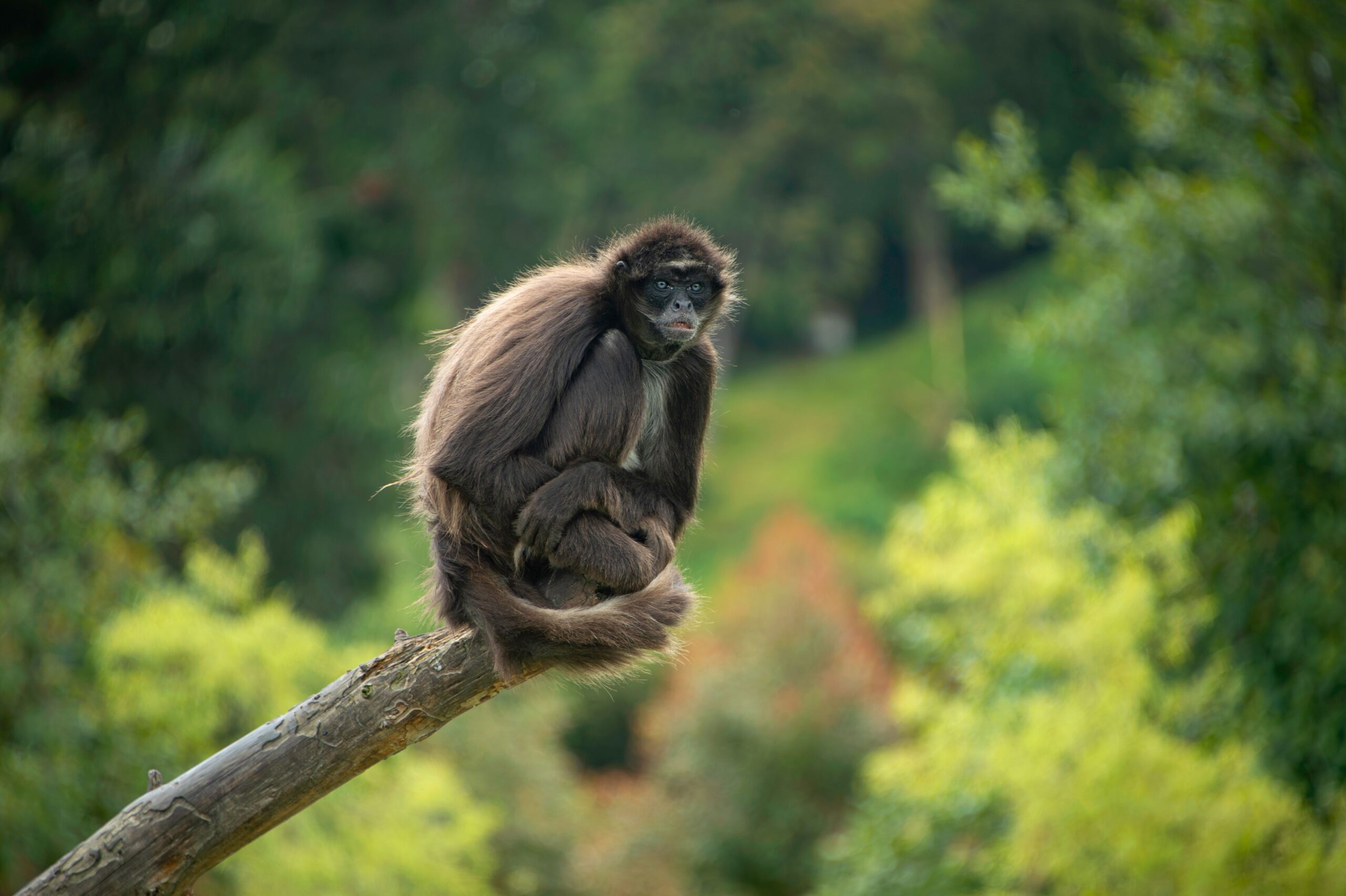
In the lowland forests of Colombia and Venezuela, tucked inside the northern Andes, Brown Spider Monkeys spend nearly their entire lives in the trees: high up in the forest canopy, where they are less exposed to predators and can be difficult to spot amongst the shadows and the leaves. If you’re standing on the forest floor somewhere nearby, your chances of hearing a Brown Spider Monkey are higher than actually seeing one —like all spider monkeys, this species is highly vocal. They communicate between social groups using a variety of different contact calls, including a soft, horse-like whinny, which they use to coordinate travel and reassure the group that all is well, if it is well.
With their long arms and powerful, prehensile tails, the Brown Spider Monkey is designed for life in the treetops, only venturing down to the forest floor when they need to drink water or eat soil —a behaviour that might seem surprising if you’re not already familiar with the Brown Spider Monkey’s eating habits. This species is largely frugivorous, meaning their diet is made up primarily of fruit. They also eat leaves, flowers and sometimes insects, but their diet is still missing essential minerals like phosphorus, which they get from the soil.
The Brown Spider Monkey is one of the world’s most endangered primates. On top of having a slow rate of reproduction—females give birth once roughly every three years, making it more difficult for populations to recover after declines—the Brown Spider Monkey’s treetop lifestyle makes them extremely vulnerable to changes in the forest. Habitat loss is one of the greatest, if not the greatest, threat to this species’ survival. The monkeys’ diet is almost entirely fruit and they need large home ranges in order to forage and get enough food each day. In the last 50 years, 85% of the Brown Spider Monkey’s habitat has been lost to deforestation and destroyed for agriculture, cattle ranching and oil palm plantations.
To thrive, Brown Spider Monkeys need access to large tracts of intact, interconnected forest corridors. This is one of the ways conservationists and NGOs are working to ensure the species survives: by planting trees, reversing fragmentation and connecting the forests that remain in Colombia and Venezuela, scientists create bridges between isolated populations of these spider monkeys, giving them more space to travel, and reducing the risk of inbreeding. Hunting is another threat to the species. Local populations believe that spider monkeys can cure anemia which makes them a target for hunters and they are also hunted for food.
And then there’s the matter of the benefit to the forest itself. It would be a mistake to profile a species like the Brown Spider Monkey, noting their dependence on the trees, without also pointing to the role they play in keeping the forest healthy and growing. These monkeys are an example of what scientists call a “seed disperser:” in a classic example of mutualism, Brown Spider Monkeys eat the fruits of the trees in one location, and then “disperse” them in another part of the forest later through their waste, planting the seeds that will become the forests of the future.
At a glance
Taxa
Mammals
Geography
Colombia and Venezuela
Status
Critically Endangered
Habitat
Tropical rainforest
Estimated Population
Unknown
Threats
Forest degradation and fragmentation; hunting
Potential Recovery Actions
Habitat recovery and connectivity; management of wild populations