At a Glance
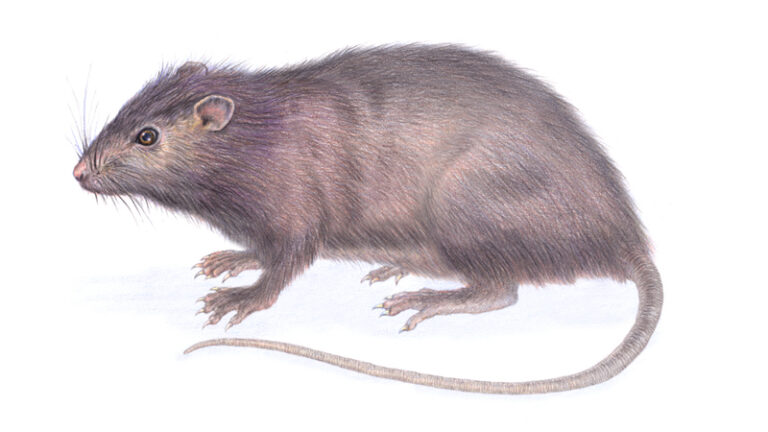
In the rocky ranges and gorges of central Australia, the Central Rock-rat spends the day sheltering in rock crevices and emerging at night to forage for seeds and leaves.
Distinguishable by its furry tail, the species’ population follows a “boom-bust” cycle like most Australian desert mammals, in which their numbers increase exponentially when resources are abundant and quickly crash when they are not. The species is now only found in five percent of its original range and is restricted to a small area of the country’s Northern Territory. It was once feared extinct, but was rediscovered in 1996. Before then it had not had a documented sighting since 1960. But it’s not out of the woods yet. Scientists are concerned that without conservation measures to help it, the Central Rock-rat could go extinct within the next 20 years. Australia has already suffered the most mammal extinctions of any country in the world.
Non-native predators, such as feral cats (and to a lesser degree foxes), and increasingly severe droughts and wildfires that burn out of control are the biggest threats to the species’ survival. After an intense drought and wildfire in 2002, researchers found that the species had disappeared in both burned and unburned areas, suggesting that there wasn’t enough available food and shelter to support the species. Climate change is already exacerbating drought and elevating fire risk in the region, making the species’ recovery even more challenging.
However, protective measures are helping the species hold on. For example, the Australian Wildlife Conservancy has begun a captive-breeding program, as well as relocated a number of animals into its Newhaven Wildlife Sanctuary, a large fenced protected area that has been cleared of feral cats and foxes. Free of these predators, the Central Rock Rat and other highly threatened species have more of a fighting chance to recover.
At a glance
Taxa
Mammals
Geography
Australia
Status
Critically Endangered
Habitat
Rugged quartzite rocky ranges, cliffs, and scree slopes, typically sheltering in rock crevices among spinifex-covered outcrops
Estimated Population
Fewer than about 650 individuals
Threats
Intense wildfires that remove protective spinifex cover, predation by feral cats, climate change
Potential Recovery Actions
Predator-proof sanctuary to prevent cat predation, protection of rocky refuges from large intense wildfires, controlling feral cats outside of sanctuaries, long-term monitoring