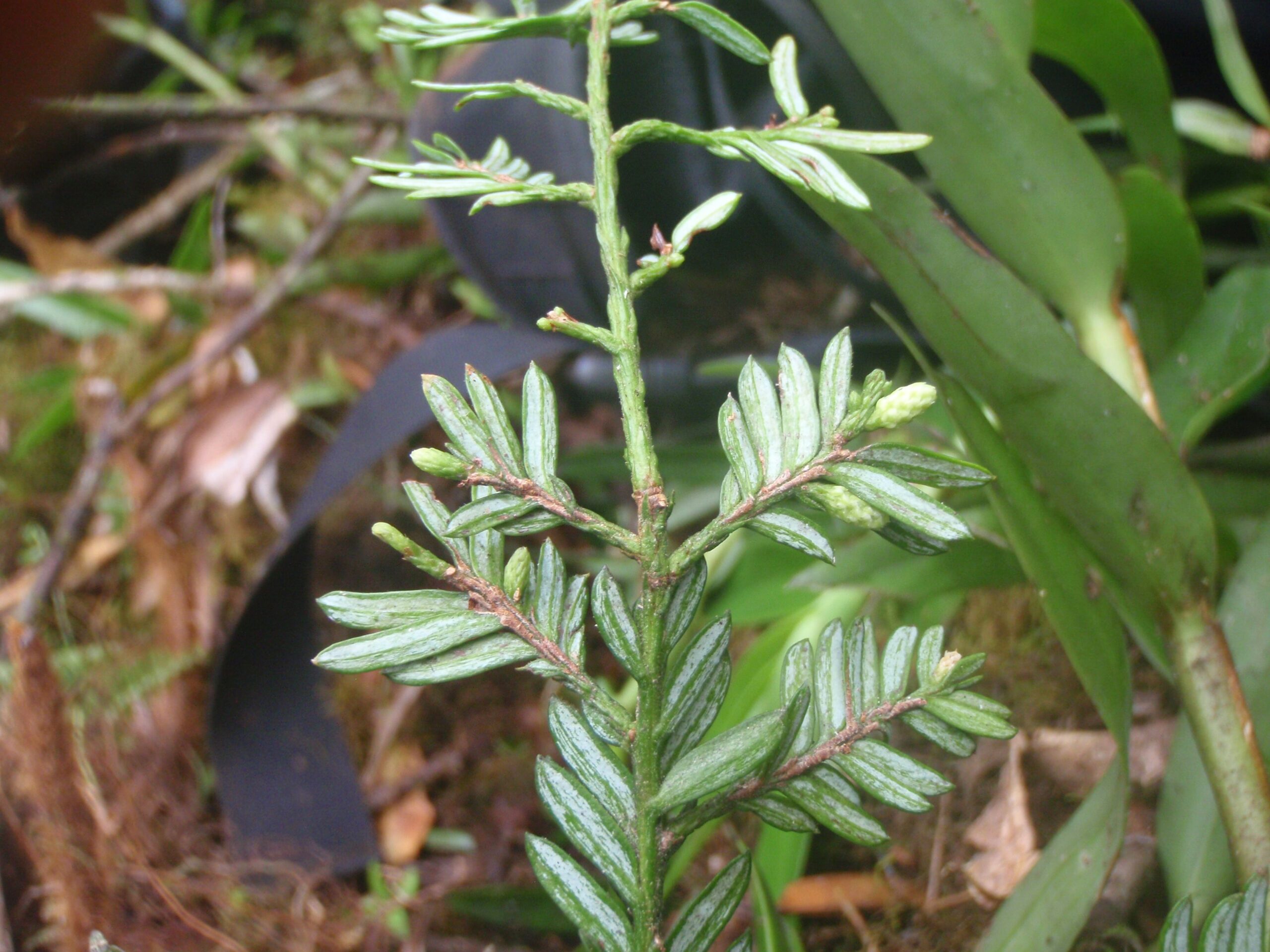
Drautabua is an ancient evergreen tree, a relic of the ancient land mass Gondwana, and is now endemic to Viti Levu, an island in Fiji. Its name refers to whale-tooth-shaped leaflets that are on branches clustered near the top of the eight-to-12 meter (26 to 40-foot) trees. The trees only live in high-elevation rainforest, usually at the top of extremely steep and narrow ridges.
Scientists think that the tree’s reproductive strategy may be the reason why it grows on mountain ridges engulfed in clouds. Trees are both male and female, but not at the same time, they alternate between reproductive seasons. Botanists think that the trees are likely pollinated by the wind, which makes the windy tops of mountain ridges the perfect habitat. The pollen from male cones blows onto the cones of females in the wind. Pollinators like bats and birds likely help spread pollen as well.
Intense storms, such as cyclones, are the biggest threat to Drautabua. The big storms can pummel the trees which are only about 14 centimeters (5.5 inches) in diameter. As climate change causes cyclones to become more frequent and intense, scientists worry that the threat from extreme weather is only growing. Mining, which destroys the forests and mountains where the tree lives, is also a threat.
At a glance
Taxa
Plants
Geography
Fiji
Status
Critically Endangered
Habitat
Tropical cloud forest
Estimated Population
Fewer than 250 mature individuals
Threats
More intense cyclones; copper mining and infrastructure; logging
Potential Recovery Actions
Ex situ cultivation