At a Glance
Staging an arboreal lizard comeback
Repopulating islands with Fijian Crested Iguanas
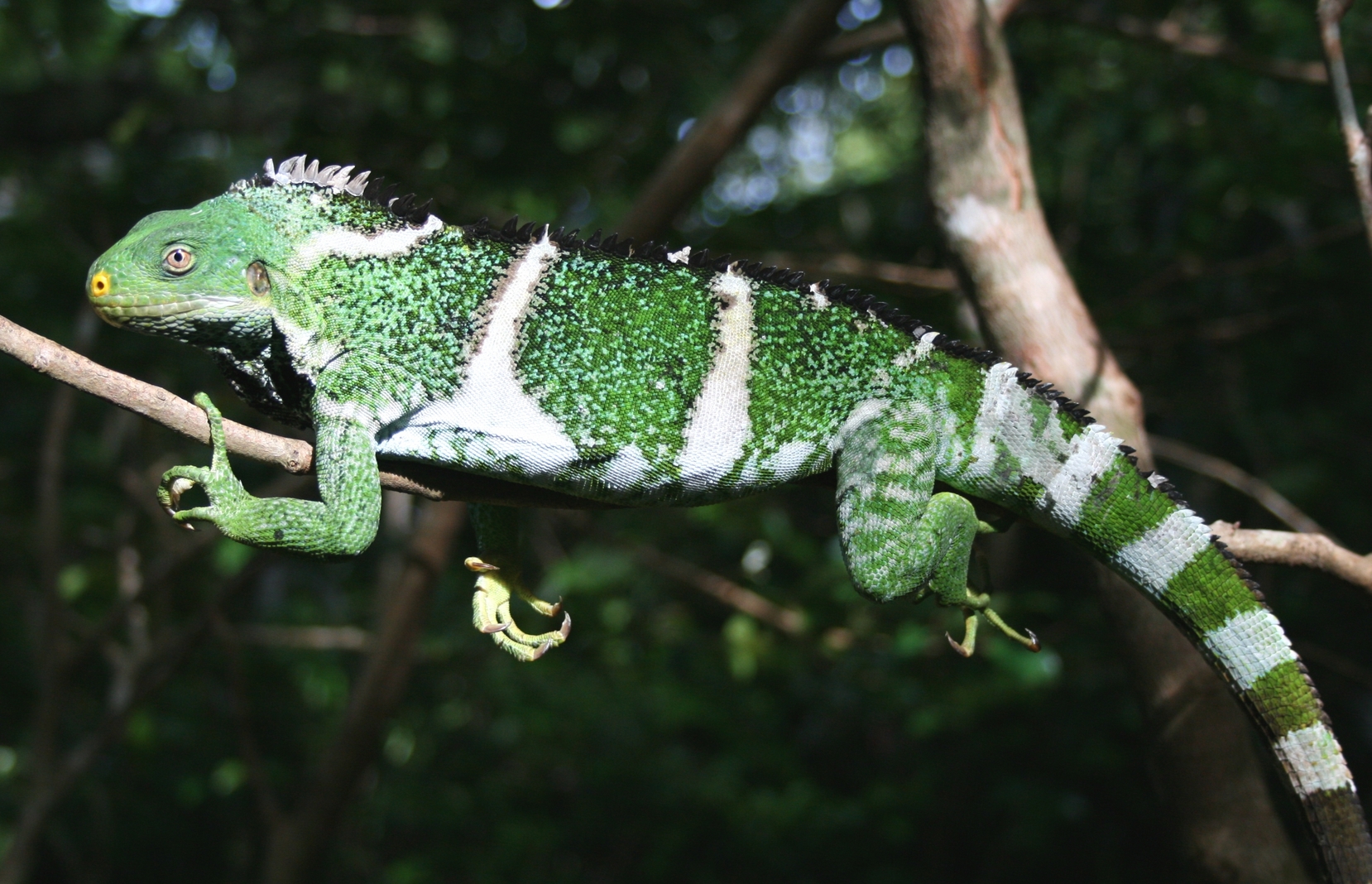
The ancestors of the Fijian Crested Iguana likely arrived in the South Pacific up to 34 million years ago, around the time the Fijian islands themselves were forming. These unlikely voyagers probably drifted across nearly 5,000 miles of ocean on uprooted trees or other vegetation from the west coast of North America, where their nearest living relatives still live today.
Once likely widespread across Fiji, the species now survives in meaningful numbers only on a few small uninhabited western islands. Scientists believe that iguanas on different islands may be genetically distinct, meaning they could actually be different subspecies. Without human intervention, however, the Fijian Crested Iguana could disappear before we can find out.
These iguanas make their home in dry coastal forests, high in the trees eating leaves, fruits and flowers. Females come down to the forest floor to lay their eggs, which can take nine months to hatch. This is among the longest incubation time of any lizard!
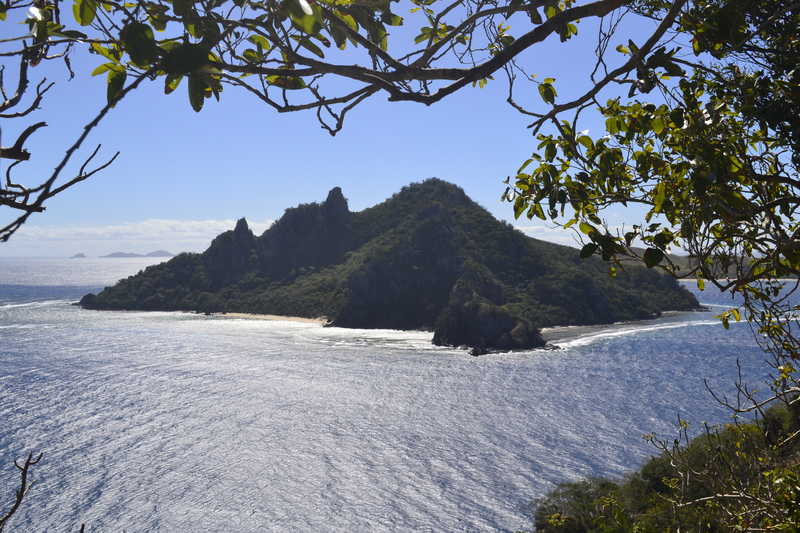
The species has not been seen in living memory on the inhabited island of Yadua. Just offshore, however, the tiny island of Yadua Taba tells a more hopeful story. In 1980 Fiji established the country’s first wildlife sanctuary on this 72-hectare (.28-square-mile) island to protect the iguanas. Since then, the dry forest has begun to recover, and the iguana population has grown from about 6,000 in 2002 to more than 10,000 by 2007, representing the vast majority of the species’ total population.
Conservation breeding and reintroduction efforts have already begun on Monuriki Island, but the species’ long-term survival will depend on continued control of invasive species and protection of dry forest habitat. Expanding populations to additional islands will help ensure that this ancient ocean voyager has a more secure future.
Fun Fact:
When excited or threatened, this species can rapidly change color from green to almost black. Fijian Crested Iguana is the largest living South Pacific iguana, growing up to about 30 to 31.5 inches (75 to 80cm) from nose to tail.
At a glance
Geography
Fiji
Status
Critically Endangered
Habitat
Forests
Estimated Population
Less than 20 individuals
Threats
Fires; forest clearing for expanding agriculture, human villages, and tourism infrastructure; grazing by goats; predation by invasive mammals; the spread of invasive plants
Possible Recovery Actions
Habitat restoration; predator eradication; regulating agricultural fires, conservation breeding and reintroduction; invasive species control
At a Glance
The Crisis
Although historical records are scarce, scientists estimate the species has declined by at least 80% in just 40 years, largely because much of its forest home has disappeared. Fires set to clear land for agriculture sometimes burn out of control, and forests have been converted to sugarcane plantations and settlements.
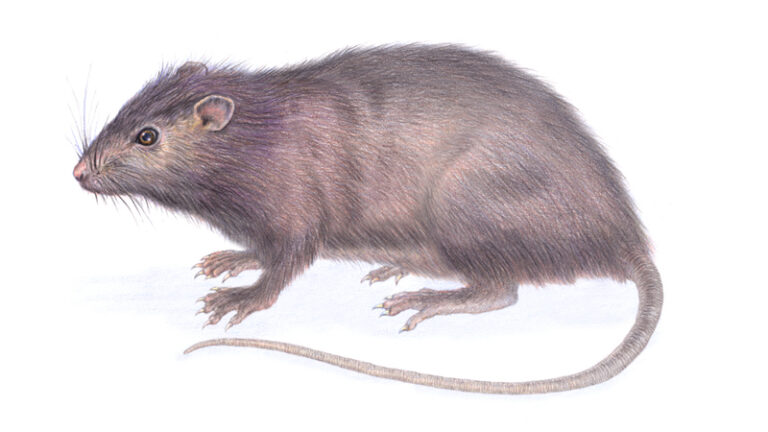
But the most serious threat may be one that humans introduced centuries ago: invasive species. On Fiji’s largest islands, the arrival of the Small Asian Mongoose, which was introduced to control rats in sugarcane fields, drove the iguana to local extinction. Elsewhere, feral goats have trampled nesting sites and degraded habitat, invasive plants have crowded out native food sources, and the illegal wildlife trade continues to pose a risk. In 2025, authorities in Spain confiscated more than 600 trafficked reptiles, including eight Fijian Crested Iguanas that were later transferred to the world’s largest captive population at the San Diego Zoo Wildlife Alliance.