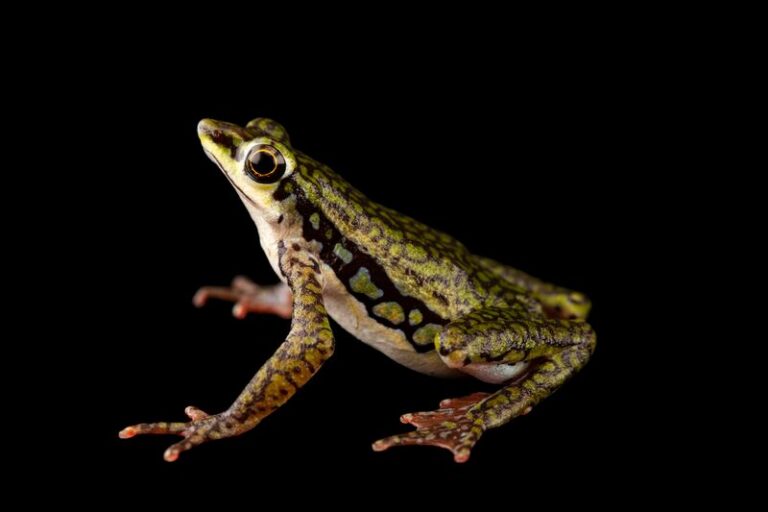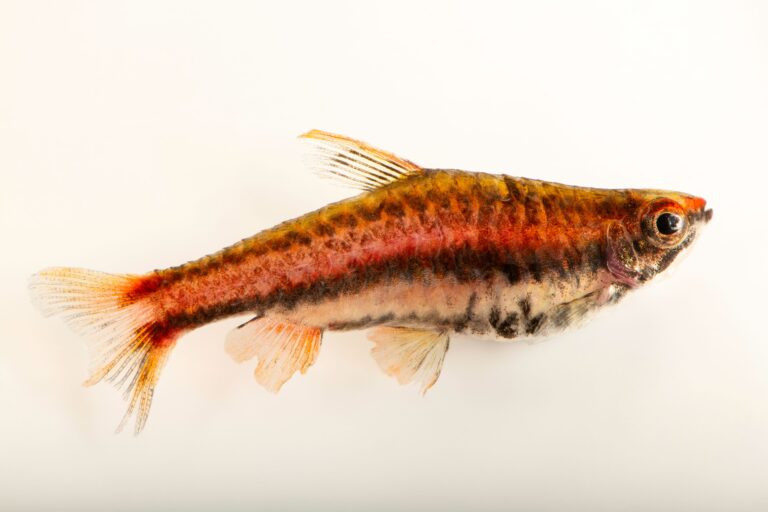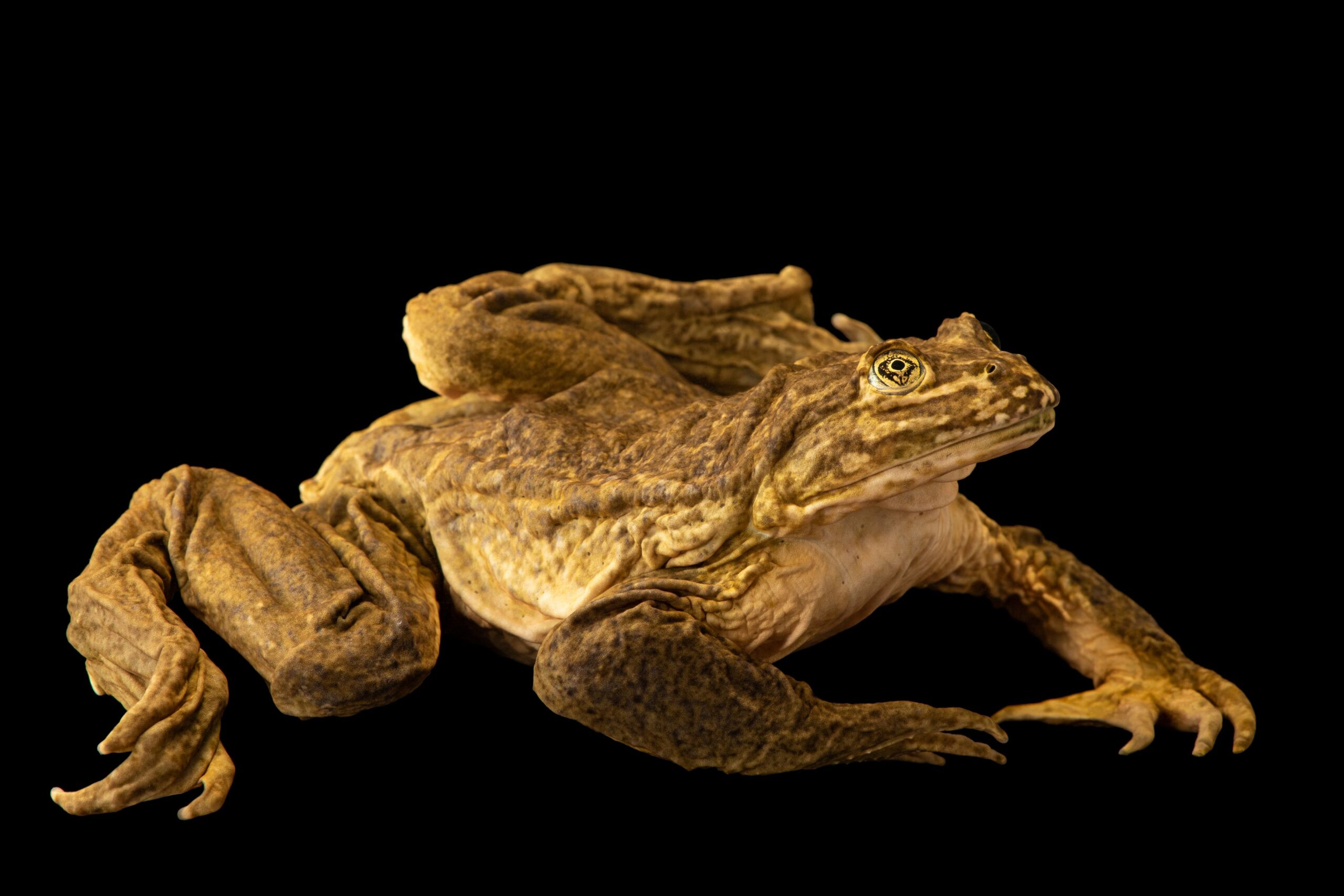
The Lake Junín Giant Frog lives in ice-cold lakes, streams and springs of the Central Andes Mountains of Peru. This frog is completely aquatic, meaning it rarely leaves the water. As its name suggests, this water frog is large and it is tied with the Titicaca Water Frog for the title of largest exclusively aquatic water frog. The tadpoles of Lake Junín Giant Frogs can weigh up to 226 grams (0.5 pounds) and adults can weigh about 544 grams (1.2 pounds)!
Surveys by scientists found that the Lake Junín Giant Frog now only lives in five locations around the lake, though it was once common. It thrives in parts of the lake and surrounding streams, canals, rivers and wetlands that have clean water without much silt. In 1996 the species experienced a mass die-off, but scientists are still uncertain what caused it. In the decades since, the species has continued to dwindle as a result of pollution, the introduction of non-native species and hunting for food and medicine. Trout were introduced to Lake Junín and prey on the water frogs. Agricultural runoff, chemicals from mining and residential water runoff are all discharged into Lake Junín harming the frogs which breathe through their skin and are very sensitive to pollutants in the water. Perhaps the biggest threat to the species is hunting for human consumption. In parts of Peru, people blend water frogs into juice because they believe that drinking the resulting concoction will cure conditions ranging from asthma to osteoporosis, and is an aphrodisiac. There is no proof that eating the frogs provides any health benefits.
One potentially bright spot for the frogs is that scientists have not found any individuals of the species that have been infected with the chytrid fungus. However, the species is understudied and scientists are trying to learn more about it to help it in the wild.
At a glance
Taxa
Amphibians
Geography
Peru
Status
Critically Endangered
Habitat
Freshwater
Estimated Population
Unknown
Threats
Non-native trout predation; water pollution; over-harvesting for human consumption
Potential Recovery Actions
Habitat restoration; in situ headstarting; invasive species control; community engagement; education