At a Glance
Refuge to Recovery
Saving Australia’s Night Parrot
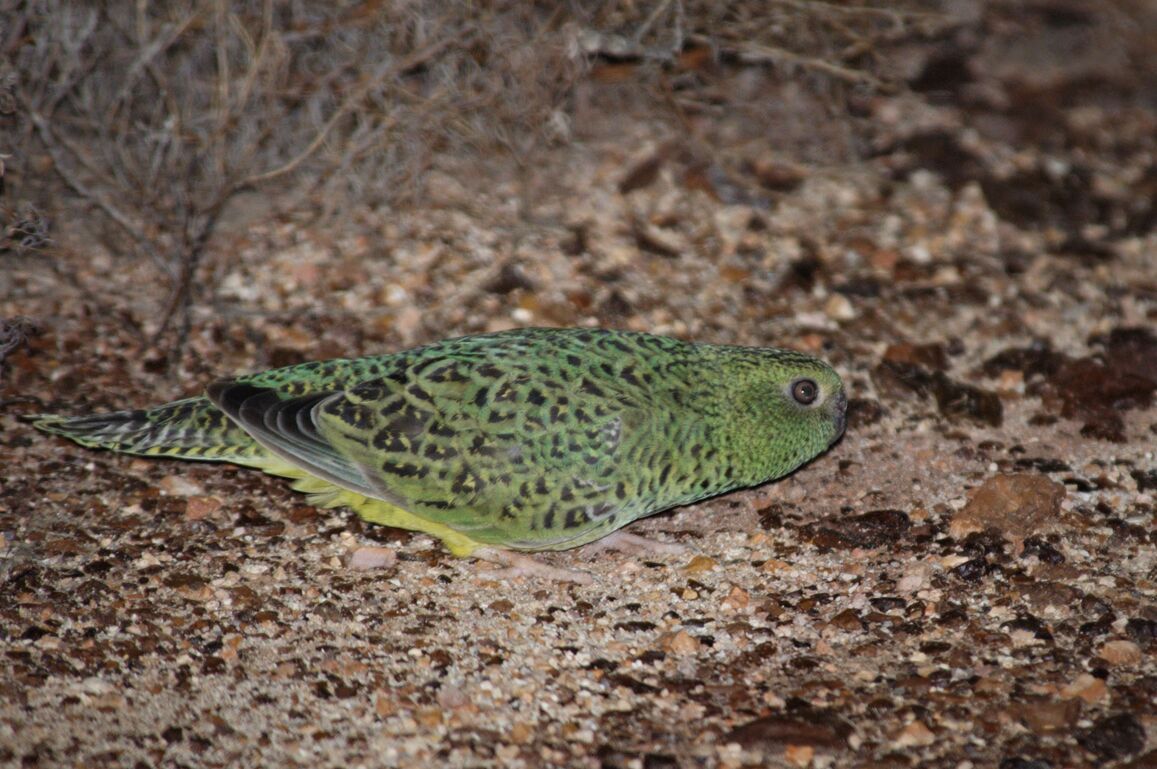
The Night Parrot is one of the world’s rarest and most mysterious birds. Native to the hummock grasslands and floodplains of Australia’s remote deserts, this small green parrot has long been hard to find. Night Parrots spend the day hidden in tunnels they build in dense spinifex grass—a spiky species of grass—only emerging at night, when they fly out to feed. They are strong fliers, but spend most of their time on the ground, where their mottled plumage with black and yellow barring is the perfect camouflage. Their secretive and nocturnal behaviour means the only clue to their presence is their soft, bell-like calls or whistles in the dark.
For more than a century after its discovery, biologists feared that the Night Parrot was Extinct. In 1990, the species was rediscovered when a group of scientists happened upon a dead parrot in southwestern Queensland. While a few more birds were sighted in the following decades, the species continued to remain elusive.
In recent years Indigenous rangers and scientists have used bioacoustic recording equipment to find the largest-known population of Night Parrots (estimated between 40-50 birds) and identify their roosting sites within the Ngururrpa Indigenous Protected Area in Western Australia’s Great Sandy Desert. This is one of a few isolated places where the species remains.
Fun Fact:
Few people have ever seen a Night Parrot in the wild, making it one of Australia’s most elusive and legendary birds.
At a glance
Geography
Australia
Status
Critically Endangered
Habitat
Hummock grasslands and floodplains
Estimated Population
~150-500 adults
Threats
Invasive species; increased fire frequency and intensity; climate change
At a Glance
The Crisis
Although threatened by habitat destruction due to altered wildfire regimes that have become more unpredictable, non-native predators, and climate change which pushes the birds to their physiological limit, the Night Parrot is still hanging on. Now, with sustained protection and care for its desert home, the Night Parrot can move beyond survival toward a future where it thrives.

Photo credit: Lachlan Gardiner, Bush Heritage

Photo credit: Lachlan Gardiner, Bush Heritage
The Phoenix Recovery Plan
Bush Heritage Australia is leading the recovery of the Night Parrot and will focus on identifying areas where the cryptic species may be surviving, protecting areas with subpopulations, monitoring non-native species in Night Parrot habitat, studying the genetic health of the known subpopulations of the species, reducing the risk of bushfires, removing invasive plants from Night Parrot habitat, and creating a culturally inclusive research program with Maiawali Traditional Custodians. As a result, the Night Parrot population will have a measurable increase in numbers within five years, which will be coupled with a decrease in the number of non-native predators in its habitat and an on-going program to keep its spinifex grassland habitat healthy. Bush Heritage Australia will develop an acoustic monitoring system that is capable of detecting the parrot more efficiently and quickly, and it will use artificial intelligence to monitor and control non-native predators.
Partner Spotlight
Bush Heritage Australia is a leading Australian conservation not-for-profit organization, protecting ecosystems and wildlife across the continent. Founded 35 years ago, Bush Heritage now manages over 3.6 million acres through private conservation reserves and partners with Indigenous and farming communities to protect an additional 50 million acres. Together, these lands protect more than 9,000 native plant and animal species.

Photo courtesy of Bush Heritage
“Since Europeans arrived in the early 19th century, Australia’s arid zone has lost dozens of species due to human impact, and for a long time it seemed the Night Parrot would be another. After going missing for nearly 150 years, its rediscovery is a symbol of hope, that if we keep trying, we can turn this horrible record around. Having started from almost zero in 2013, if we can keep building on the knowledge we’ve gained in the last 10 years of research and management, we can bring this species back from the brink.”
Nick Leseberg
Night Parrot ecologist, Bush Heritage Australia