At a Glance
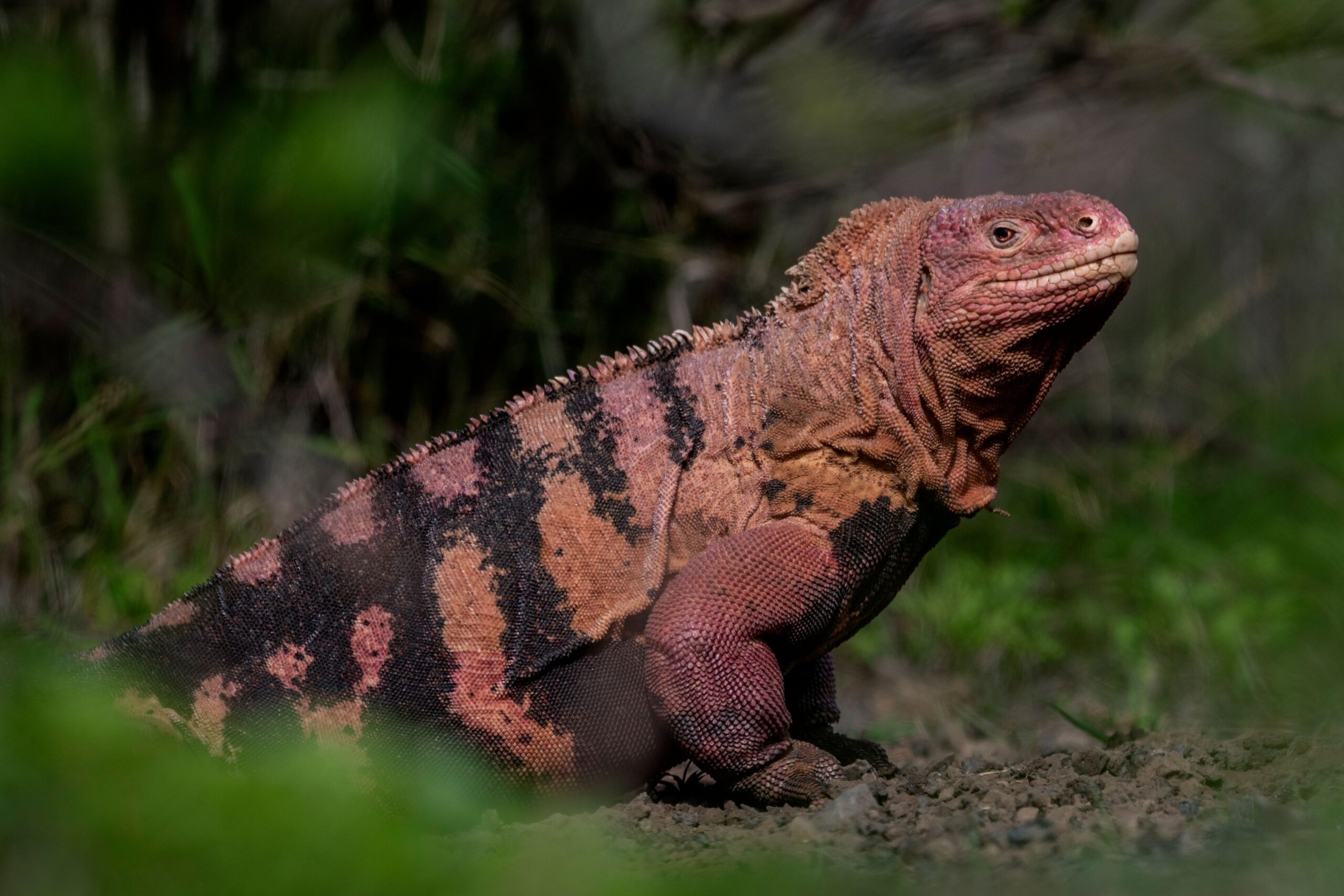
Pink Iguanas are only found on Isabela Island in the Galapagos, and live in only one location: on the slopes of the highest mountain peak in the entire archipelago, which also happens to be an active shield volcano.
In the last decade (give or take a few years), Wolf Volcano has erupted twice—once in 2022, when the volcano shot a cloud of ashen lava nearly 4,000 meters (12,400 feet) into the sky; and then before that in 2015, when lava coursed down the eastern and southern slopes. And it was lucky it did. If the lava had flowed over onto the north and west sides of the volcano, it would not have been good news for the only known population of Pink Iguanas in the world.
The Pink Iguana plays an important role in the ecosystem surrounding Wolf Volcano as an ecosystem engineer, supporting the growth of new plant-life by dispersing seeds through their waste. Researchers monitor Pink Iguanas in their volcanic habitat to learn more about them, study their nesting areas, and track population changes. The Galápagos National Park and conservation organizations are also working to protect important nesting sites and control invasive predators like feral cats, which have been recently documented preying on iguana hatchlings as they emerge from their nests.
Before scientists officially identified the Pink Iguana as its own species in 2009, this unique lizard was presumed to be a variation of the yellow-colored Galapagos Land Iguana. Genetic tests eventually confirmed the Pink Iguana is, in fact, a separate species. Today, the population is extremely small, with only around 200 to 300 individuals believed to remain on Wolf Volcano.
At a glance
Taxa
Reptiles
Geography
Ecuador
Status
Critically Endangered
Habitat
Arid top of volcano; arid volcanic slopes
Estimated Population
Estimated 200 to 300 individuals
Threats
Invasive species; volcanic eruption risk
Potential Recovery Actions
Invasive species management