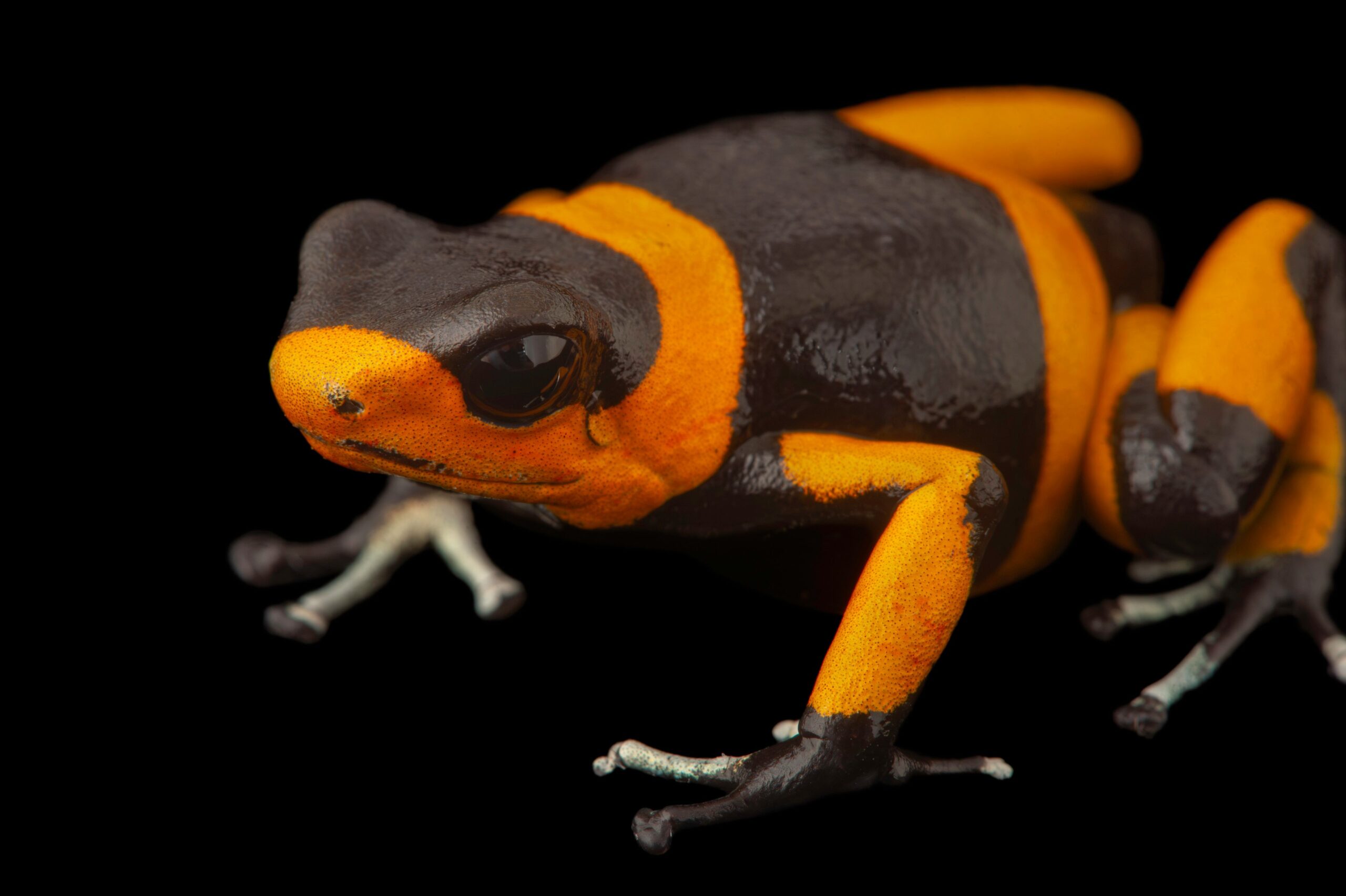
The Red-banded Poison Frog is a vivid toxic frog (in the wild) found in tropical forest in Cordillera Occidental and Farallones de Cali National Park in Colombia. The frog’s body is black with red, orange or yellow bands.
The males of the species are very attentive parents, staking out protected places near streams and rivers that are safe from predators for females to lay eggs. When they have found the perfect spot, the males attract females by calling to them. If a female answers, she will lay a few large eggs above the forest floor, usually on the leaves of plants or in a small crevice of a tree. The male then fertilizes the eggs and cares for them, which includes carrying each individual tadpole on his back to separate areas where they can develop and hatch. Red-banded Poison Frog tadpoles are carnivorous, which means they can’t hatch near each other without a Hunger Games-like scenario playing out. The females will also lay unfertilized eggs that males will take up to the tadpoles for them to eat after they hatch.
The Red-banded Poison Frog’s colors advertise to predators that it is poisonous, but its colors have also likely made it a target for the illegal pet trade. The species has been heavily collected by illegal wildlife traffickers and scientists estimate that about 80,000 frogs were taken from the wild between 1977 and 2009. Based on population surveys, scientists believe that the population of Red-banded Poison Frogs is declining by more than 80% every 10 years. There is a bright spot for the species, there are several areas with stable populations of the frog in Parque Nacional Natural Farallones de Cali.
At a glance
Taxa
Amphibians
Geography
Colombia
Status
Critically Endangered
Habitat
Tropical rainforest
Estimated Population
Unknown
Threats
Forest degradation and fragmentation; illegal wildlife trafficking
Potential Recovery Actions
Conservation breeding; reintroduction