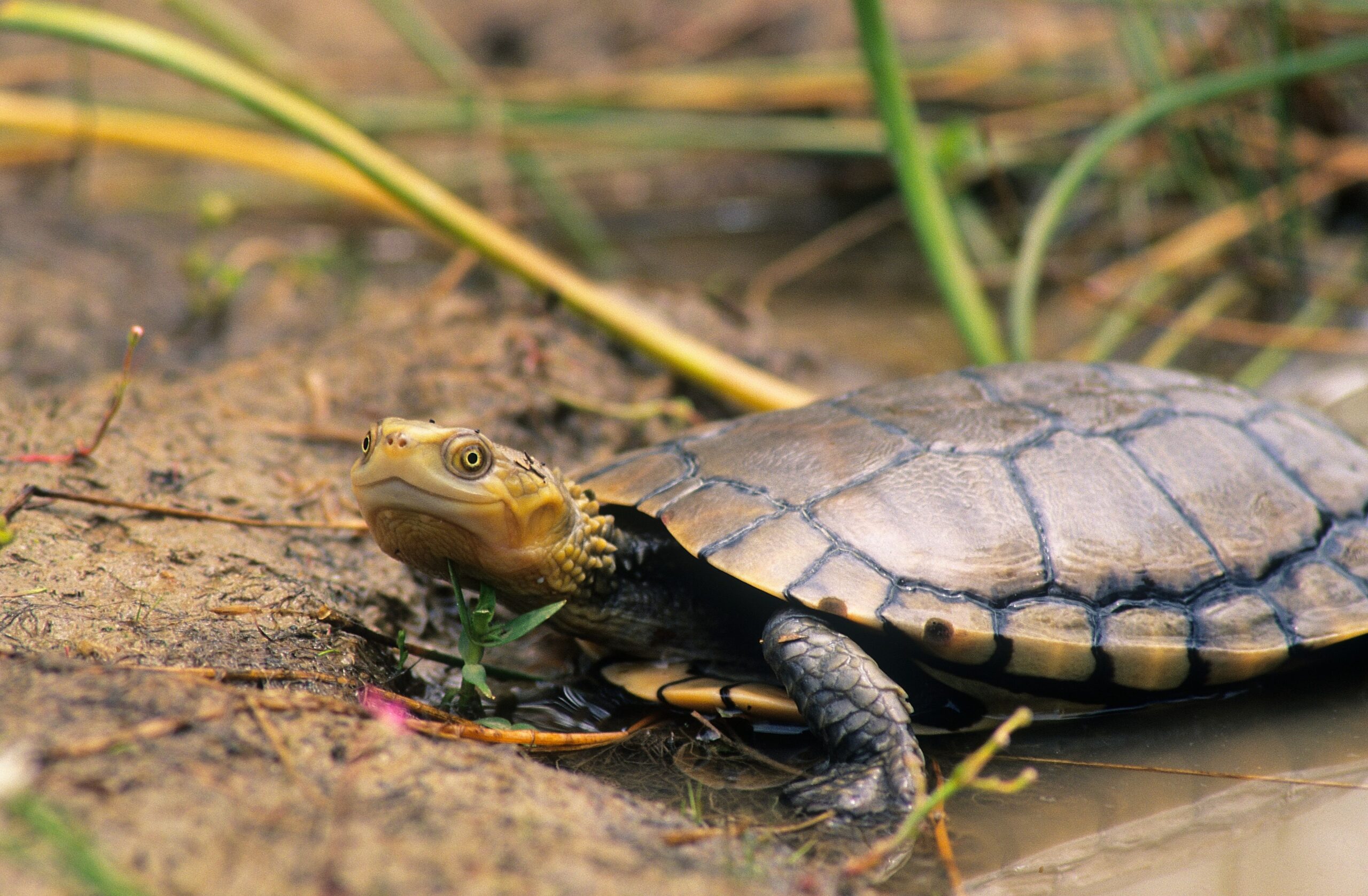
The Western Swamp Turtle is elusive—so elusive it was believed to be extinct until it was unexpectedly rediscovered in 1953. It is Australia’s smallest turtle species and the most threatened.
This tiny turtle, with a shell measuring between 15 and 20 centimeters long, lives in seasonal swamps in south-western Western Australia that fill with water during the winter and spring months. When the swamps are full the turtles spend all of their time in the water, but the water temperature has to be just right; they can’t live in water below 14 degrees Celsius (57 degrees Fahrenheit) or above 30 degrees Celsius (86 degrees Fahrenheit). Females typically lay clutches of three-to-five eggs from November to December, and the eggs will only hatch if soil temperatures are less than 34 degrees Celsius (94 degrees Fahrenheit).
When the blistering summer heat arrives, the swamps dry up and the Western Swamp Turtle retreats to burrows excavated from the clay of the swamp floor. They enter a type of summer hibernation called aestivation, and their metabolism and activity slow down.
The swamps the Western Swamp Turtle depends on have largely been destroyed due to urbanization. The small turtles are also easy prey for non-native predators such as foxes. Climate change is causing the swamps where they live to dry up earlier in the season, which can prevent females from laying eggs. They need clay soil to survive the hot summers and can’t burrow in sandy soil. Bushfires are also a big threat to the species, damaging and drying up their swampy habitats.
At a glance
Taxa
Reptiles
Geography
Australia
Status
Critically Endangered
Habitat
Seasonal freshwater swamps
Estimated Population
About 15–25 mature adults remain in the wild; roughly 400–500 individuals across all managed sites including juveniles and captive-bred releases
Threats
Climate change, habitat destruction, pollution, fires
Potential Recovery Actions
Protecting and restoring seasonal wetlands on the Swan Coastal Plain, managing water levels in the face of declining rainfall, controlling introduced predators such as foxes, maintaining captive breeding and head-starting programs