At a Glance
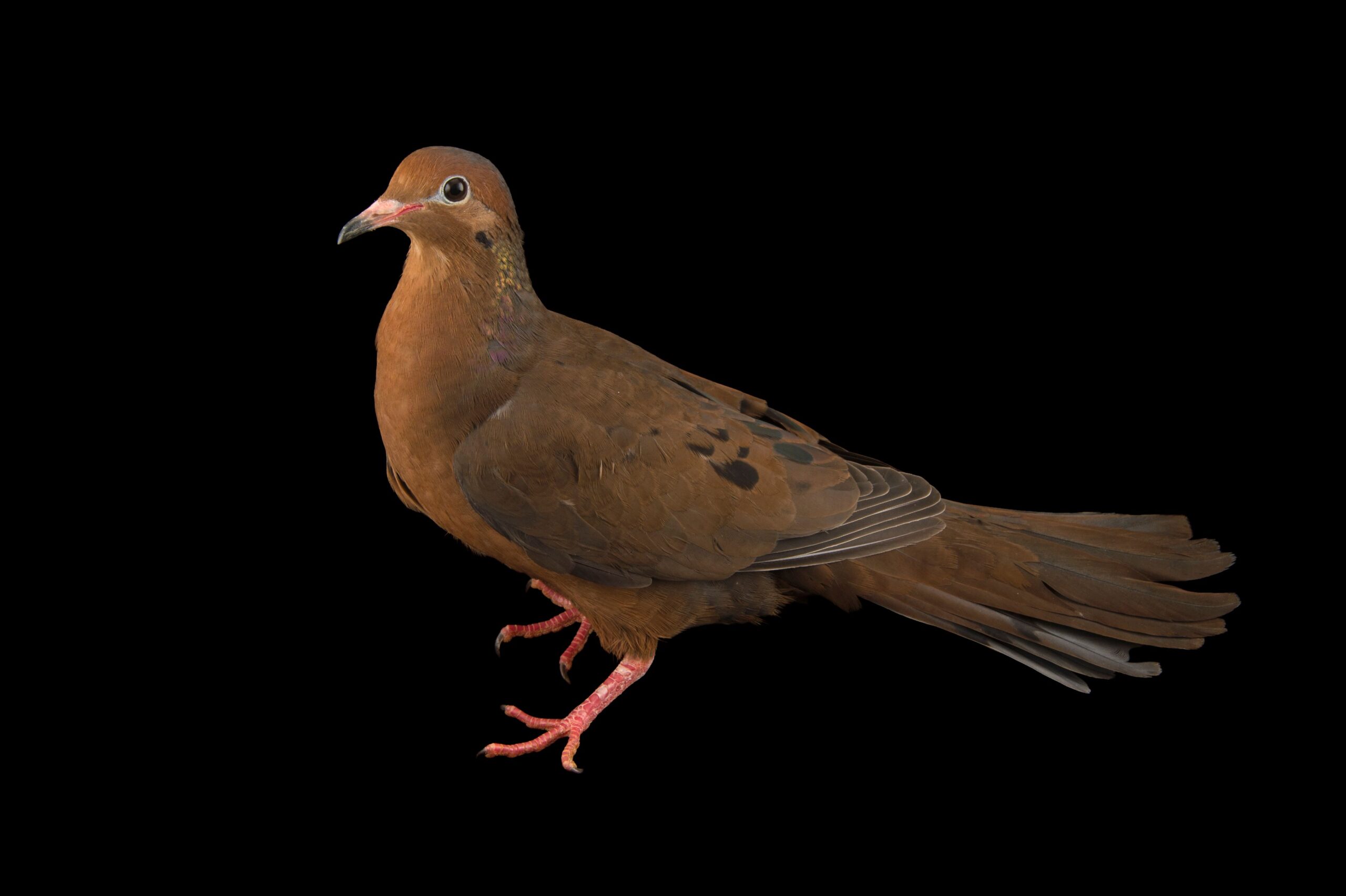
The Socorro Dove has been seen in the wild since 1972 and was declared Extinct in the Wild in 1994, but the small cinnamon-brown bird with a blue-gray nape, dark tail feathers and blue patches around its eyes is getting a second chance thanks to conservation breeding programs. The dove was only found on Socorro in the Revillagigedo Islands off the west coast of Mexico, and the population was stable until sheep and cats were brought to the island during between the 1950s and 1970s.
Sheep eat plants and the understory of trees that the doves depended on. Their ravenous appetites strip the forest understory of vegetation which may be driving locust outbreaks on Socorro. Locust outbreaks have become regular on Socorro, usually striking about twice every year since the mid 1990s. The locusts devastate native plants and trees, further destroying forests that the fruit-eating doves depended on.
A scientific expedition to Socorro in 1925 is the reason that the Socorro Dove has survived in conservation breeding programs. The expedition moved 17 Socorro Doves to the United States and all individuals of the species alive today are descended from those birds.
Socorro Doves have some unique behaviors and characteristics compared to mainland dove species. They spend a lot of time on the ground, they are generally solitary or live in pairs, and males help raise chicks. The breeding season on Socorro is only about two-to-three months long, but the doves make the most of it. Females will usually lay two clutches of eggs per season in very close succession, so close in fact that they typically lay the second clutch before the first has even fledged the nest. When females lay their second clutch of eggs, males take over caring for the first clutch of chicks.
Sheep were removed from Socorro in 2010, but conservationists are still working to control non-native cats and locusts. About 200 Socorro Doves live in conservation breeding programs around the world and those doves could help repopulate their home.
At a glance
Taxa
Birds
Geography
Mexico
Status
Extinct in the Wild
Habitat
Forest
Estimated Population
Approximately 200 in human care
Threats
Invasive species
Potential Recovery Actions
Control feral cats and mice; establish breeding flock on Socorro; habitat restoration; reintroduction after eradication progress; control locust outbreaks