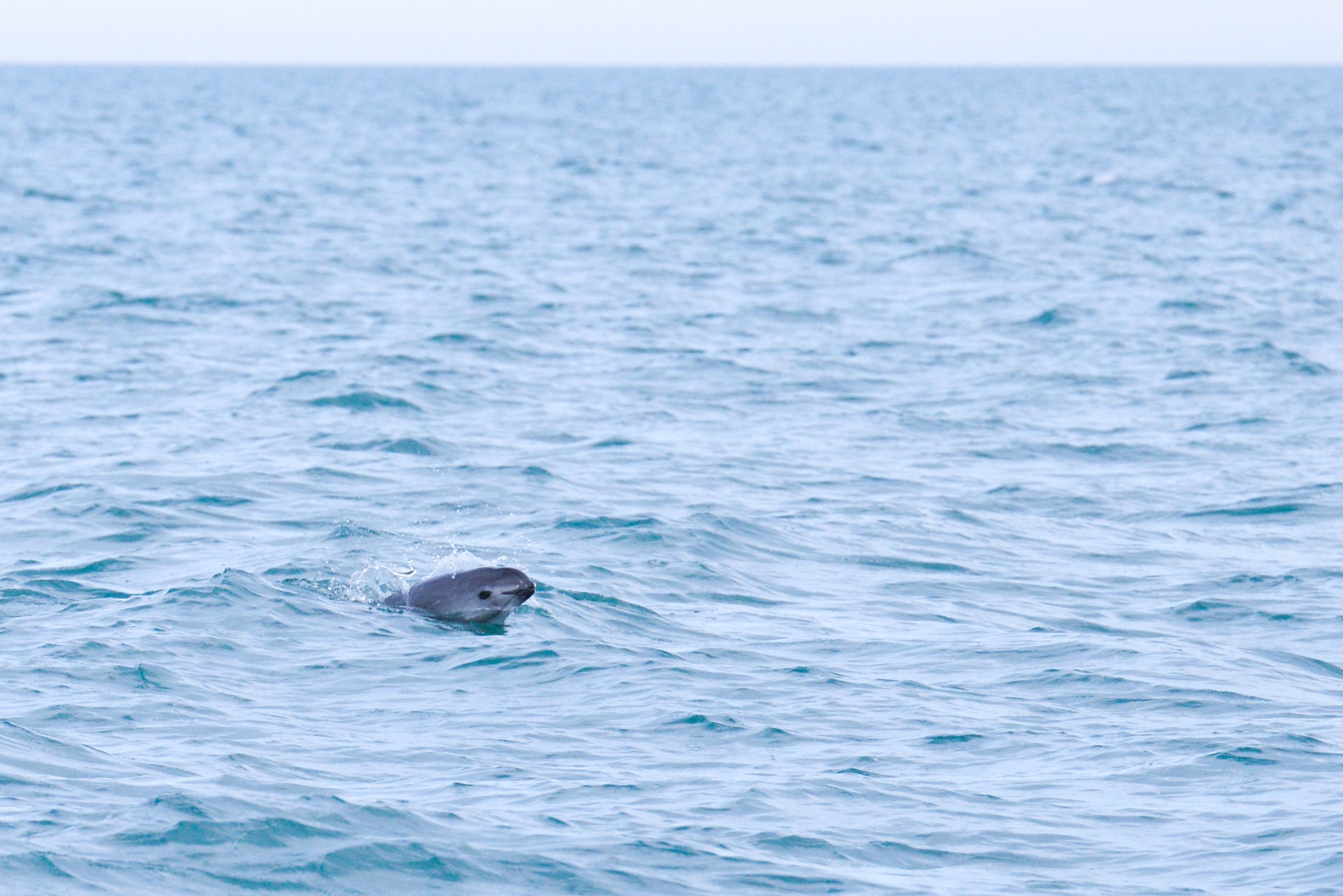
The Vaquita is a superlative species. It holds the titles for world’s smallest cetacean, the rarest marine mammal in the world and it has the smallest range of any whale, dolphin or porpoise. The five-foot-long porpoise with dark patches ringing its eyes and mouth only lives in the northern part of the Gulf of California where they eat shrimp, small fish and cephalopods. Vaquitas are usually solitary or only found in groups of two.
The biggest threat to Vaquitas is fishing with gillnets. The nets, which are used to catch multiple species of fish and shrimp, ensnare Vaquitas and drown them. Fishing for Totoaba is the biggest risk to the Vaquita because it happens in the Vaquita’s last refuge in the Gulf of California. The swim bladder of Totoaba is used in China in soup dishes and is said to have medicinal properties, though there is no proof of medicinal benefits.
The Mexican government, non-governmental organizations and scientists are working with local communities to stop fishing with illegal nets and have been developing alternative nets that are Vaquita safe. They have also established a zero tolerance area in which no fishing with nets is allowed—both these efforts have helped the small Vaquita population stabilize in recent years, though it still only numbers in the dozens of porpoises. Today, it’s estimated that there are between 9 and 18 Vaquita in the wild.
At a glance
Taxa
Marine
Geography
Mexico
Status
Critically Endangered
Habitat
Marine coastal waters
Estimated Population
Fewer than 15 individuals
Threats
Fishing nets
Potential Recovery Actions
Transition to alternative fishing gear; removal of illegal fishing; biobanking