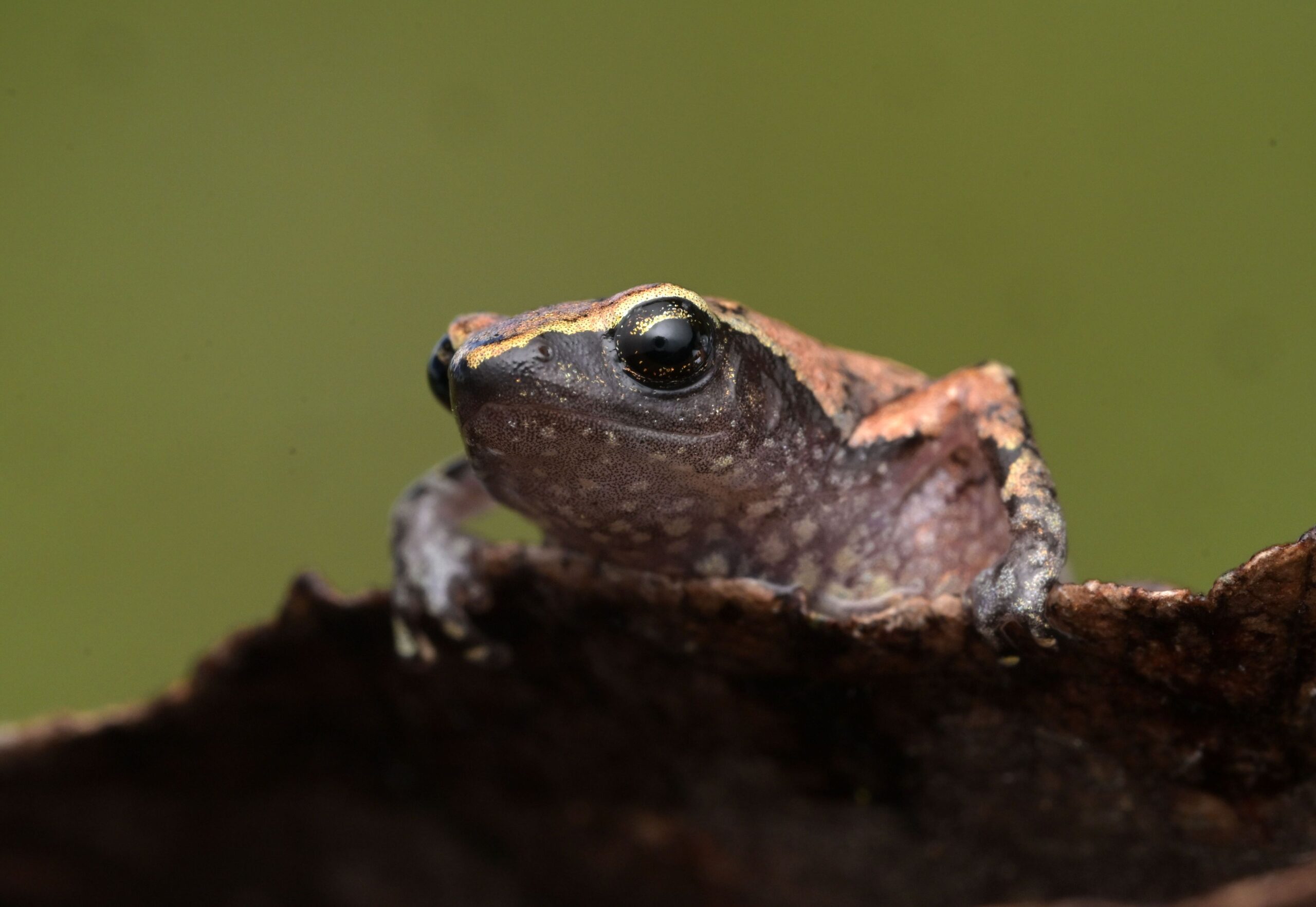
Scientists are still learning and studying Helena’s Stump-toed Frog; they even debated which genus it belonged to until 2016 when it was officially described as a species in the new genus Anilany. Less than 20 square-kilometers (eight square-miles) of this frog’s forest habitat remains, and the majority is within the Ambohitantely Special Reserve and a tiny fragment in Ankafobe Reserve, both in Madagascar. Herpetologists need to do more research to determine if other Anilany species that range across Madagascar are Helena’s Stump-toed Frogs or new species to science.
The species is tiny, and is only about 15 millimeters long when it’s fully grown! The frogs are active during the day, where they spend their time in the leaf-litter. The forest home of Helena’s Stump-toed Frog is completely surrounded by grasslands. The reserve is not well protected and is at risk from fires, illegal wood-cutting and livestock grazing.
Herpetologists think that the species’ tadpoles likely develop in terrestrial nests, but more research is needed to confirm that.
At a glance
Taxa
Amphibians
Geography
Madagascar
Status
Critically Endangered
Habitat
Montane forest
Estimated Population
Unknown
Threats
Fires, illegal woodcutting, livestock encroachment into the forest
Potential Recovery Actions
Reforestation, conservation breeding, reintroduction, strengthening protected area management