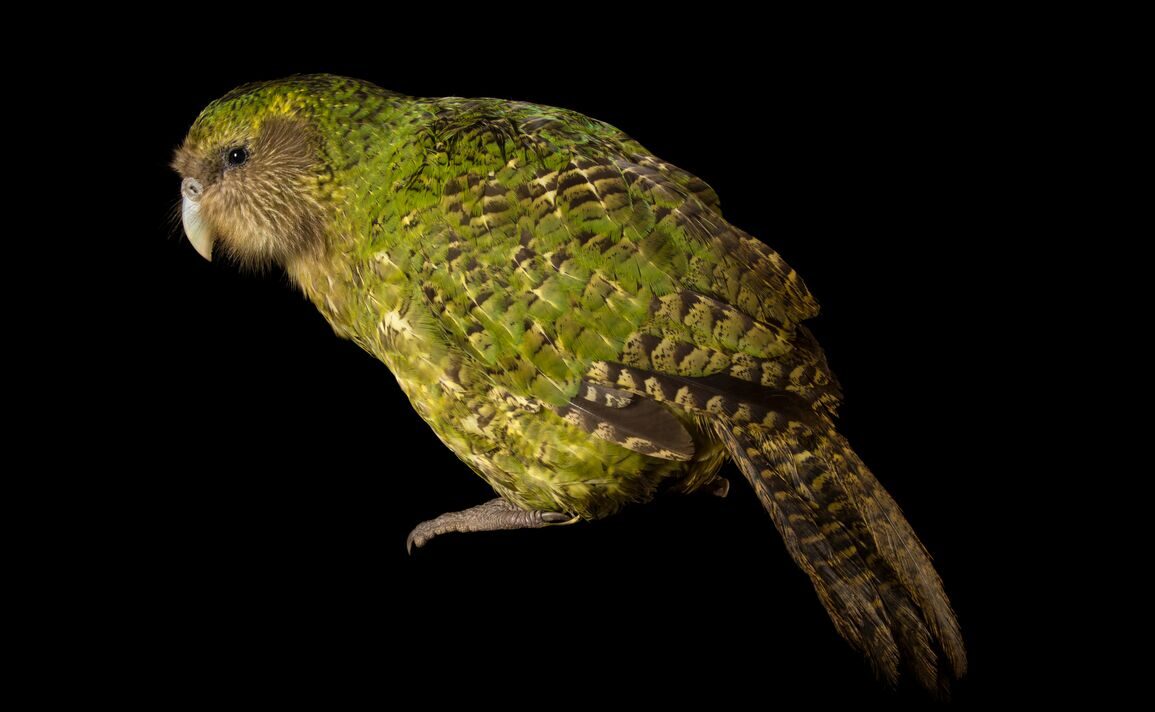
The Kākāpō, with its beautiful mottled green-plumage, is a unique bird, often affectionately described as an odd bird because it defies so many avian characteristics. It’s the largest parrot species in the world and it is unable to fly, but can walk several kilometers at a time and is a very agile climber. They can climb up to 20 meters (65 feet) in trees. It’s also a long-lived bird; with an average lifespan of between 60 and 90 years old.
The Kākāpō is the only parrot species that breeds in leks, meaning males congregate during the summer and autumn months and compete for females by calling to them with booms and “ching”. After the breeding season, the males disperse because they don’t provide parental care, and females incubate the eggs and raise the chicks. Females nest on the ground either in natural cavities or under dense brush laying between one and four eggs, which they tend and regularly turn.
Since then, conservationists have relocated the remaining Kākāpō to predator-free islands off the coast of Rakiura (Stewart Island) and a conservation breeding program has been established to help recover this species.
At a glance
Taxa
Birds
Geography
New Zealand (Aotearoa)
Status
Critically Endangered
Habitat
Forest
Estimated Population
235
Threats
Non-native predators
Potential Recovery Actions
Removal of non-native predators, conservation breeding