At a Glance
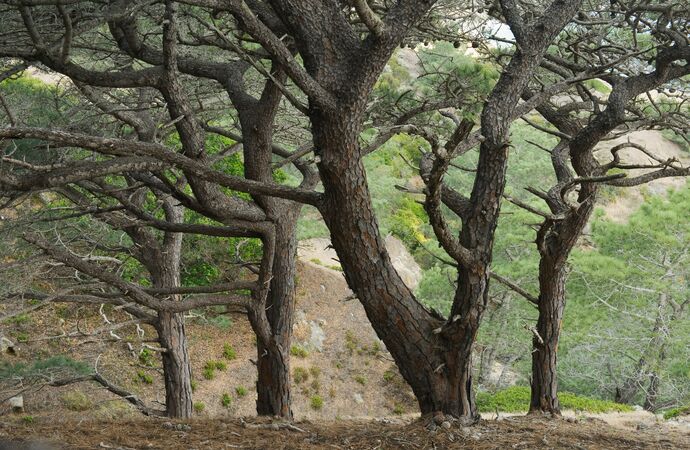
If you visit particular stretches of foggy southern California coast, you may spy the rarest native pine tree in North America — and possibly the world. The 40-foot-tall Torrey Pine is uniquely adapted to life on this dry, sandy coast, with long needles built to catch moisture from the fog.
The tree has two subspecies: one on the mainland, limited to a tiny coastal area in San Diego, and the other on Santa Rosa Island, which is among the five islands included within Channel Islands National Park. It is unclear exactly how the trees arrived on Santa Rosa or how long they have been there. If humans (intentionally or not) brought them to the island, they have been there less than 13,000 years. If, however, the seeds were brought by birds, or pinecones floated over from the mainland, it’s possible the species has been there much longer. However they arrived on the island, the Torrey Pines on Santa Rosa look a little different than the trees on the mainland. They are wider, shorter and bushier than the mainland pines, and have blue-grey needles. Recent research also suggests they have developed distinct traits that help them survive in their local environment.
Due to the Torrey Pine’s unique ecological niche, it’s unlikely that it was ever widespread along the California coast, but its range has undoubtedly shrunk over time. Urban development, drought and pests such as bark beetles all threaten the future of the tree’s remaining groves. For example, in the late 1980s, a drought led to an uptick in five-spined engraver beetles, which by the early 1990s had killed 12-15% of the trees in Torrey Pines State Natural Reserve, the protected area where the remaining mainland trees can be found. Several decades later, during the 2010s, another 15% of the pines died in an extended drought that drove a boom in the beetle population. Non-native ungulates were removed–a long process that ended in 2011 when the last sheep and cattle were shipped off the island and small ungulates were removed. However, given the species’ dependence on such small areas of intact habitat for survival, these trees need all the help they can get to ensure their future
At a glance
Taxa
Plants
Geography
United States
Status
Critically Endangered
Habitat
Dry, windswept coastal bluffs and canyons
Estimated Population
4,500 trees
Threats
Climate change; pests; fires and urbanization
Potential Recovery Actions
Planting and monitoring seedlings