At a Glance
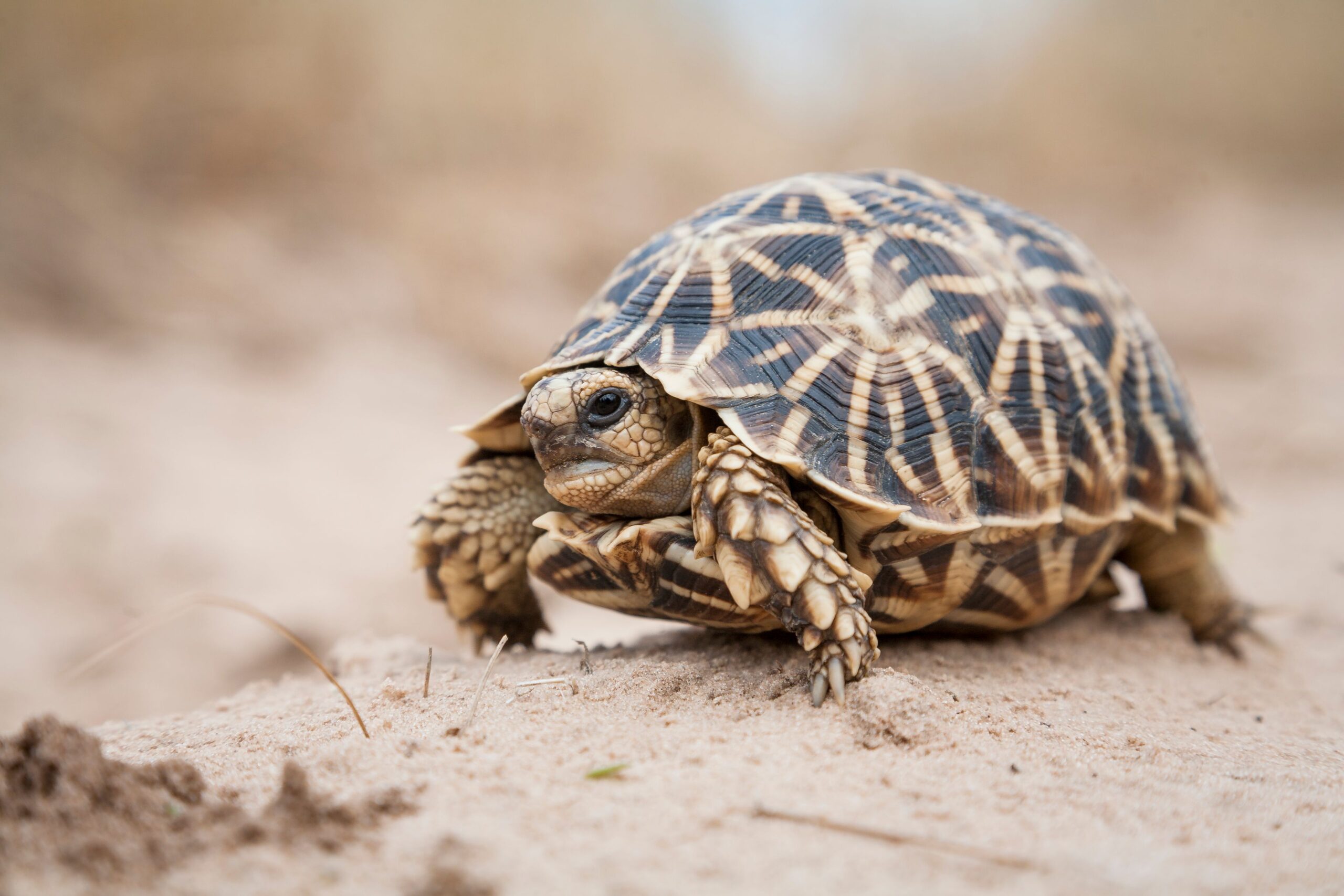
Talk about a pretty face – well, carapace. Fully grown at only six inches long, the Geometric Tortoise is one of the world’s rarest tortoise species, though it’s worth noting that the striking black-and-yellow pattern of their shell is about something other than good looks. It helps the Geometric Tortoise hide from predators in the dense shrub land of South Africa’s Western Cape, the only place in the world where this tortoise is found. Unfortunately, this tortoise’s striking shell also makes it a target of the exotic pet trade, one of the threats to their survival in the wild. More than 90% of the Geometric Tortoise’s natural habitat has been destroyed for agriculture and urban development. This sensitive landscape is further threatened by human-caused wildfires and invasive plant species, which compete with and choke out the local plantlife the tortoises depend on. Today, scientists estimate there are only 800 individuals of the species left in the wild. The Geometric Tortoise is protected under Schedule I of the Convention on the International Trade in Endangered Species of Wild Fauna and Flora (CITES), and under the Nature Conservation Ordinance of the Western Cape Province. Conservationists and researchers are working to protect the Geometric Tortoise through habitat protection and restoration, scientific monitoring, and public education. Efforts to conserve habitat include the removal of invasive species, and wildfire management. In 2015, a cohort of conservation organizations came together to create the Geometric Tortoise Preserve, which encompasses 898 acres (363 hectares) of invaluable habitat to safeguard 80% of the tortoise’s remaining population. One of the most incredible outcomes of protecting land in this way, for the initial benefit of a flagship species like the Geometric Tortoise, is that it protects habitat for many other vulnerable and endangered species—such as Black Rhinoceros, Leopards, and Marital Eagles, among others.
At a glance
Taxa
Reptiles
Geography
Western Cape Province, South Africa
Status
Critically Endangered
Habitat
Lowland renosterveld and fynbos vegetation
Estimated Population
Unknown
Threats
Habitat loss and degradation, including from cattle ranching and agriculture; trampling
Potential Recovery Actions
Habitat protection and management, conservation of remaining habitat fragments, monitoring of populations