At a Glance
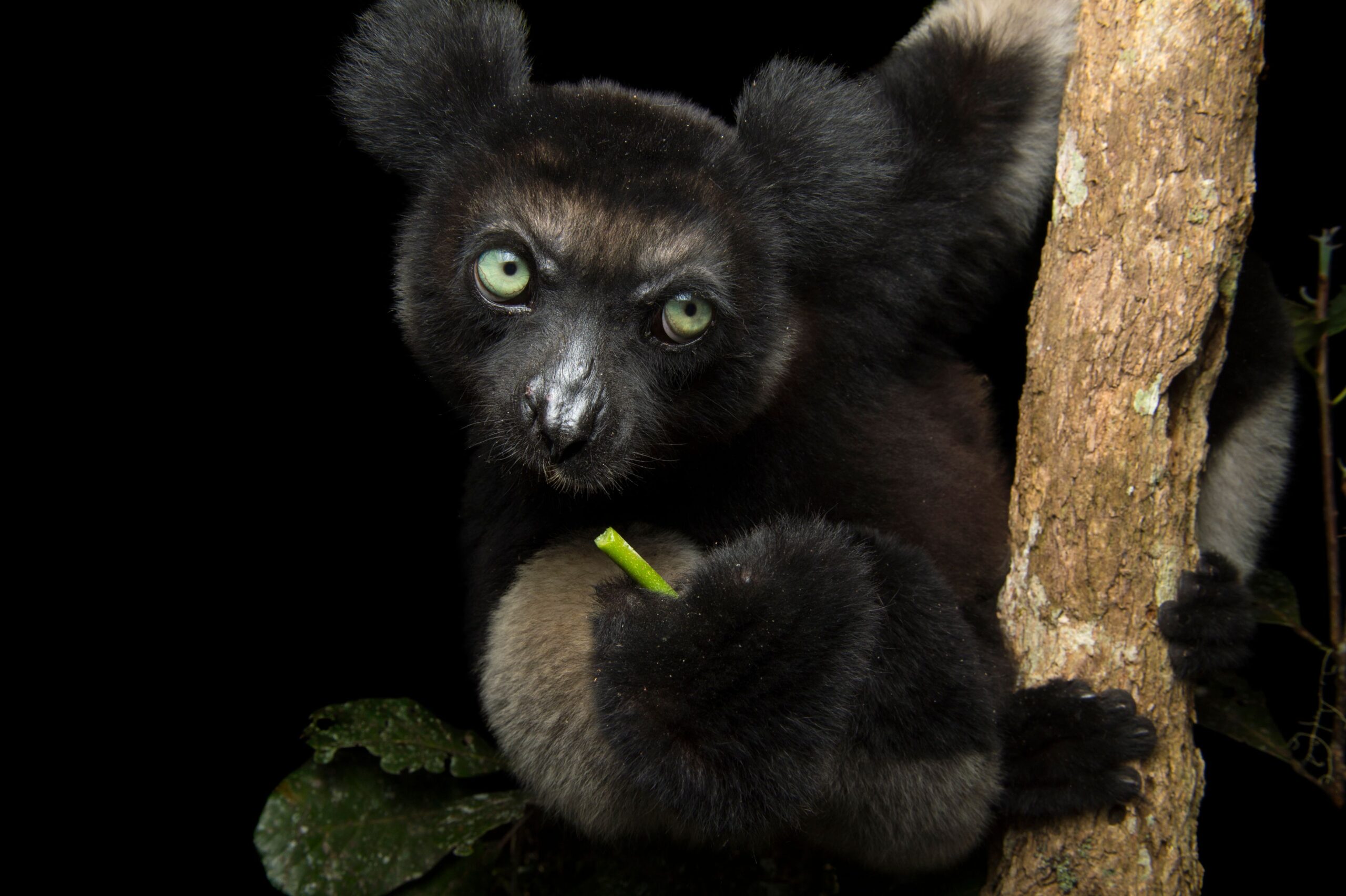
In the remaining rainforests of northeastern Madagascar, families of Indris establish their territory by singing. These vocalizations have been described as “haunting” and “whale-like” (for good reason — you can listen here), and can be heard as far as two kilometers (more than 1 mile) away. In the morning when one group starts up their song, a neighboring group often responds, making their presence known, claiming their patch of the rainforest for another day.
The Indri is the largest living lemur and the only lemur with a very short tail. Highly social animals that live in small family groups, Indris are monogamous: they form mate-bonds for life, and live together with their offspring. Indris spend nearly their entire lives in the forest canopy, moving through the trees with powerful leaps that cover impressive distances.Their diet consists mainly of leaves, although they also eat flowers, fruit, and seeds depending on the season. The greatest threat to their survival? As with so many of the species on the Phoenix 100 list, it’s habitat loss. More than 90% of Madagascar’s original rainforests have been cleared for agriculture, logging, charcoal production, and other forms of encroaching development. For generations, traditional taboos protected the Indri against hunting in parts of the species’ range — in more recent years, researchers have noted that the power of these taboos to protect the Indri is waning. This species is increasingly killed for its meat and skin. The Indri is one of the world’s most endangered primates. They are listed on CITES Appendix I, which protects the Indri against the illegal wildlife trade under international law. At the local level, conservation efforts revolve around protecting Indri habitat through national parks, community-managed reserves, and forest restoration projects; part of this work includes increasing local awareness of the importance of lemur conservation, as well as pride in the unique wildlife Madagascar has to offer.
At a glance
Taxa
Mammals
Geography
Madagascar
Status
Critically Endangered
Habitat
Tropical moist lowland and montane forests
Estimated Population
Unknown
Threats
Habitat destruction; logging; fuelwood collection; illegal hunting; genetic isolation from fragmentation
Potential Recovery Actions
Population surveys; habitat protection; restoration; awareness raising; sustainable livelihood development