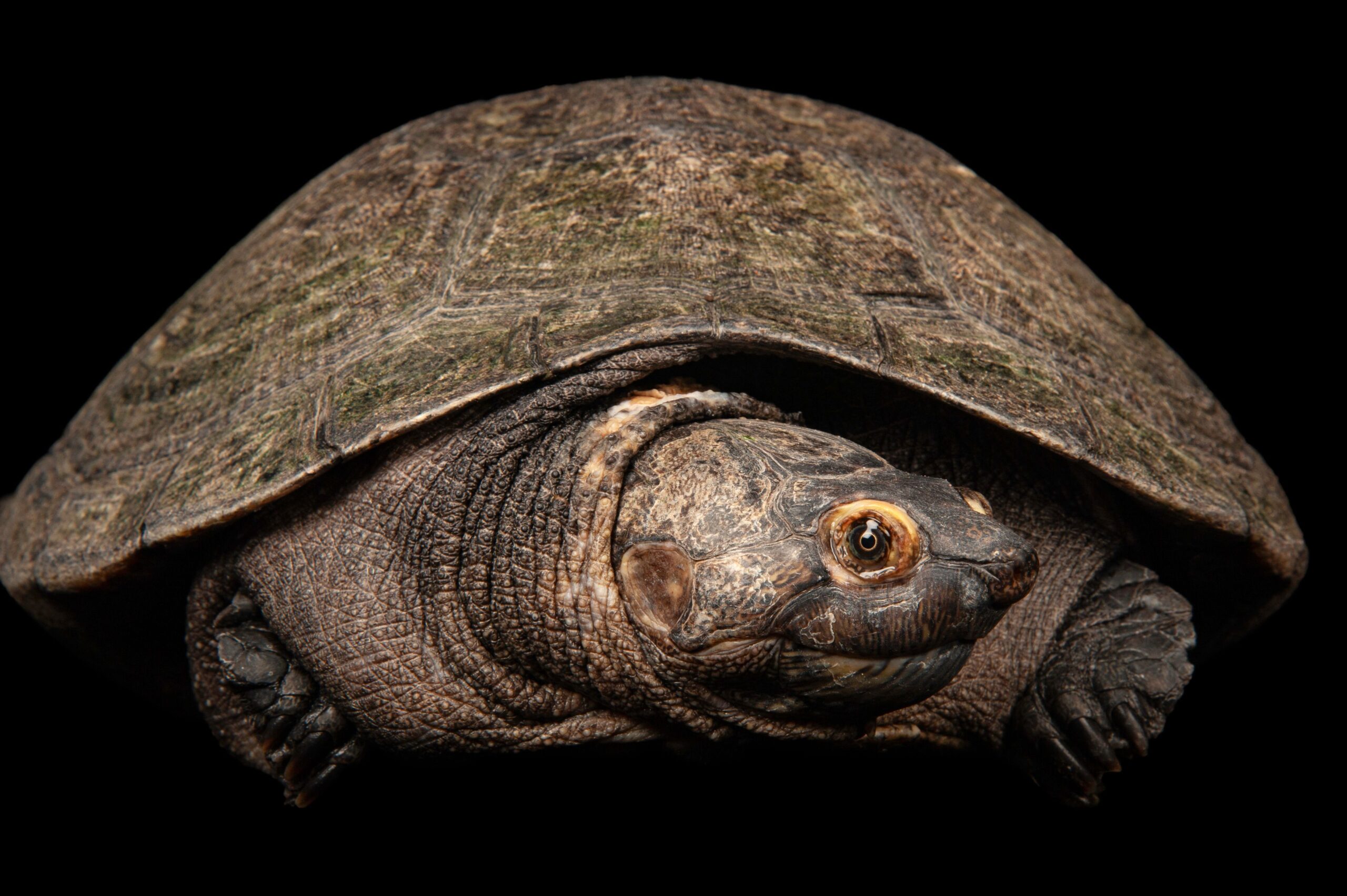
This turtle isn’t full of itself, it has an unusually large head that is so big that the turtle cannot fully retract it into its shell. Instead, it bends its head sideways to fit into its shell. It lives in wetlands in Madagascar and spends most of its life in the water. Females do venture out of the wetlands to lay clutches of eggs between September and January, though they nest every other year instead of annually.
Adult Madagascan Big-headed Turtles mostly eat molluscs, plants, fruit and flowers. Juveniles eat aquatic invertebrates. When the juvenile turtles hatch they typically move to shallow bodies of water and then relocate to wetlands after they have matured.
The biggest threat to Madagascan Big-headed Turtles is being hunted for food by local communities and getting caught in fishing nets. The wetlands where they live are also being converted into agricultural fields, like rice paddies. Several conservation organizations are helping protect turtle nests in the wild with local communities and helping the species recover through a conservation breeding and headstart program.
At a glance
Taxa
Reptiles
Geography
Madagascar
Status
Critically Endangered
Habitat
Wetlands
Estimated Population
10,000
Threats
Local exploitation for food; illegal trade; fishing bycatch; habitat fragmentation from agriculture and deforestation
Potential Recovery Actions
Global action plan; captive breeding; reintroduction; trade monitoring; rescue centers