Protecting a unique tortoise
Keeping the Ploughshare Tortoise safe in Madagascar
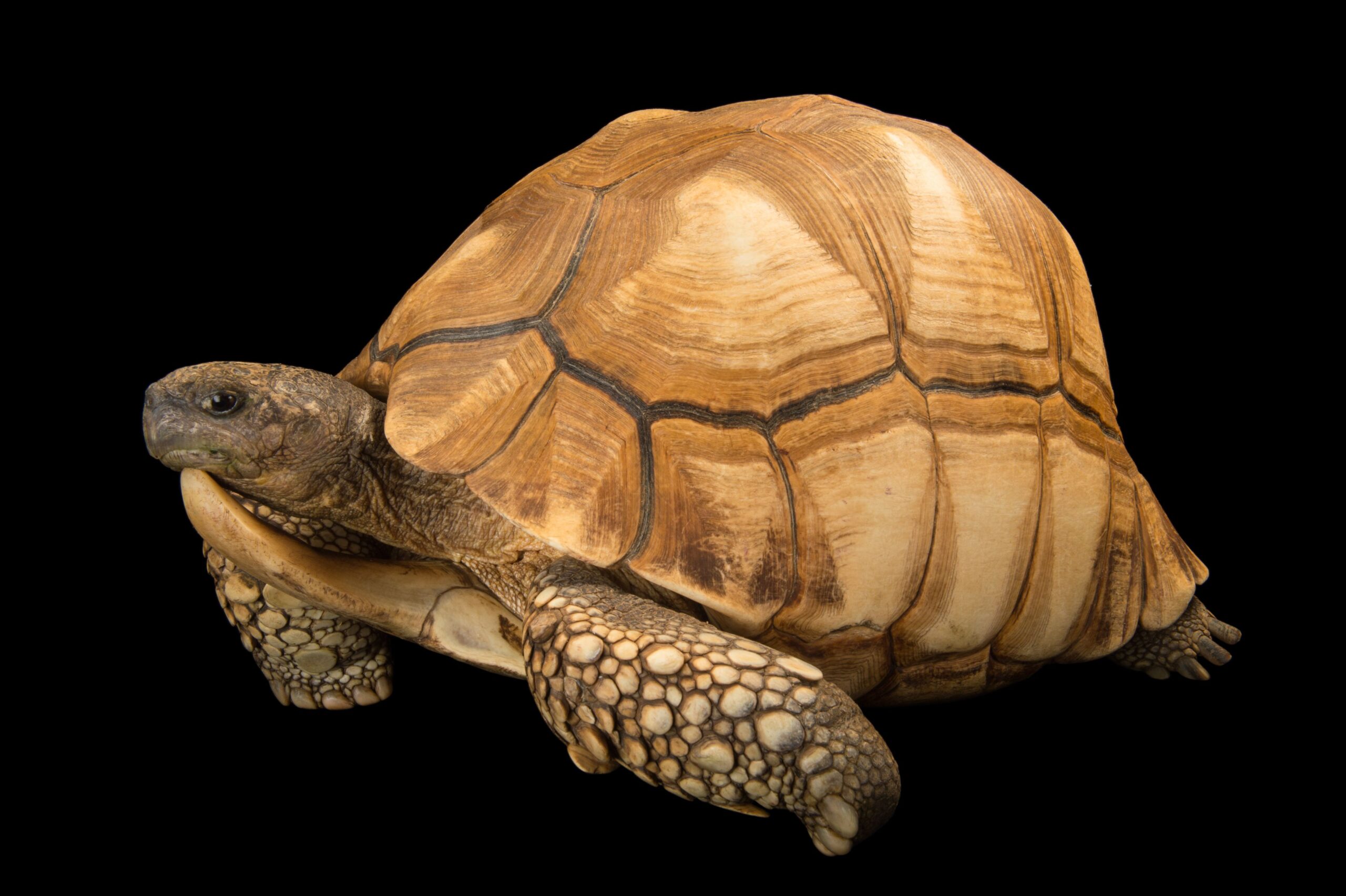
The Ploughshare Tortoise is the tortoise species most threatened with extinction in the world. It is only found in Madagascar, where it is locally called Angonoka. It has a high-domed carapace and its gular scute between the front legs give it a distinctive shape that looks like a plough. Males have larger gular scutes than females and will use them to fend off other males during breeding season. If a male gets his gular scute underneath another male he can use it to flip over his rival.
As a long-lived species, the Ploughshare Tortoise reproduces slowly. It doesn’t reach sexual maturity until it is at least 20-25 years old. Adult tortoises breed between January and late May, and females will excavate a nest, usually near a tree or log, and lay a clutch of between one and six eggs.
The Ploughshare Tortoise only lives in Madagascar’s Baly Bay National Park and scientists estimate that there are about 50-100 tortoises left in the wild.
The tortoises live in dry deciduous forests, rocky savanna and bamboo scrub that experience seasonal rains. In those habitats, the tortoises eat grasses, leaves and fruit.
The Ploughshare Tortoise population will rebound and begin to recover if its habitat is protected and effectively managed so it’s at less risk of being destroyed by human-caused fires. The population will increase if tortoises born in conservation breeding programs are released to the wild. And one of the most important recovery measures will be enforcing laws that make it illegal to collect the tortoises for the pet trade.
Fun Fact:
Ploughshare Tortoises are the gardeners of the dry forest, dispersing seeds through their droppings that grow into the next generation of native plants.
At a glance
Geography
Madagascar
Status
Critically Endangered
Habitat
Dry deciduous forests
Estimated Population
50-100
Threats
Illegal wildlife trade, human-caused fires
Potential recovery actions
Habitat management, conservation breeding, trade enforcement
At a Glance
The Crisis
Within Baly Bay National Park the tortoises live in isolated subpopulations. The subpopulations are separated by the Andranomavo River, two are to the east of it and three are to the west of it. However, even subpopulations that are on the same side of the river can’t reach each other to breed. The major threats to the species are human-caused fires to create pastures for cattle, and the illegal international pet trade.
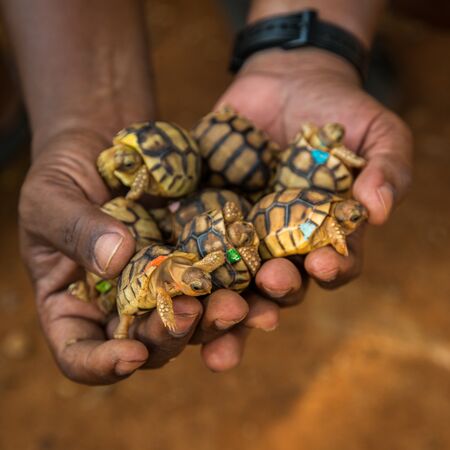
“The Ploughshare Tortoise is one of the rarest animals on Earth, with a near-mythical status in the animal world. For the last century, the species has survived only in a tiny part of northwestern Madagascar, an area smaller than 10 square miles. Coveted for its longevity, its striking golden domed shell, and its extreme value in the illegal wildlife trade, it was driven to functional extinction in the wild by 2017. In 2010, a small group of confiscated tortoises from Hong Kong and Taiwan came to the Turtle Conservancy in California, and after fifteen years, finally began breeding in 2025 – the start of an effort to bring the species home to Baly Bay.”
Eric Goode
Co-founder and CEO, Turtle Conservancy