At a Glance
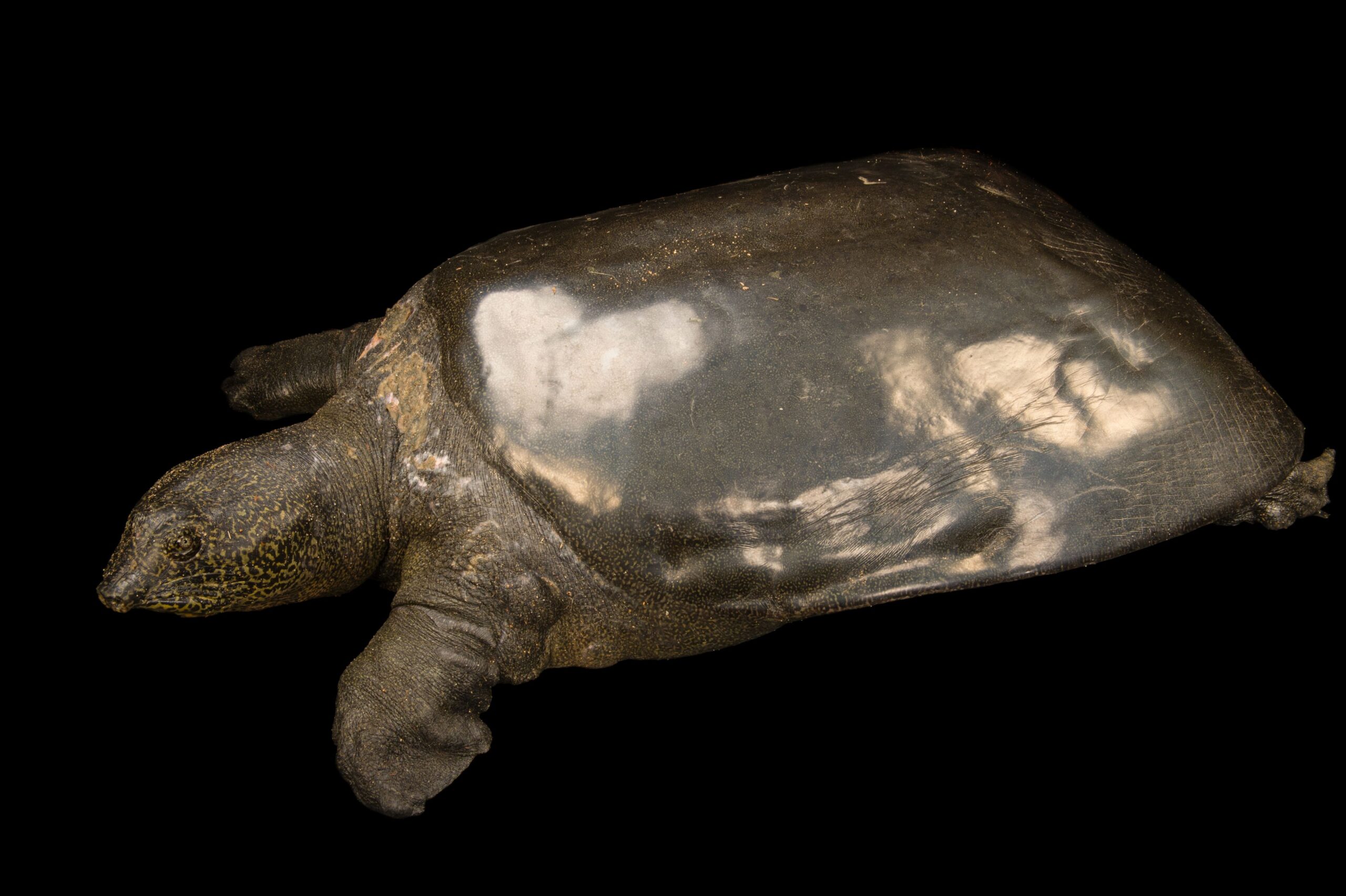
Swinhoe’s Softshell Turtle —also known as the Yangtze Giant Softshell Turtle— is so rare and so critically endangered that their current population status is surrounded in mystery. Scientists believe there could be three (or more) individuals still surviving in the wild, but the species is notoriously elusive, and it is unknown if any of the remaining turtles are female.
Considered one of the largest freshwater turtles in the world, adult Swinhoe’s Softshell Turtles can reach weights of up to 100 kilos (220 pounds). The species is recognizable for its long, pig-like snout and the position of its eyes on top of its head, which is somewhat unusual for freshwater turtles.
In the past, Swinhoe’s Softshell Turtle could be found across major river systems in southern China and northern Vietnam. This species has been driven to the edge of extinction by a long list of outside pressures. Much of their original habitat has been lost or altered to urbanization, agriculture, draining of wetlands, dam construction, sand mining that destroys nesting beaches, and much of the rivers they depend on are polluted. Swinhoe’s Softshell Turtle was also targeted by hunters (as a food source), which contributed to this species’ sharp population decline in the early 1990s.
But hope still remains for the Swinhoe’s Softshell Turtle, and conservationists haven’t given up on them. Scientists are using advanced tools like environmental DNA testing to detect any traces of the turtle in large water systems where they might still survive.
At a glance
Taxa
Reptiles
Geography
Vietnam; China
Status
Critically Endangered
Habitat
Rivers; freshwater wetlands
Estimated Population
Three known individuals in the wild
Threats
Extremely small fragmented population; hunting; wetland conversion and drainage; pollution; hydroelectric barrages; sand mining
Potential Recovery Actions
Consolidate isolated individuals; create suitable breeding sites