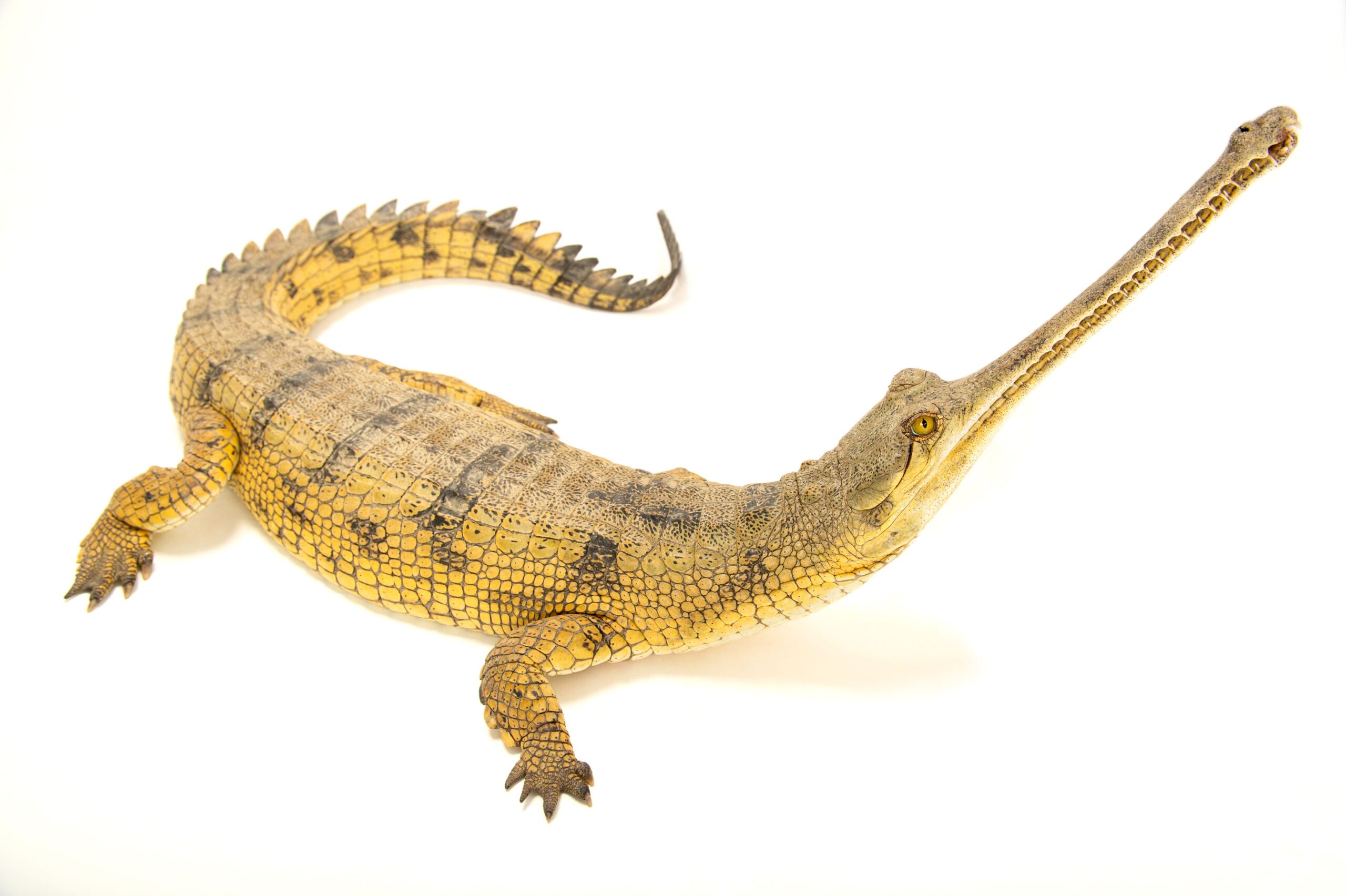
For most audiences unfamiliar with the wildlife of India, the word ‘crocodile’ is unlikely to conjure images of the Gharial—a crocodile native to major river systems across South Asia, distinctive for its long, narrow snout with rows of up to 110 sharp, interlocking teeth. Males develop a bulbous ghara on the snout used to make buzzing noises and attract females. Otherwise, the Gharial’s unique face almost gives it the appearance of a long-beaked waterbird, and for good reason: the Gharial’s jaw is perfectly adapted for catching fish, their primary food source.
The Gharial’s fish-dependent diet puts this species in direct competition with commercial fishing in the rivers they inhabit, depleting this crocodile’s food source, making it harder for them to hunt. And to survive. This one threat would be enough on its own to cause serious concern for the future of this species. Unfortunately, as is so often the case in stories about the conservation and protection of endangered species, the Gharial is under pressure from several other outside forces. One of the biggest threats to gharials is habitat loss caused by dams, irrigation projects, and the destruction of natural riverbanks. Sand mining removes the sandy nesting beaches females need to lay eggs, while pollution and overfishing reduce the healthy fish populations the reptiles depend on for survival. A little over a century ago, the Gharial was common and widespread across the northern river systems of northern India. Scientists don’t know the exact number of gharials alive then, but scientists estimate that, by the 1970s, Gharial populations saw a 96% decline across their traditional distribution range. Conservation organizations and wildlife agencies have worked for decades to prevent the extinction of the Gharial. Efforts to bring this species back from the brink of extinction include captive breeding and reintroduction programs. Conservationists also monitor nests, protect breeding habitat, and work with local communities to reduce harmful fishing practices. Although the species still faces many challenges, these efforts have given scientists hope that the gharial can survive in the wild for future generations.
At a glance
Taxa
Reptiles
Geography
India; Nepal; Bangladesh
Status
Critically Endangered
Habitat
Rivers
Estimated Population
300 to 900 individuals
Threats
Fishing nets; dams; water extraction
Potential Recovery Actions
Head-starting; conservation breeding; reintroduction