At a Glance
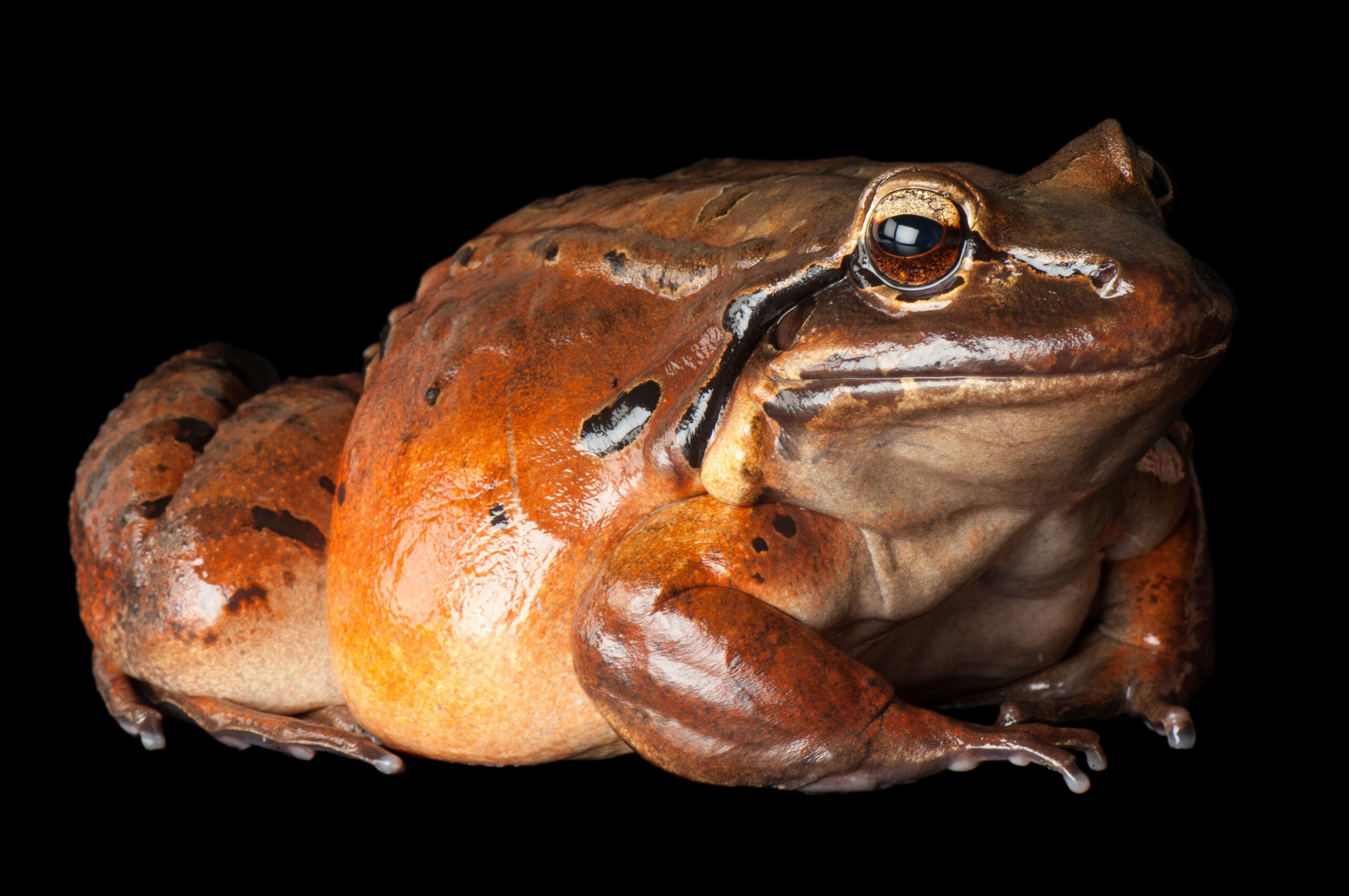
The Mountain Chicken is one of the largest frogs in the world. The species once lived on as many as eight islands across the Caribbean, but now there are only small subpopulations on Dominica and a semi-captive colony on Montserrat. Despite their common name, the large frogs live at fairly low elevations in dense forests and small-scale farms.
The Mountain Chicken can weigh up to one kilogram and is one of the original native apex predators in the Eastern Caribbean. The frogs eat insects, small mammals, snakes and other frogs. They are nocturnal and spend their days in burrows in the soil and leaf litter. Males attract females to burrows with loud yelps that can be heard a mile away. Females then lay their eggs in foam nests in burrows. Together, the parents will guard the eggs and when the tadpoles hatch, and the female revisits them regularly to feed them unfertilized eggs.
Until the mid 2000s, Mountain Chickens were still abundant on Montserrat and Dominica, despite being a delicacy and hunted in large numbers for centuries. Now that the species has been listed as Critically Endangered, hunting and eating the species has been banned on both islands. What caused their numbers to crash was the arrival of the chytrid fungus Batrachochytrium dendrobatidis, a pathogen that has spread around the world causing deadly disease in amphibians and is a threat to Mountain Chickens.
A conservation breeding program is working to help recover the Mountain Chickens on Montserrat, but the frogs’ lack of resistance to chytridiomycosis is hampering efforts to return them to the wild. Furthermore, significant areas of forest habitat have been lost to volcanic eruptions since the 1990s. Meanwhile on Dominica, as few as 30 individuals remain, scattered across several locations. While there are encouraging signs that these Dominican Mountain Chickens are resistant to the chytrid fungus to some extent, none of them are in protected areas. All of the frogs left in the wild face ongoing pressure from poachers, hurricanes, droughts and invasive alien predators.
At a glance
Taxa
Amphibians
Geography
Dominica; Montserrat
Status
Critically Endangered
Habitat
Tropical rainforest and small-scale farms at low elevations
Estimated Population
Fewer than 50 individuals
Threats
Habitat loss; poaching; chytrid fungus; invasive alien predators; climate change
Potential Recovery Actions
Conservation breeding; reintroduction; habitat protection; biosecure sanctuaries