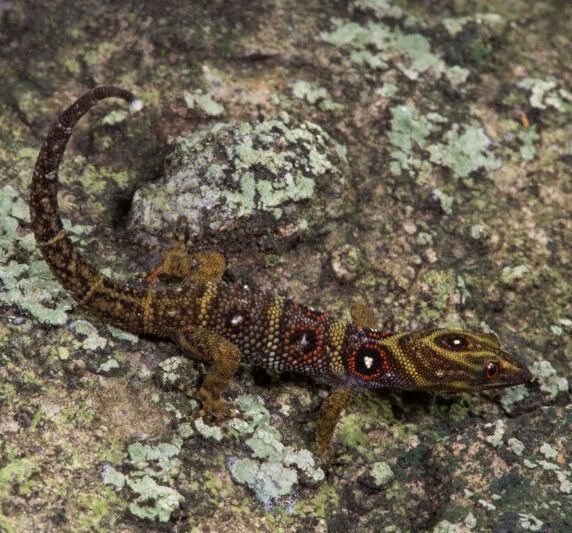
The Union Island Gecko lives small! With a known range of considerably less than one square kilometer of one island in the Caribbean nation of St. Vincent and the Grenadines, this gecko’s future depends largely on what happens within one plot of land. Officially described by scientists in 2005, the paperclip-sized lizard was historically insulated from many threats because its little plot of rocky and mountainous paradise was largely inaccessible. However, the gecko’s distinctive jewel-like markings have spurred poaching for the international pet trade (particularly in Europe and United States), and a road built nearby has made it easier for poachers to reach. As would-be collectors search for geckos, they damage the habitat that the species needs to survive. Poaching for the pet trade caused the species’ number to decline by 80% between 2011 and 2016.
In 2019, at the request of the Government of St. Vincent & the Grenadines, the Convention on International Trade in Endangered Species (CITES) added the Union Island Gecko to its Appendix I list, providing it with the highest level of protection under the international agreement. This, coupled with a suite of anti-poaching surveillance measures led by the local community and the Forestry Department, have largely put a stop to the illegal trafficking of wild-caught Union Island Geckos.
The gecko population had started to rebound, but unfortunately suffered another major setback when Hurricane Beryl struck Union Island in 2024, destroying as much as 80% of trees and almost every home on the island. The hurricane, in turn, has triggered an explosion in populations of invasive non-native species and increased the risk from wild fires. Urgent efforts are underway to protect and restore the remaining habitat of this iconic lizard and the many other rare and unique species that share its forest.
At a glance
Taxa
Reptiles
Geography
St. Vincent and the Grenadines
Status
Critically Endangered
Habitat
Old growth, dry forest
Estimated Population
Unknown
Threats
Poaching; invasive species; and habitat destruction from hurricanes, goats, fires and development
Potential Recovery Actions
Stop illegal pet trade; prevent wild fires; remove invasive non-native plants