Caribbean | Reptiles

Saint Lucia Racer

Erythrolamprus ornatus

Photo credit: Jeremy Holden/Fauna & Flora
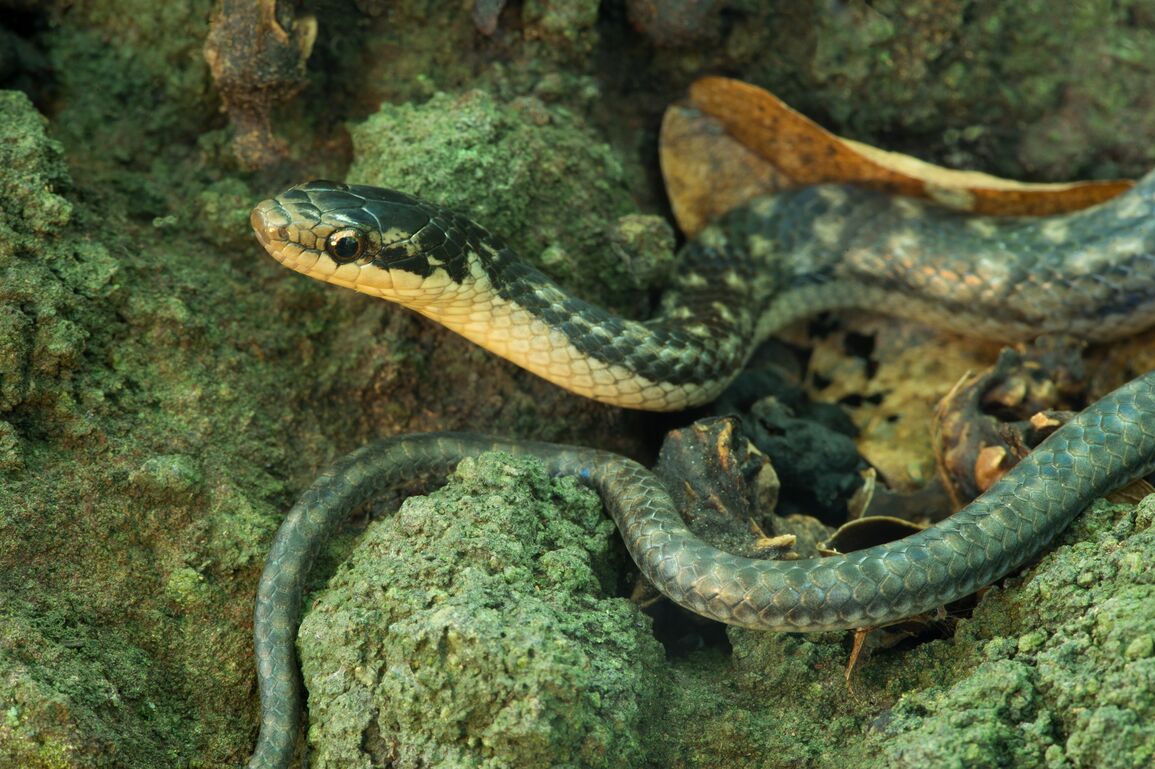
The Saint Lucia Racer is the current record holder for (probably) being the world’s rarest snake — a title that, actually, conservationists hope they will not always have to carry. The species was first presumed extinct in 1936, until the discovery of a single racer on a tiny offshore island almost forty years later in 1973. It vanished from the scientific record again shortly afterwards, only to be rediscovered once more in 2012, on that same tiny offshore island: Maria Major.

Maria Major is just one kilometer from the coast of Saint Lucia, the Caribbean country after which this racer is named and where they were once widespread. Today, scientists believe fewer than 50 snakes survive on the island. It is the only place in the world they are found. 

What drove the Saint Lucia Racer to the brink of extinction? The Saint Lucia Racer was devastated by the introduction of non-native species. This harmless snake is a ground-dweller; the species evolved without natural predators, and had no adaptations it could use to defend itself. When European colonizers brought rats and mongooses to Saint Lucia, the racer was nearly wiped out. 

Today, Maria Major is a nature reserve called Maria Islands Nature Reserve. The snake is protected under national law. Local authorities and conservation organizations working in the Caribbean hope to replicate the success of efforts to conserve the Antiguan Racer (another Phoenix 100 species) in Antigua and Barbuda by increasing the Saint Lucia Racer’s population to at least 500 individuals. To accomplish this, a new predator-free sanctuary will be established on Saint Lucia to which the racers can be reintroduced.

Taxa

Reptiles

Geography

Saint Lucia

Status

Critically Endangered

Habitat

Tropical dry forest

Estimated Population

Fewer than 50 individuals

Threats

Invasive species; extremely small habitat area; wildfires; inbreeding

Potential Recovery Actions

Habitat protection and restoration; invasive species control; captive breeding; reintroduction

You may also be interested in

Union Island Gecko

Ekman’s Magnolia

Portland Ridge Frog