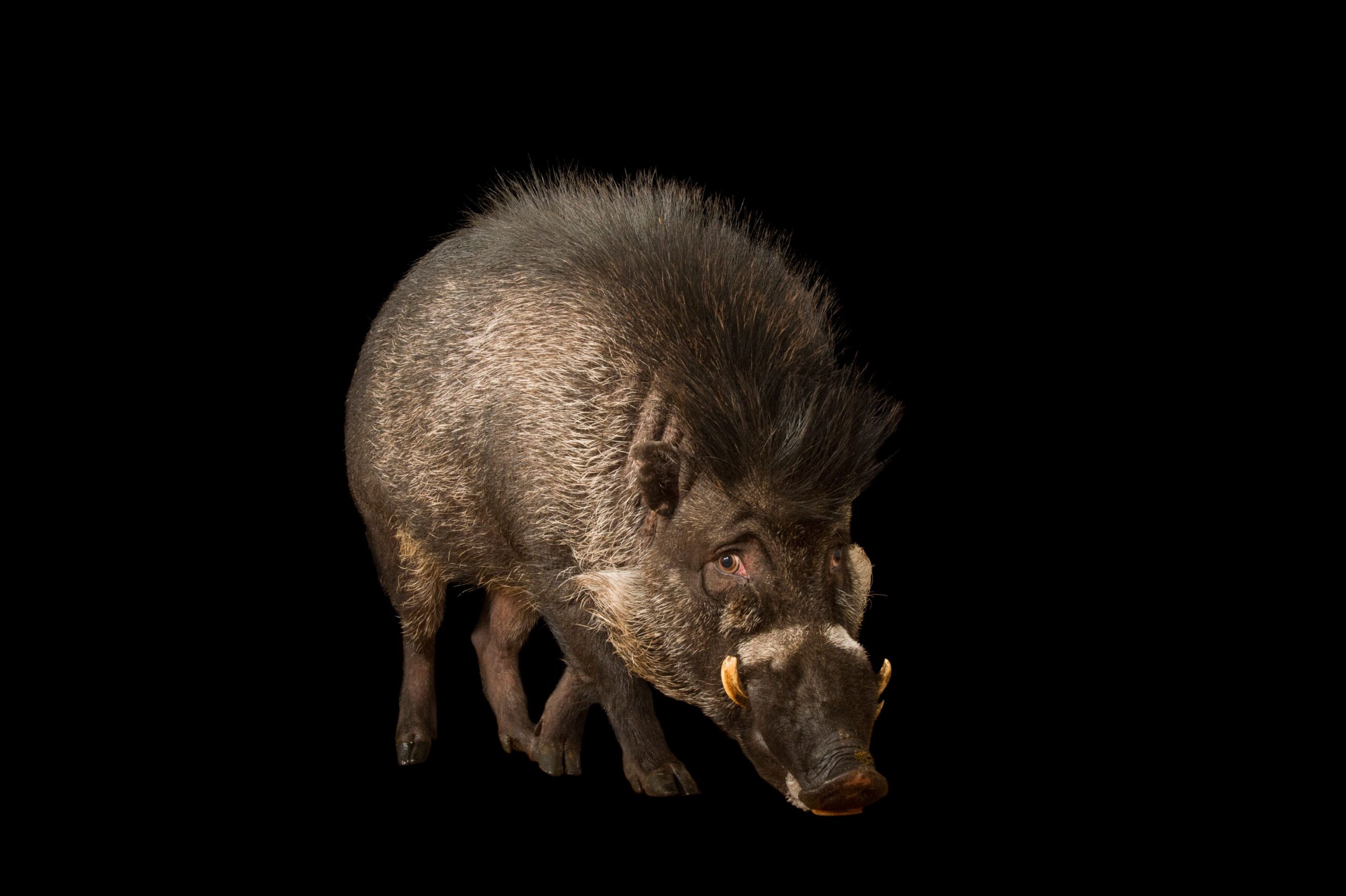
Visayan Warty Pigs look like punk-rockers of the animal world with dark faces with a white band of fur across their snouts, and manes that verge on extreme mohawks, reaching up to nine inches long during breeding season. During the breeding season, males have three pairs of distinctive wart-like facial growths that scientists think help protect their faces during fights with rivals. Scientists believe that the warts help protect the males from sticks and pokes from their rivals’ large tusks.
The species is native to the tropical forests of the Philippines, but much of their original habitat, approximately 95%, has been destroyed for logging and slash-and-burn agriculture. In the wild the Visayan Warty Pig only survives in small and fragmented patches of habitat on two islands, Panay and Negros. It’s hunted both for meat and in retaliation for raiding crops and is also at risk from hybridizing with domesticated pigs.
The Visayan Warty Pig is not a picky eater, rooting through soil to search for food ranging from fruits, roots, tubers to small animals. In their search for all and any food, they aerate the soil in forests and disperse seeds.
The species is legally protected in the Philippines, but the laws created to help the species are not effectively enforced in many areas where the species still exists.
At a glance
Taxa
Mammals
Geography
Philippines
Status
Critically Endangered
Habitat
Tropical rainforest
Estimated Population
Unknown
Threats
Hunting, small and fragmented populations, habitat destruction, hybridization with domestic pigs
Potential Recovery Actions
Strengthen protection in key areas, conservation breeding and reintroduction