At a Glance
Recovering Rhina
Translocating the bowmouth guitarfish to a global hotspot for sharks and rays
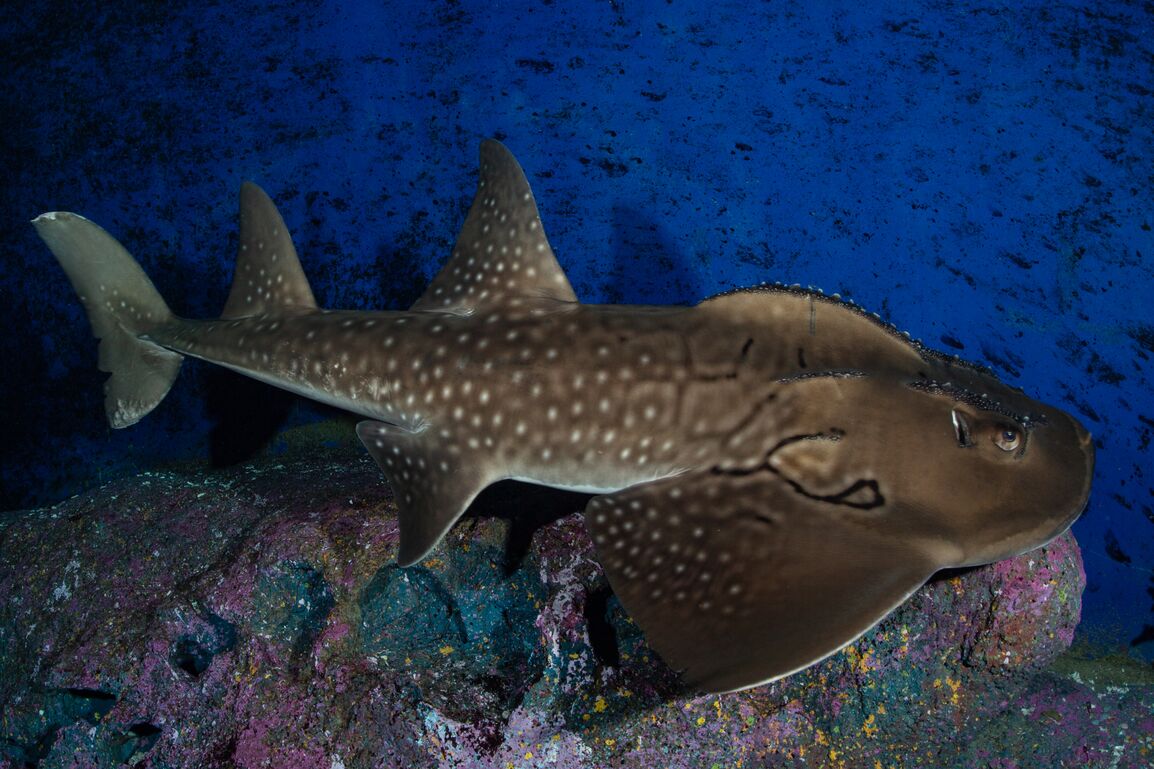
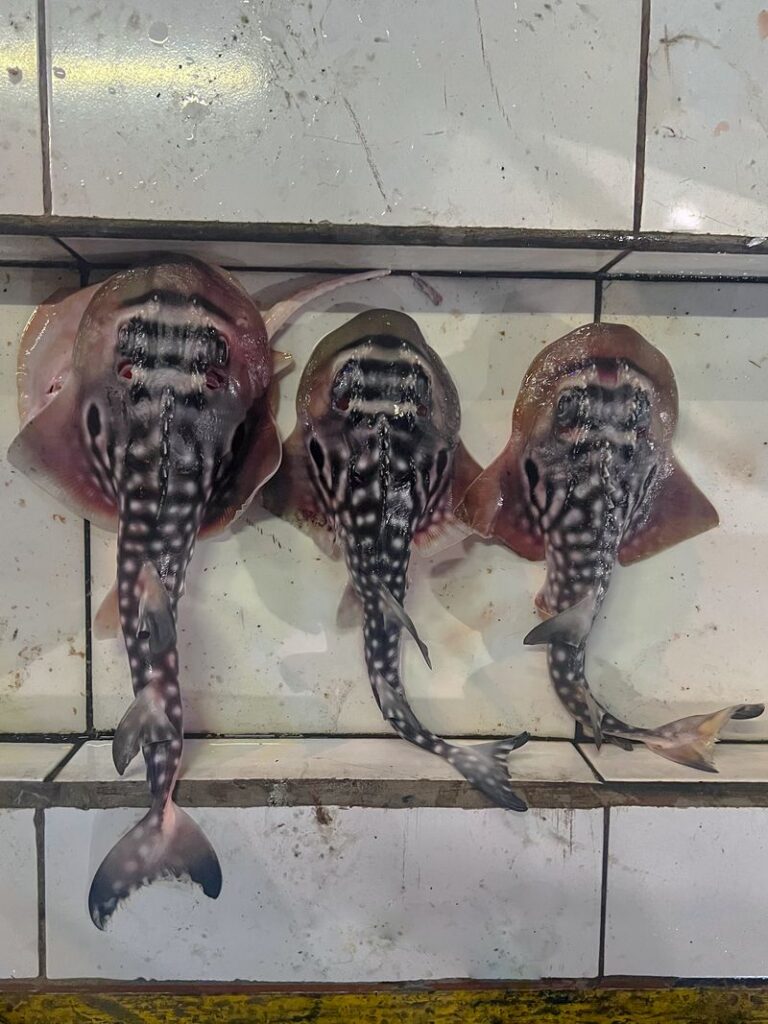
For millions of years, the Bowmouth Guitarfish has basked in the shallow coastal waters across a large swath of the Indian and western Pacific oceans, using its specially adapted flattened teeth to eat mollusks and crustaceans. Reaching up to nearly 9 feet (2.7 meters) in length (with some sources reporting individuals reaching 10 feet), the large fish resembles a shark, but in fact it is a type of ray. Among other differences, rays have gills on the underside of their bodies, while sharks have gills on their sides.
Though generally considered a coastal, shallow-water species, Bowmouth Guitarfish have occasionally been documented far offshore. A recent study found 37 reports of the species from large commercial fishing vessels catching schools of tuna in open waters over seafloor deeper than 6,550 feet (2,000 meters).
Scientists have had trouble assessing the Bowmouth Guitarfish’s conservation status because of a lack of species-specific data for a fish that can be found across such a wide range of places, from Japan to New Caledonia to the Middle East. However, they estimate that the species’ numbers have plummeted more than 80% over the last 45 years. Because Bowmouth Guitarfish mature late and reproduce slowly, it takes roughly 15 years for a new generation to emerge, making population recovery a slow process.
One potential beacon of hope is off the coast of Australia, where turtle excluder devices — which can be attached to fishing nets to allow sea turtles and other non-targeted species to escape fishing nets and avoid being caught as bycatch — have reduced bycatch of rays by 94%, and limits on rays’ catch and retention appear to be reducing the fin trade. In July 2026, ReShark announced its second affiliate project, Shark Ray 360, which is focused exclusively on conservation of the Bowmouth Guitarfish.
Fun Fact:
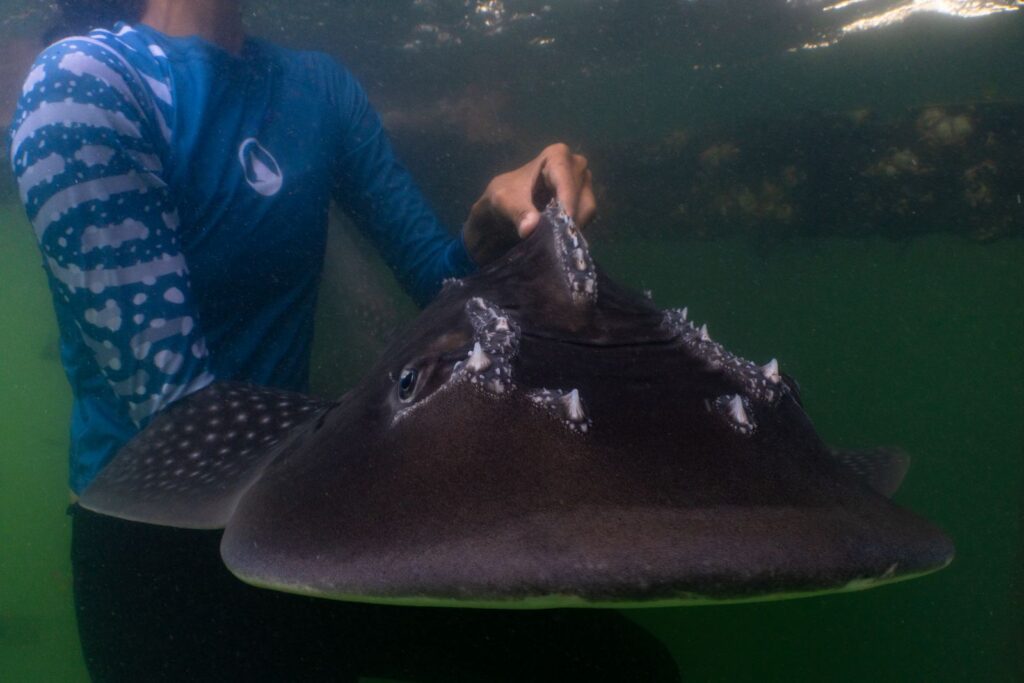
Though it looks like a shark, the Bowmouth Guitarfish is actually a type of rhino ray, and is often called “shark ray.” Bowmouth Guitarfish have several prominent ridges of calcified thorns on their head, giving them the appearance of an underwater Triceratops.
At a glance
Geography
Broadly distributed in the Indo-West Pacific, from the Red Sea, Arabian Sea and South Africa eastwards to Papua New Guinea and New Caledonia, and northwards to Japan
Status
Critically Endangered
Habitat
Coastal soft bottom ecosystems, often adjacent to coral reefs
Estimated Population
Unknown
Threats
Intensive fishing pressure that results in their capture, both as bycatch and as targets for their fins and meat
At a Glance
The Crisis
The species faces many threats globally, including habitat destruction and pollution, and the rays are often caught as bycatch by fishers, damaging nets with their spiky heads. But the biggest threat is the one that also kills about 100 million sharks a year: the fin trade. The fins of shark-like rays such as the Bowmouth Guitarfish are among the most prized for consumption, and thus the most expensive. Scientists estimate that the species’ numbers have plummeted more than 80% over the last 45 years. Because Bowmouth Guitarfish mature late and reproduce slowly, it takes roughly 15 years for a new generation to emerge, making population recovery a slow process.
The Phoenix Recovery Plan
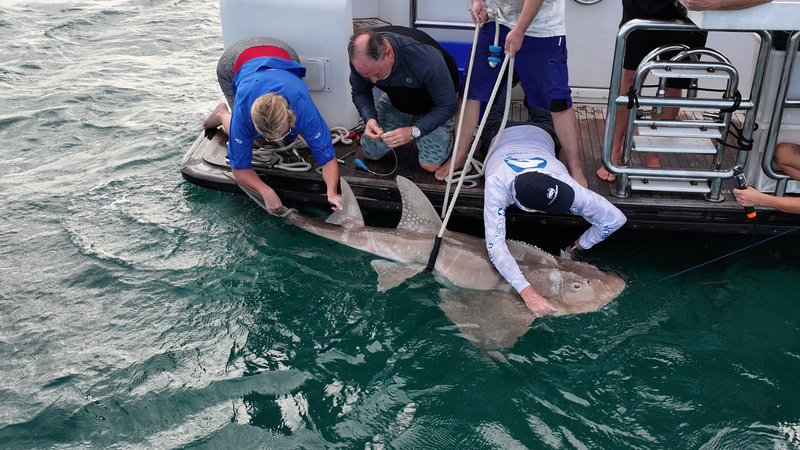
ReShark will galvanize partners around the world, including aquariums, local communities and government ministries to support conservation translocations of Bowmouth Guitarfish to the wild in Indonesia. They plan to learn more about the species’ diet, care under humans, and survivorship of guitarfish translocated to the wild. Each year, ReShark plans to translocate about 5-10 Bowmouth Guitarfish pups to the wild, slowly building a self-sustaining population that is able to expand the species range.
Partner Spotlight
The ReShark initiative was launched in early 2020 with an initial focus on recovering the endangered Indo-Pacific Leopard Shark (Stegostoma tigrinum) in Raja Ampat, Indonesia. The initiative has grown into a major international coalition of over 120 partners in 19 countries, including conservation NGOs, scientists and large public aquariums, as well as the Indonesian and Thai national and Raja Ampat and Phuket local governments.
“Not only would the recovery of the Bowmouth Guitarfish signal hope for other threatened rays, but it would also demonstrate humanity’s ability to reverse extinction even in the face of ongoing exploitation. I have seen firsthand how ReShark’s first project on Indo-Pacific leopard sharks in Raja Ampat created a domino effect, inspiring further conservation action both locally and across other countries. I am hopeful that bringing the Bowmouth Guitarfish into ReShark will empower our global coalition of the willing to amplify our impact on shark and ray conservation worldwide.”
Nesha Ichida
Marine conservation scientist, Thrive Conservation