At a Glance
A rodent recovery
Growing the Bahamian Hutia population and protecting it from non-native predators
Imagine you’re a biologist visiting an isolated, uninhabited island in The Bahamas in the middle of the 20th century. Historical records suggest this island could be the last refuge for a species believed to be extinct—a species that has not been observed anywhere in the wild for more than 60 years (at least). You arrive with little more than an intrepid team of scientists, and a notebook and pen in your pocket for recording data. Imagine what you might feel when you learn the rumors were true: against all odds, on this tiny island, the species survives.
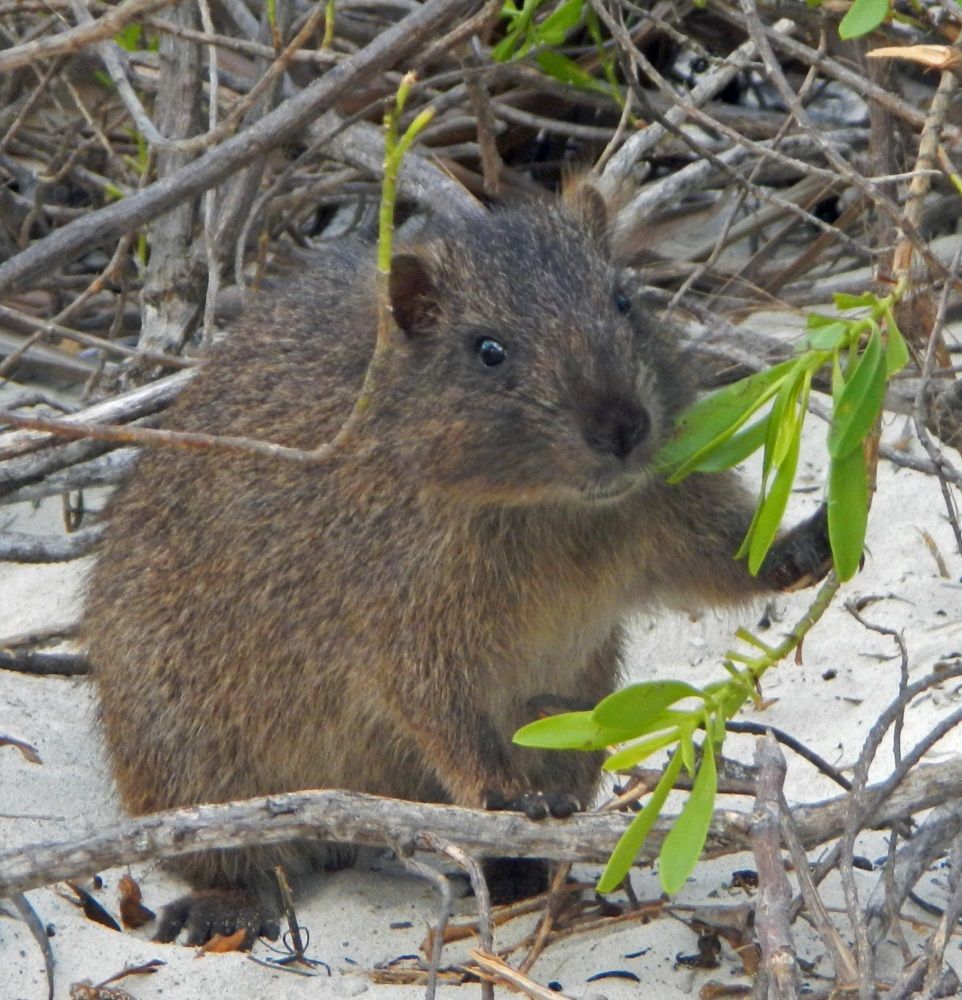
The above is a fictionalized version of the true story of the rediscovery of the Bahamian Hutia, which today is one of the only native land mammals left in The Bahamas. This large rodent had almost completely vanished from the Bahamian archipelago when, in 1966, biologist Garrett Clough documented a surviving population of hutias on the tiny, remote island of East Plana Cay.
Bahamian Hutias are distant cousins of other rodents like Capybaras and Guinea Pigs, and are roughly rabbit-sized. Scientists believe their ancestors drifted to the Caribbean islands on rafts of vegetation more than 15 million years ago, after tropical storms swept them out to sea.
Fun Fact:
This rabbit-sized rodent doesn’t need fresh, free-standing water. It gets its hydration from the succulent plants it eats.
At a glance
Geography
Antigua and Barbuda
Status
Critically Endangered
Habitat
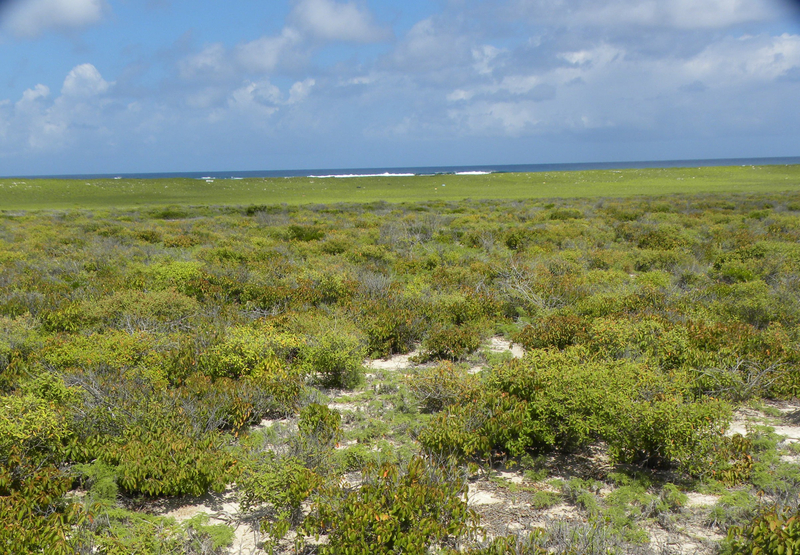
Coastal woodland
Estimated Population
680 individuals
Threats
Invasive species; development for tourism
Possible Recovery Actions
Invasive species control; habitat protection; reintroduction to suitable sites
At a Glance
at a glance
The Crisis
On the islands, Bahamian Hutias evolved without other larger animals, leading them to lose their fear of predatory mammals. This made them extremely vulnerable to hunting and the eventual introduction of non-native species like cats and rats after the arrival of European colonizers. This endearing little animal is still on a knife-edge, however, as it is restricted to tiny islets that face increasing pressures. These comprise less than 0.2% of the hutia’s original, wide distribution range across the Great Bahama Bank.
The species had survived on East Plana Cay, but conservationists knew the Bahamian Hutia might be only one hurricane or disease outbreak away from actual extinction. So they reintroduced some of the East Plana Cay hutias to a couple of other protected islands in The Bahamas.
“I’m incredibly excited that the Bahamian Hutia has been selected for the Phoenix Species Project. My hope is that this marks the beginning of a new era for the species, one where it not only recovers, but thrives, and is celebrated as a unique and irreplaceable part of The Bahamas’ natural heritage.”
Falon Cartwright
Executive director, Bahamas Endemic and Threatened Species Initiative