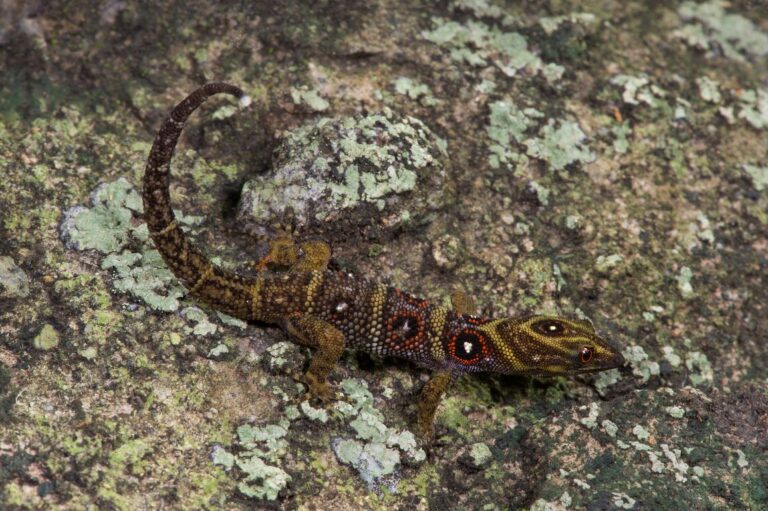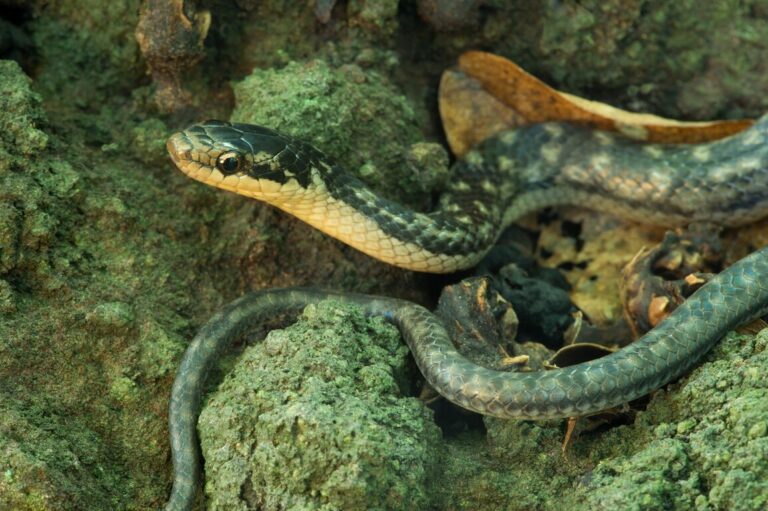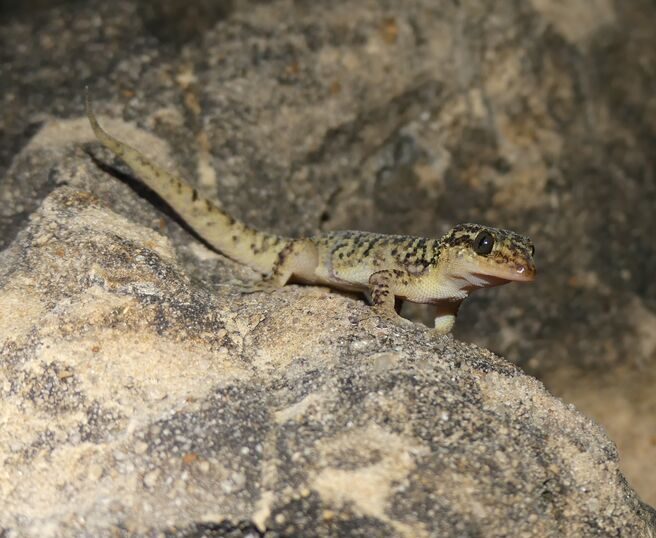
Extremely rare, blink and you might miss the Barbados Leaf-toed Gecko if you happen to be exploring cliffs on the Barbados coast at night. Obligatory disclaimer: for safety reasons, exploring ocean-side cliffs in the dark is not recommended, though this gecko’s rarity and nocturnal lifestyle makes it especially elusive to scientists. So elusive, in fact, that the Barbados Leaf-toed Gecko was believed to be extinct until as recently as 2011.
Although the gecko was a familiar sight to scientists in the 18th century, Barbados Leaf-toed Geckos waned as the island became increasingly developed. By the 1970s, many feared this species was extinct. In 2011, however, local explorers came across a handful of geckos during a nighttime field survey in rocky coastal habitat. Additional searches along the coast found scattered colonies across a total range of less than 18 hectares (44 acres). Like a few of the other species that the Phoenix Species Project is working to recover, the Barbados Leaf-toed Gecko is an example of a “Lazarus species”—a species incorrectly labelled as extinct, and later discovered alive, often in small numbers.
In the case of the Barbados Leaf-toed Gecko, non-native predators and competitors (including rats, cats, giant centipedes, cane toads, mongooses and both African and Asian House Geckos), habitat destruction from coastal development, and poaching for the illegal wildlife pet trade are among the biggest threats to their survival.
In 2021, many of the geckos starved as a direct result of ash falling from volcanic eruptions on the island of St Vincent, West of Barbados. Since the rediscovery of the species, scientists have documented a rapid decline in their numbers and distribution range. There is an urgent need to establish biosecure gecko sanctuaries that can be kept free from harmful invasive alien animals. At the community-level, there is an effort to increase local awareness and pride in the species on Barbados, and protect their dwindling coastal habitats.
The Barbados Leaf-toed Gecko is a creamy colored lizard with dark blotches and a striped tail. Every toe bears a white heart-shaped pad, which is a helpful way to distinguish this species from the non-native geckos on Barbados. By day, Barbados Leaf-toed Geckos avoid birds and the intense heat of the Caribbean sun by hiding deep inside limestone rocks and rocky crevices. The markings on their backs are unique to each individual, just like human fingerprints, and are used to help monitor their populations.
At a glance
Taxa
Reptiles
Geography
Barbados
Status
Critically Endangered
Habitat
Coastal cliff tops, coastal dry forest, rocky limestone
Estimated Population
Up to 4,000 adults
Threats
Invasive species; coastal development; illegal collection for the international pet trade; climate change
Potential Recovery Actions
Improved species and habitat protections, establish biosecure “mainland islands” and associated Biosecurity Management Plans