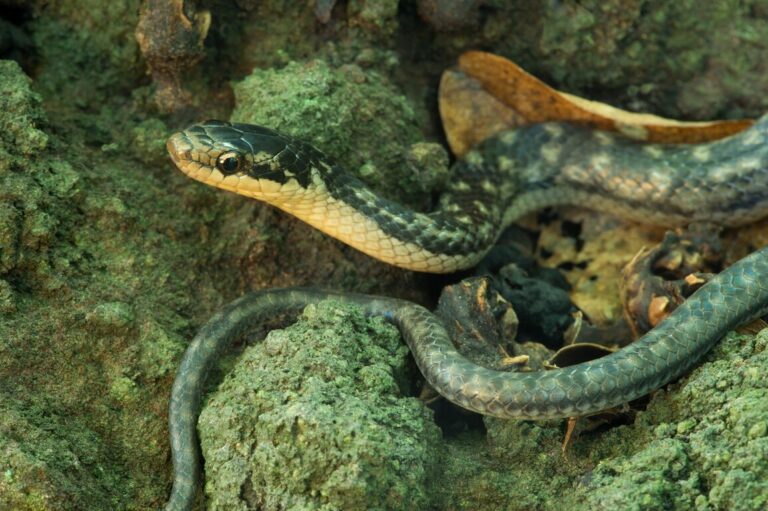
The Antiguan Racer’s conservation story is a saga that began several hundred years ago, with the arrival of European colonizers and the development of sugar plantations in the Caribbean. Foreign ships brought rats across the ocean to the islands of Antigua and Barbuda. Unchecked by any natural predators, rat populations across the archipelago skyrocketed, creating problems for both native species like the Antiguan Racer and plantation owners.
How did they try to fix the rat problem? By introducing yet another new predator to this ecosystem under pressure: the Asian Mongoose. Instead of eating the rats, the mongooses devastated populations of native bird species, amphibians and reptiles – including the Antiguan Racer.
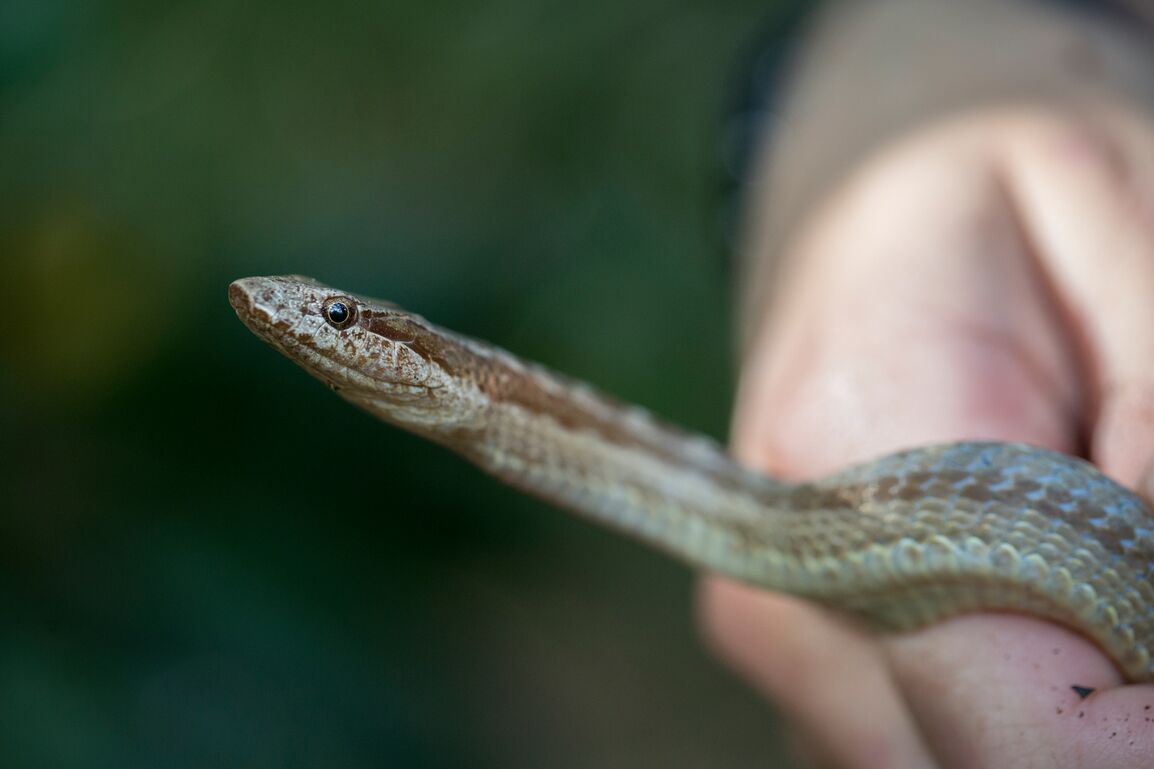
In 1995, more than 30 years ago, only 50 individuals remained on a tiny island (Great Bird Island) in the archipelago. But the Antiguan Racer’s story is ultimately a story of incredible resilience, and survival in the face of seemingly insurmountable odds. The Antiguan Racer has been declared extinct twice, incorrectly: once in 1936 and then again in 2009. Thanks to conservation action, which included the careful removal of rats and mongooses from multiple islands and a reintroduction program, these beautiful brown-gold snakes made an inspiring comeback in the late 2000s, with their numbers climbing to more than 1,100 across four small islets totalling less than 65 hectares (160 acres).
Today, the Antiguan Racer’s story continues as local conservationists and passionate volunteers work to give them their best shot at survival in a world that’s constantly changing. More recent counts estimate their population size currently sits at 680 individuals. The species and its habitat are under constant pressure from climate change, coastal development, and invasive species. Most Antiguan Racers surviving today are tagged with microchips to help scientists monitor their growth and survival.
At a glance
Taxa
Reptiles
Geography
Antigua and Barbuda
Status
Critically Endangered
Habitat
Coastal woodland
Estimated Population
680 individuals
Threats
Invasive species; development for tourism
Potential Recovery Actions
Invasive species control; habitat protection; reintroduction to suitable sites