At a Glance
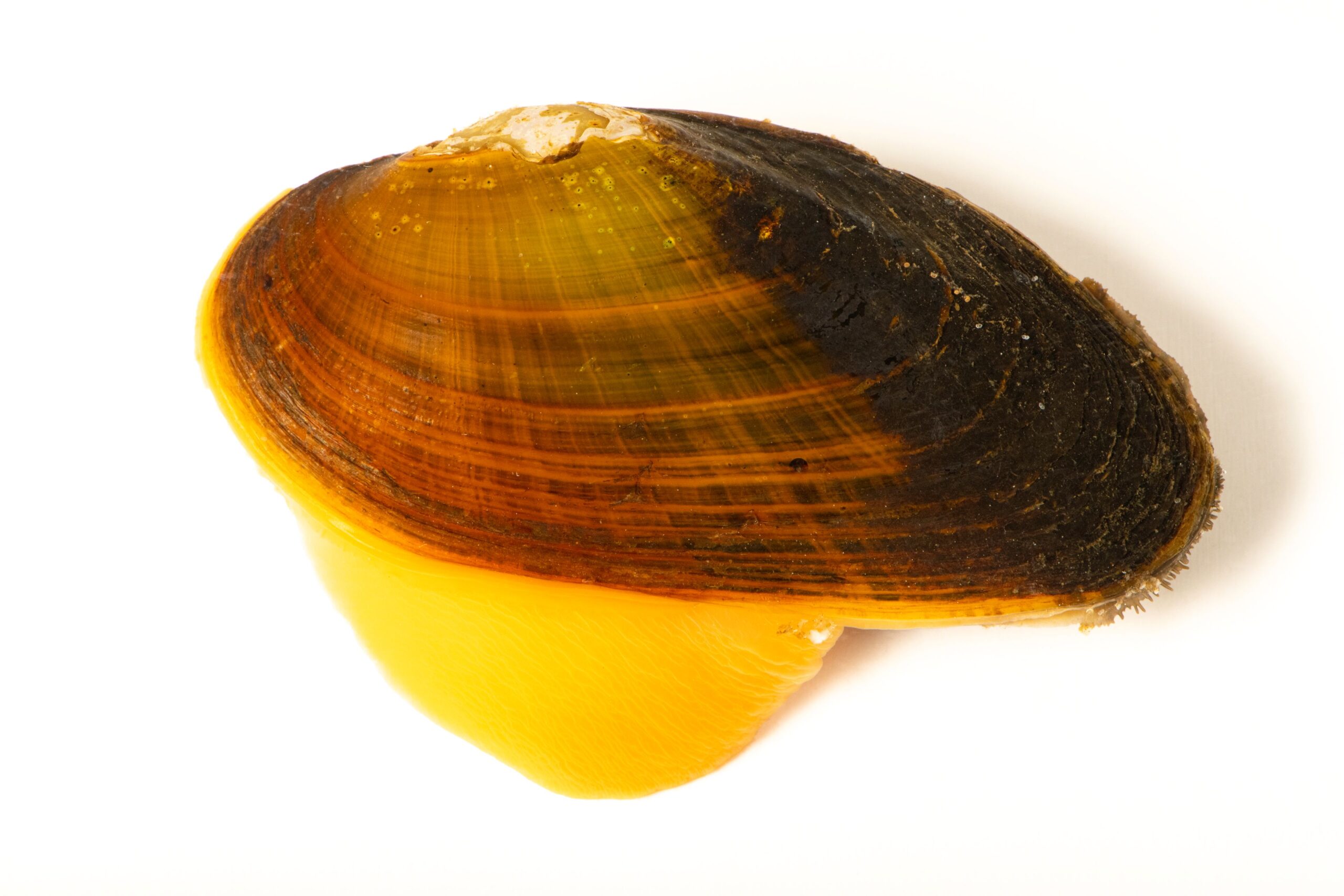
The Appalachian Elktoe is a freshwater mussel that only lives in a few river systems in the Appalachian Mountains. The mussel, which ranges in color from brownish to greenish, lives in a few small and isolated subpopulations on the Little Tennessee River, French Broad River and the Toe/Nolichucky River systems that straddle the North Carolina and Tennessee border in the United States. However, several of its subpopulations are not viable and scientists believe that they are functionally extinct, meaning that it is unlikely that they can breed quickly enough to prevent the subpopulation from disappearing.
The Appalachian Elktoe lives in shallow, clear, cool, and moderate to fast-flowing creeks, springs, streams and rivers with rocky, gravel or boulder or bedrock bottoms. They are filter feeders and actually help clean the water as they eat phytoplankton and zooplankton that they filter through their gills.
When the elktoe breeds, males release sperm into the water and females take it in through their siphons and fertilize their eggs with it. The females keep the fertilized eggs in their gills until the larvae hatch, at which point they detach from the moms and attach themselves to fish. They are not harmful to their fish hosts and will detach from the fish and drop to the rocky or gravelly bottoms of the water when they reach the juvenile stage.
The major threats to the Appalachian Elktoe is water pollution from waste water, pesticides and fertilizers, sedimentation, mining, dredging and changes to rivers from projects like dams. Major floods and droughts have also caused some subpopulations to dramatically decline. The Appalachain Elktoe has also been hit by mass die-offs, specifically in the subpopulation on the Little Tennessee River but scientists have not been able to determine what is causing it. Scientists also worry that since the subpopulations of the Appalachian Elktoe are isolated from each other, they are losing genetic diversity, which makes them more susceptible to disease.
At a glance
Taxa
Invertebrates
Geography
United States
Status
Critically Endangered
Habitat
Freshwater rivers and streams
Estimated Population
Unknown
Threats
Sedimentation; pollution; reservoirs, dams and drainages; habitat degradation; urban and agricultural runoff
Potential Recovery Actions
Habitat protection and restoration; water quality improvement; population monitoring and research