At a Glance
From catastrophe to comeback
A bold path for resilience and recovery for a vanishing salamander
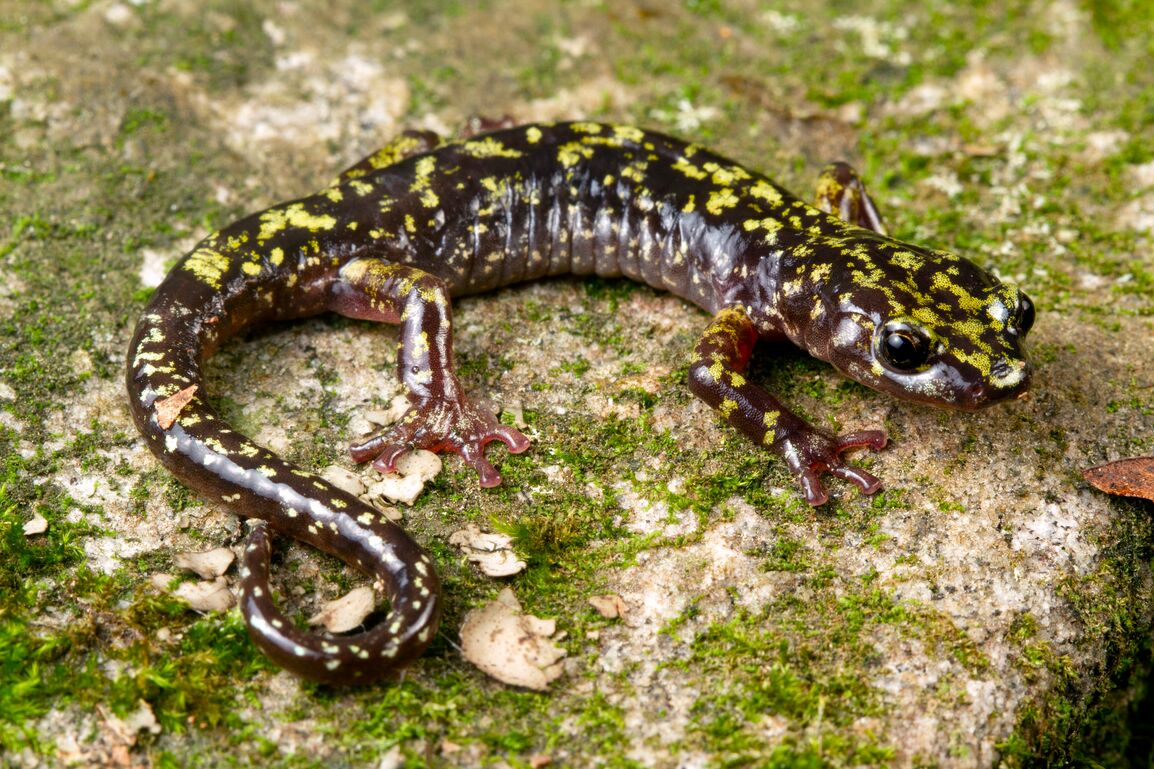
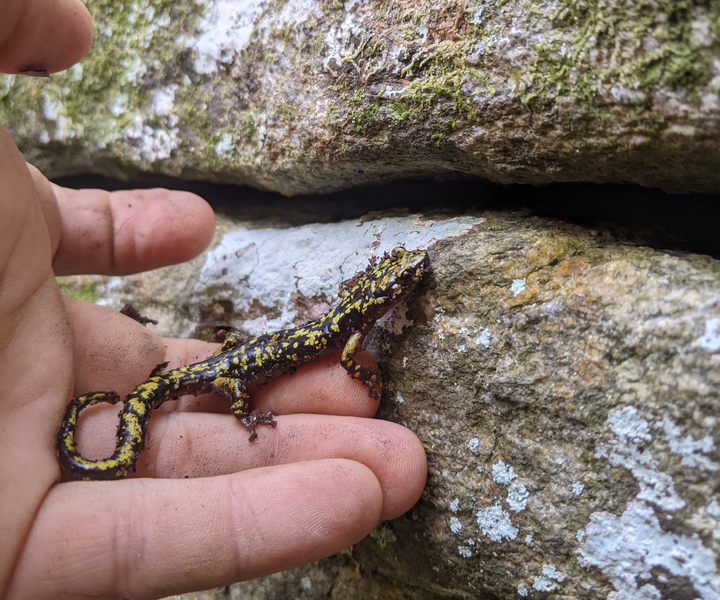
In the mountains of western North Carolina, a small green salamander has spent years hiding in plain sight. Green salamanders live on both sides of the Great Smoky Mountains, but it wasn’t until 2019 that scientists used genetic testing to confirm that the Hickory Nut Gorge Green Salamander, found only in a small canyon in North Carolina, was distinct from the Green Salamander, a species that can range from as far north as Pennsylvania to as far south as Mississippi. In fact, the Hickory Nut Gorge Green Salamander appears to have diverged between 10 to 12 million years ago — long before humans branched off from our closest relatives.
While they may not have realized it was a separate species, local communities have long been familiar with the Hickory Nut Gorge Green Salamander. The Hickory Nut Gorge canyon where it lives is within one of the world’s biggest salamander hotspots: North Carolina has the most salamander species in the United States, and the Appalachian region holds one-fifth of the world’s salamanders. Salamanders are among the vertebrate groups most vulnerable to extinction.
The Hickory Nut Gorge Green Salamander spends much of its life in the trees and cliff faces and boulders. In the winter it lays eggs and hibernates in the crevices of large rocks.
Fun Fact:
Only about 200 of the world’s 800+ salamander species spend their time in trees, including the Hickory Nut Gorge Green Salamander, which lives in the world’s hotspot for salamander diversity in the Appalachian region in the United States.
At a glance
Geography
United States
Status
Critically Endangered
Habitat
Forest, inland cliffs
Estimated Population
About 500
Threats
Habitat destruction as the result of tourism, real estate development, transportation and energy infrastructure
At a Glance
The Crisis
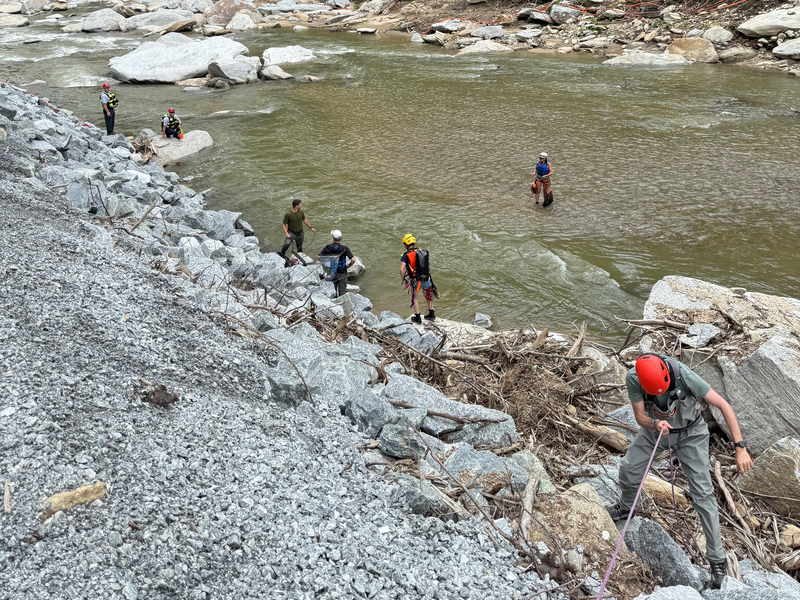
The species currently faces a range of threats, including climate change, disease, and habitat destruction. Surveys indicate that the species’ populations have dropped about 56% in only two decades. Because salamanders can’t travel great distances, they can’t easily find a new place to live if their home is destroyed. In 2024, the catastrophic flooding and landslides brought on by Hurricane Helene devastated several of the Hickory Nut Gorge Green Salamander’s few known habitats, underscoring the need to act quickly to protect the species before it’s too late. Fortunately, a conservation breeding program was established after the storm, a critical step to ensure the species can hang on until its habitat is restored and it can return to its native forest and cliffs.
The Phoenix Recovery Plan
Amphibian and Reptile Conservancy will be leading a recovery project that will increase the size of the Hickory Nut Gorge Green Salamander population living in human care, establish a reintroduction program that will have released up to 200 salamanders within five years, develop protocols for protecting salamander nests, replant native vegetation to reduce landslides, protect habitat with nests and develop conservation benefit agreements with local communities in Rutherford and Henderson counties in North Carolina.
Partner Spotlight
Amphibian and Reptile Conservancy (ARC) has a long history of delivering measurable and successful outcomes for amphibians and reptile recovery. ARC has projects across the US leading recovery efforts for Endangered Species Act (ESA) listed and petitioned species. They have successfully and demonstrably led programs to recover populations of Frosted Flatwoods salamanders, Gopher frogs, Houston toads, Chiricahua leopard frogs, bog turtles, Eastern Diamondback rattlesnakes, and many others. Notably, ARC led the efforts for a full recovery of the Red Hills salamander and expect to have everything in place for a full recovery and delisting within the next two years.
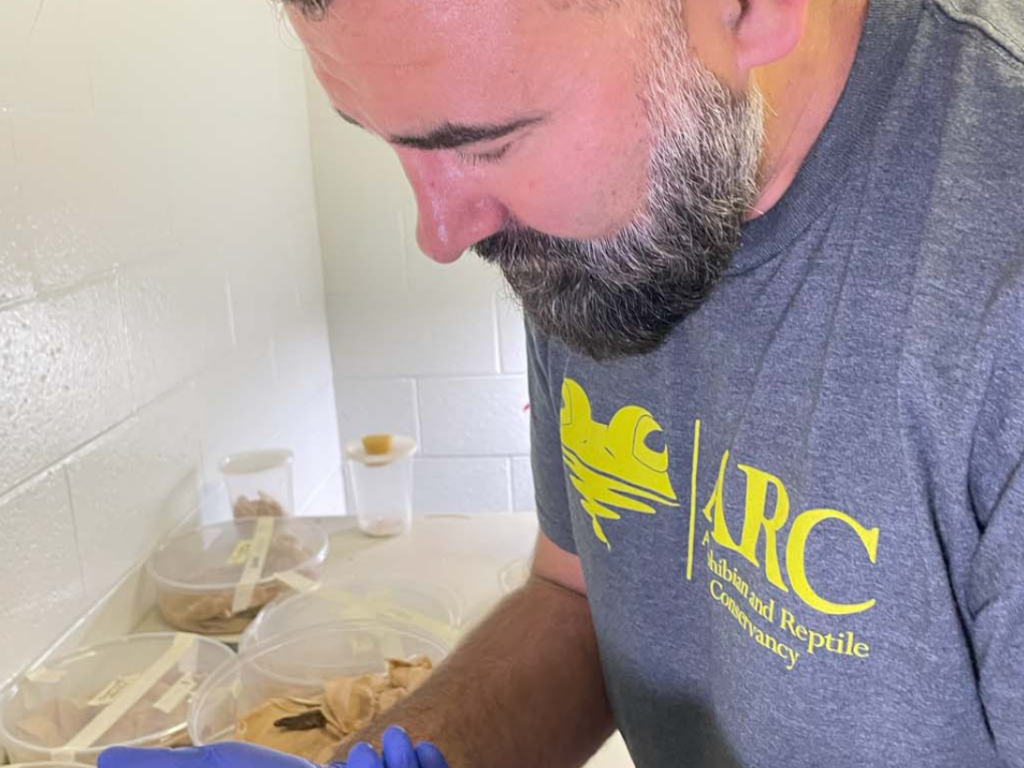
“When you spend a lot of time surveying the cracks of cliff faces for a rare salamander that most people don’t know exists, it gives you perspective on what’s important. If the Hickory Nut Gorge Green Salamander goes extinct, our economies won’t crash, nor will our daily lives be impacted. But are we willing to allow millions of years of evolutionary divergence and such an incredibly unique species to disappear because of our actions? For me, every species has just as much right to live as we do, and I think that’s worth fighting for. I want a future where there are still amazing species waiting to be discovered, whether by science, like the Hickory Nut Gorge green salamander was in 2019, or by a curious 10-year-old who has simply never seen a salamander.”
JJ Apodaca
Executive director, Amphibian and Reptile Conservancy