At a Glance
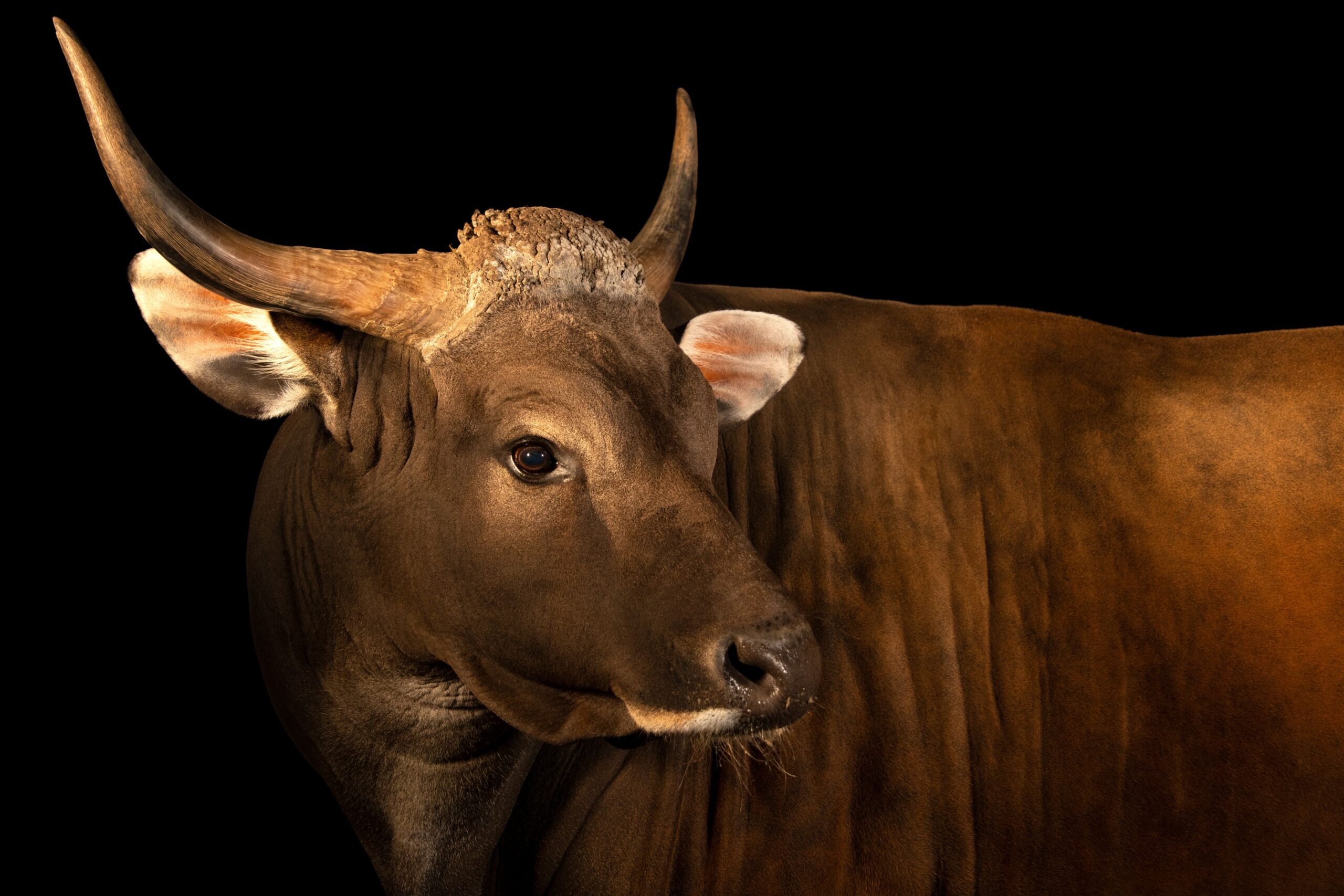
As members of the bovid family, Banteng might resemble domesticated cattle, but don’t be fooled, they are a wild cattle species! This shy species can be found throughout Southeast Asia, but in small and isolated subpopulations. Banteng can live in a variety of different habitats, including tropical forests, deciduous forests, seasonal swamp forests and grasslands. Their grassland habitats especially are often used by farmers with domesticated cattle. When Banteng are in close contact with domesticated cattle, they are at a higher risk of contracting disease or breeding and hybridizing.
Banteng are herbivores, eating grasses, plants, browse and fruits, and they spread seeds through their dung helping keep the ecosystems they live in healthy. They live in small herds, sometimes as few as two animals and up to as many as 40. The herds typically have one bull and several cows and juveniles. Bulls have dark-colored coats and horns, whereas females have reddish-brown coats and don’t sport any horns. Both males and females have white “stockings” on their legs and white spots on their rumps. Bantengs are also important prey for apex predators such as Tigers and Leopards.
The biggest threats to Banteng are hunting, especially with snares, the destruction of their habitat by humans for agriculture, the loss of genetic diversity and climate change.
At a glance
Taxa
Mammals
Geography
Southeast Asia
Status
Critically Endangered
Habitat
Dry deciduous forests, tropical forests, grasslands
Estimated Population
Approximately 3,300 mature individuals globally
Threats
Hunting; habitat destruction; small and fragmented populations
Potential Recovery Actions
Strengthen protection measures in key sites; conservation breeding and reintroduction