At a Glance
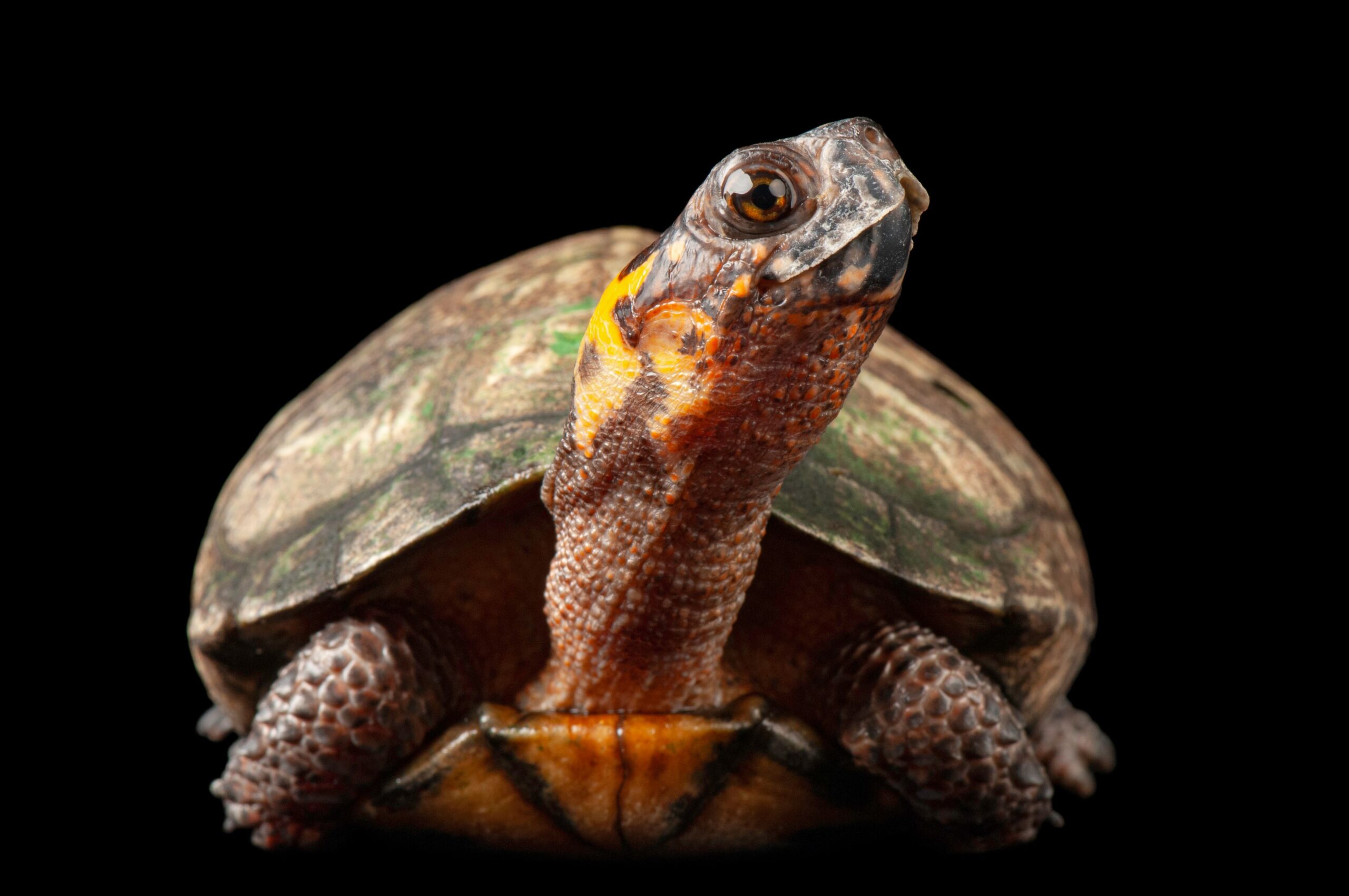
In the remaining fragments of mountain bogs and sunny swamps across the eastern United States, North America’s smallest turtle is holding on to survival. The Bog Turtle favors open freshwater wetlands away from running water and with plenty of sunlight to nurture native grasses. In fact, historically the species has been known to come in after beavers enter a landscape: Beavers build dams that flood a forested area, kill the trees and transform it into a wet meadow, perfect habitat for the semi-aquatic reptiles. The Bog Turtle is also relatively long-lived for its small size; it has been documented to live over 60 years in the wild.
Found in parts of 12 states in the eastern U.S., the Bog Turtle is divided into northern and southern populations separated by a 250-mile gap in Virginia and West Virginia. The northern population is believed to be slightly more threatened, but all of the species’ subpopulations are in danger: Scientists estimate that 80% of the species’ habitat and 90% of its individuals disappeared in the 20th century.
The biggest threat to the Bog Turtle is the drainage and destruction of wetlands for agricultural fields and other human uses, but the pet trade, sedimentation, pollution, disease, predation of its eggs and hatchlings, roadkill and climate change all exacerbate the pressures on an already-stressed species. The vast majority of the Bog Turtle’s remaining habitat is on private lands, complicating efforts to help it recover. Even in protected areas, species of both native and invasive plants can grow too numerous and begin to dominate the turtle’s habitat, making it less suitable. As woody vegetation grows tall, it shades the low-lying wetland plants and soils the species needs for survival. In addition, the Bog Turtle’s low reproductive rate makes it more difficult for the species to recover; the average female lays under four eggs per year, and doesn’t reproduce every year.
In addition to being listed as Critically Endangered, the Bog Turtle is federally protected under the U.S. Endangered Species Act. However, due to its increasingly fragmented habitat, it depends on humans to help connect subpopulations.
At a glance
Taxa
Reptiles
Geography
United States
Status
Critically Endangered
Habitat
Freshwater wetlands including bogs, marshes, and wet meadows
Estimated Population
2,500–10,000 individuals
Threats
Habitat destruction and degradation; wetland drainage and alteration; invasive plants; illegal collection
Potential Recovery Actions
Habitat protection and management monitoring and research; regulation of collection