At a Glance
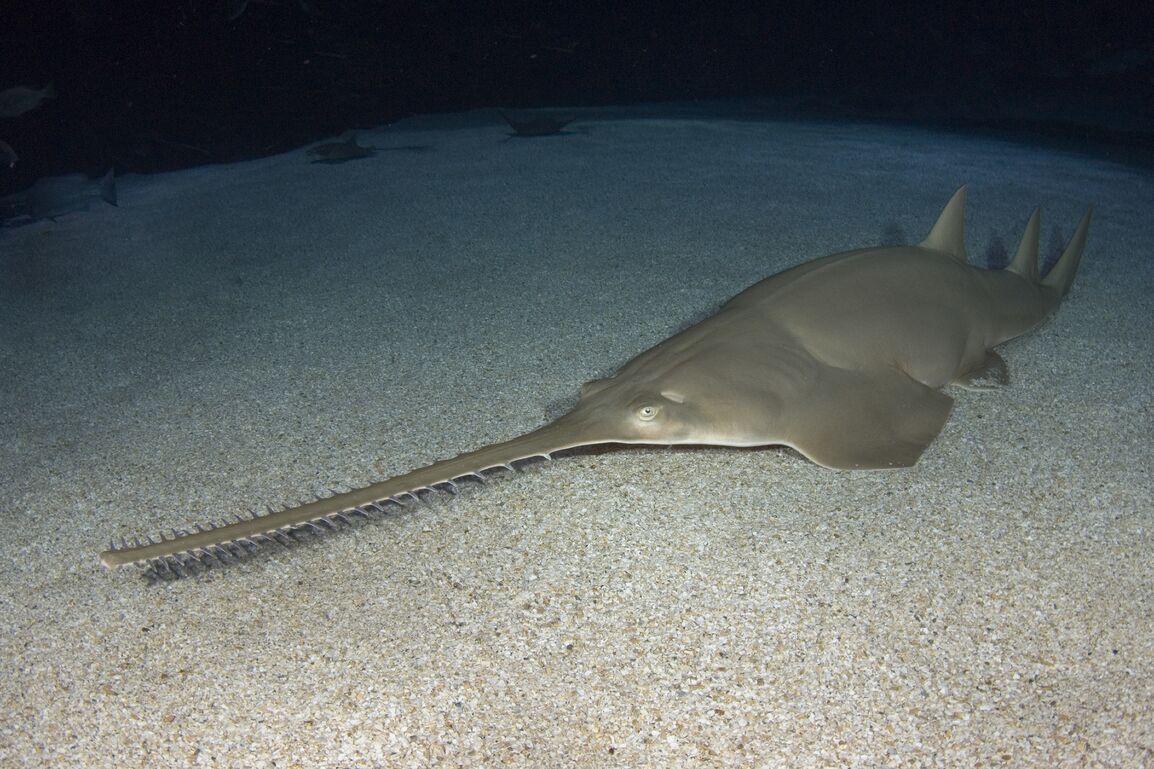
The Green Sawfish looks like a shark with a saw for a nose, but this fish is actually a type of ray! It has a nearly 1.5 meter (five-foot) rostrum (snout) covered in teeth and it can reach up to 7 meters (24 feet) in body length. It uses its tooth-studded rostrum to stun fish by swinging it from side-to-side or to dig up shellfish and crustaceans hiding in sand and mud.
The Green Sawfish lives in shallow bays, mangroves, estuaries and around rivermouths with sandy or muddy bottoms throughout the Indian and Pacific Oceans, but scientists have also found adults in deep waters. The species gives birth to live young and females usually give birth to litters of up to 12 pups.
The Green Sawfish’s most defining feature, its rostrum, also makes it more vulnerable to becoming bycatch. The ray is very susceptible to being caught in industrial and artisanal fishing nets. The Green Sawfish is also hunted for its fins, as well as its teeth and rostrum. Much of its mangrove habitat has been destroyed and its remaining habitats are threatened by infrastructure for shipping, pollution from mining and oil and gas production.
At a glance
Taxa
Sharks and Rays
Geography
Indo-West Pacific; best remaining strongholds Australia and Papua New Guinea
Status
Critically Endangered
Habitat
Estuaries; mangrove creeks; seagrass beds; soft-bottom coastal waters; continental shelf to at least 70 meters (230 feet)
Estimated Population
Unknown
Threats
Overexploitation by coastal fisheries; entanglement in nets; habitat loss especially mangrove decline; trade in rostra and fins
Potential Recovery Actions
Species-specific protections; safe release protocols; enforce trade bans; mangrove protection and restoration; conservation breeding development