At a Glance
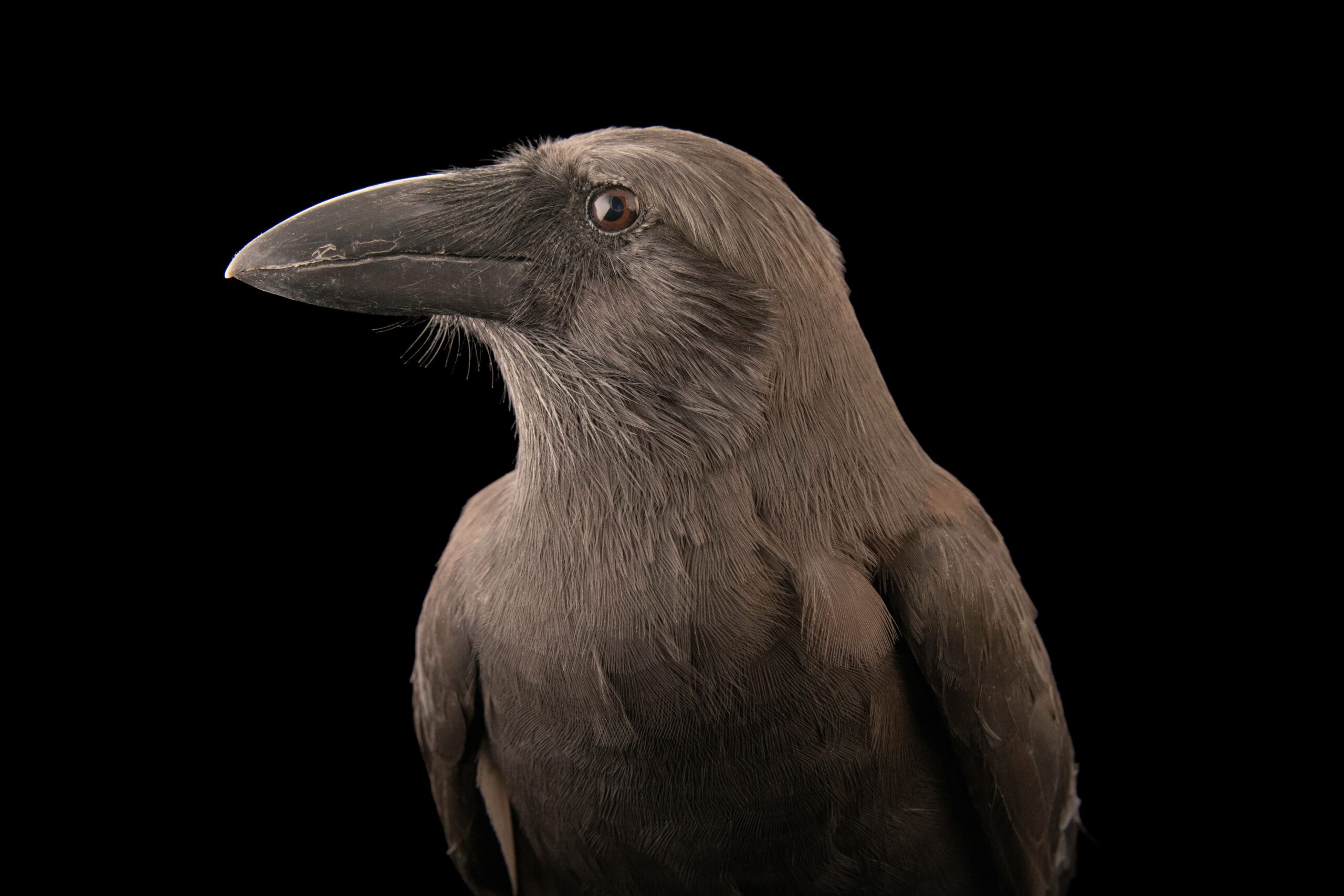
Also known as the ‘alalā, the Hawaiian Crow is Extinct in the Wild and is the only remaining native Hawaiian crow species left from the islands. These social corvids with black plumage were last seen in the wild in 2002. ‘Alalā were hard hit by disease brought to the islands by westerners and predation by non-native species. Both threats caused the population to fall to only eight individuals. At that point, conservationists stepped in and moved the remaining crows into a conservation breeding program.
‘Alalā once lived in dry and semi-dry forests across the Hawaiian Islands where they played important roles in forest health. The birds are seed dispersers and help spread the seeds of native fruits as they forage, though they are not picky eaters and will also eat insects, nestlings and eggs of other smaller bird species. The understory of Hawaii’s forests kept the birds safe from ‘io, or Hawaiian Hawks, their natural predators. ‘Alalā have loud alarm calls which help alert other species to predators in the area.
The species doesn’t have as successful a strategy for avoiding non-native predators. Mongooses, rats and cats prey on ‘alalā chicks, which stay very close to the ground for several days after they fledge their nests until they are able to fly. Avian malaria and avian pox, neither of which are endemic to the Hawaiian Islands, also caused huge population declines in ‘alalā. Non-native livestock are also eating up vegetation that ‘alalā depend on in the wild, and the forests where the species once lived are also threatened with logging and clearing for agriculture.
More than 100 ‘alalā are part of a conservation breeding program in Hawaii and several birds were released into a large field aviary within a forest in 2024. Two additional birds were moved to the aviary in 2025.
Pairs typically form long-term bonds, though the species isn’t monogamous. The crows typically lay a clutch of eggs between March and July and adults are devoted parents caring for their chicks for at least eight months. Females are solely responsible for incubating eggs and males are primarily responsible for feeding chicks, though both parents will work to feed nestlings.
At a glance
Taxa
Birds
Geography
USA; Hawaii
Status
Extinct in the Wild
Habitat
Forest; shrubland
Estimated Population
About 100 individuals in managed care; none in the wild
Threats
Habitat degradation; introduced predators; avian malaria; avian pox virus
Potential Recovery Actions
Conservation breeding; habitat recovery; predator control; disease control; reintroduction