At a Glance
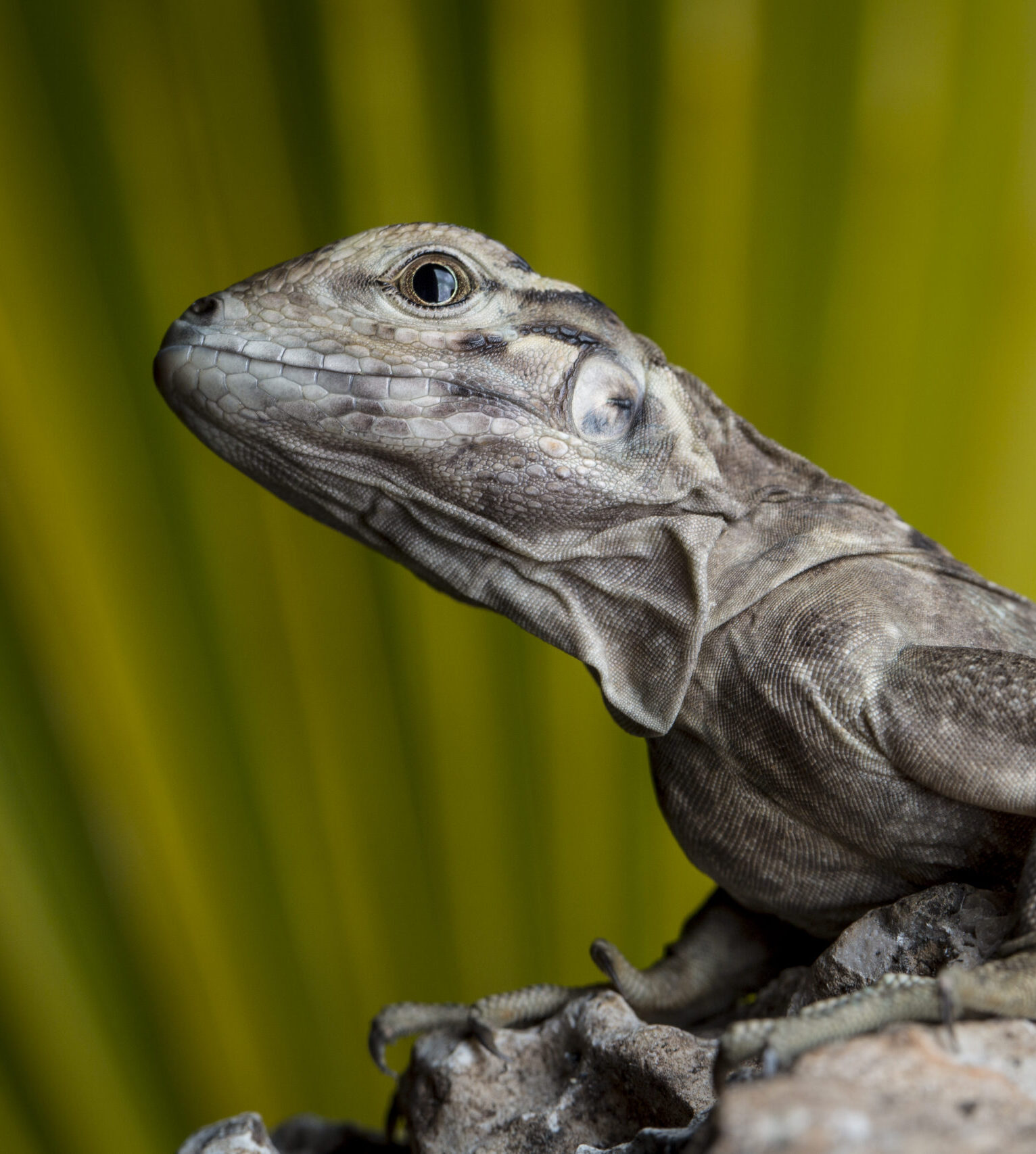
Less than half a century ago, the Jamaican Iguana was considered Extinct. It wasn’t, but conservationists wouldn’t know that until 1990, when a small surviving population of Jamaican Iguanas was rediscovered in the Hellshire Hills, a region that supports one of the world’s most threatened ecosystems: dry limestone forest, which the Jamaican Iguana now depends on for its survival.
Today, the Hellshire Hills are protected as an important forest reserve, situated within the Portland Bight Protected Area. While this landscape is protected by law, the limestone forest, and the wildlife species the forest supports, are still threatened by illegal logging practices (chiefly for charcoal), and encroaching development. Since so few iguanas remain, centralized in one location, the species is also vulnerable to negative impacts from natural disasters like hurricanes and disease outbreaks.
To prop up the wild population of Jamaican Iguanas, conservationists work tirelessly to reduce the presence of invasive predators like mongooses, which prey on iguanas and their nests, around the lizard’s limited habitat range. Another key strategy in the effort to conserve this species is the conservation breeding program at Hope Zoo in Kingston, where young iguanas are reared in safe environments until they are large enough to defend themselves against most predators and can be released into the Hellshire Hills.
The Jamaican Iguana is the largest land animal native to Jamaica, and an example of a Lazarus species —a species incorrectly labelled as extinct, and later discovered alive, often in small numbers. These conservation success stories are incredible examples of the resiliency of nature, and are also sources of hope for the recovery of all threatened and endangered species.
At a glance
Taxa
Reptiles
Geography
Jamaica
Status
Critically Endangered
Habitat
Dry limestone forest
Estimated Population
500-600
Threats
Predation by non-native species; habitat loss; large-scale development
Potential Recovery Actions
Headstart program; invasive species control; habitat protection; monitoring