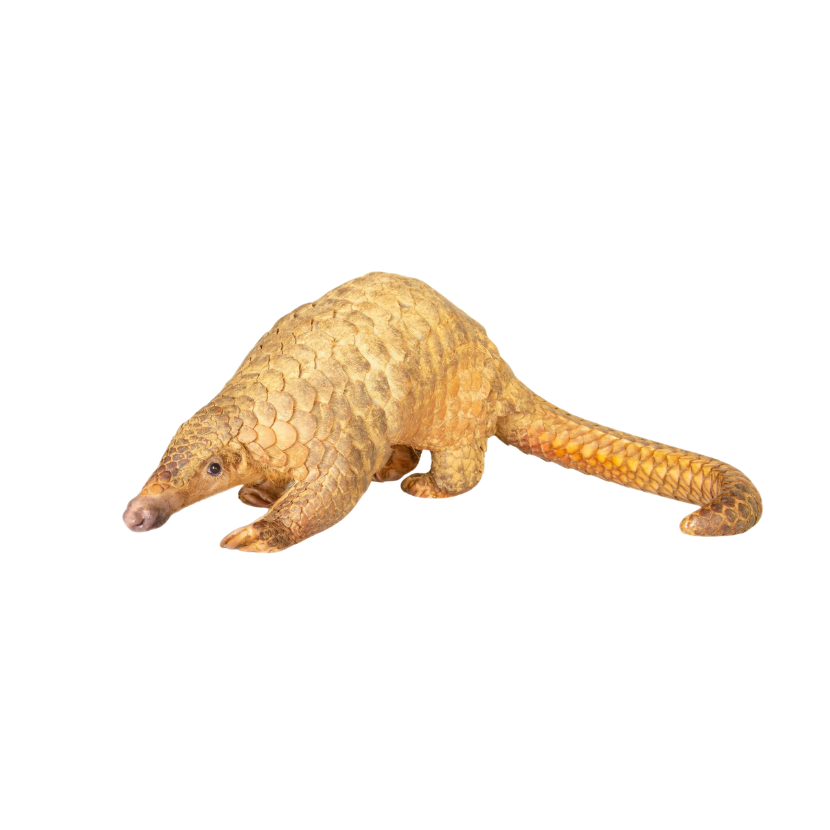
Pangolins are the most heavily trafficked mammals in the world. Like other species of pangolin, the Malayan Pangolin, also called the Sunda Pangolin, is covered in scales made of keratin, the same thing that human fingernails and hair is made of. The scaly mammal is nocturnal and they are especially adapted to find and eat termites. They use their muscular arms and claws to dig into termite nests and extract ants and termites using their 25 centimeter-long tongues.
Pangolins are nocturnal and defend themselves from predators by rolling into a ball. But larger mammal predators, such as tigers and leopards, are not the only species that pangolins sometimes need to fend off attacks from. When the pangolins rip into termite mounds, termites will try to fight back, but pangolins can seal their mouths, ears and nostrils to keep angry termites out.
Malayan Pangolins are solitary and nocturnal. Their breeding season can depend on where they live in Southeast Asia. The species range includes Vietnam, Cambodia, Indonesia, Laos, Malaysia, Singapore, Myanmar, Brunei and Thailand. They live in tropical forests, but they have even been found in degraded forests and areas like oil palm plantations and rubber plantations.
Despite once being common across Southeast Asia, the Malayan Pangolin is Critically Endangered due to poaching.
At a glance
Taxa
Mammals
Geography
Southeast Asia
Status
Critically Endangered
Habitat
Tropical rainforest
Estimated Population
Unknown
Threats
Poaching
Potential Recovery Actions
Hunting prevention; reintroduction to safe sites