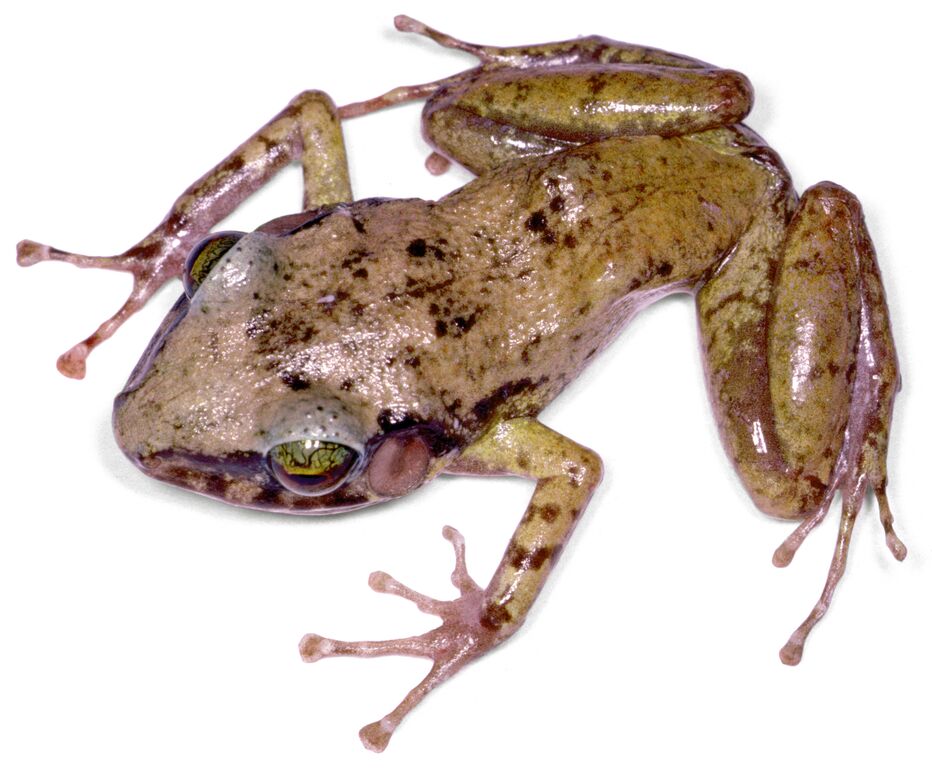
This Jamaican frog lives in limestone caves and their adjacent dry forests in the south of the island. Only four caves are currently known to harbor these rare frogs: two caves near Jackson’s Bay, and two in the Hellshire Hills. Conservationists have searched many other cave systems in this area, but have failed to detect any frogs. Even in and around their known caves, sightings of this species are exceedingly rare and conservationists think that the number of Portland Ridge Frogs is decreasing.
Conservationists believe that Portland Ridge Frogs migrate between the caves and the neighbouring forest, likely retreating into caves during dry conditions. Most documented sightings of the frogs come from the mouths of caves in good quality dry forest habitat. Scientists do not know how the species breeds, but like most species of whistling or robber frogs, they probably lay eggs that hatch out as froglets—tiny versions of the adult frogs. The juveniles complete the tadpole stage before leaving their eggs. Scientists don’t know whether these frogs are susceptible to chytridiomycosis, the often-deadly amphibian fungal disease that has spread to Jamaica.
A major threat to the species is from invasive alien predators, including the much larger and voracious Cuban Tree Frog, which is rapidly spreading across Jamaica. Conservationists have begun trials to catch and remove the tree frogs from the cave entrances to prevent them from preying on or competing with the endemic frogs. Another problem is that even though all four occupied caves sit within the Portland Bight Protected Area, the local capacity to manage this large and complex area is limited and the dry forests are being degraded by domestic and feral goats and pigs, tree cutting for charcoal, and wildfires.
The risk of fires is further exacerbated by climate change, which makes the forests and caves where they live hotter and drier. Climate change is also associated with an increase in the intensity and frequency of hurricanes: Hurricane Beryl struck Jamaica in 2024 with winds that reached up to 165 mph (265 kpm) and the next year Hurricane Melissa hit the island with winds that reached 185 mph (297 kpm). The storms damaged the dry forest habitat that is home to the frogs and majorly affected local organizations that are responsible for managing those areas.
Infrastructure projects could pose a threat to the species in the future, for example if Jackson Bay Cave is made more accessible for humans to enter.
At a glance
Taxa
Amphibians
Geography
Jamaica
Status
Critically Endangered
Habitat
Limestone forest; caves
Estimated Population
Unknown
Threats
Habitat loss; cave disturbance; feral and invasive alien species; climate change
Potential Recovery Actions
Habitat protection; invasive alien predator control; translocations; fire prevention and emergency response