At a Glance
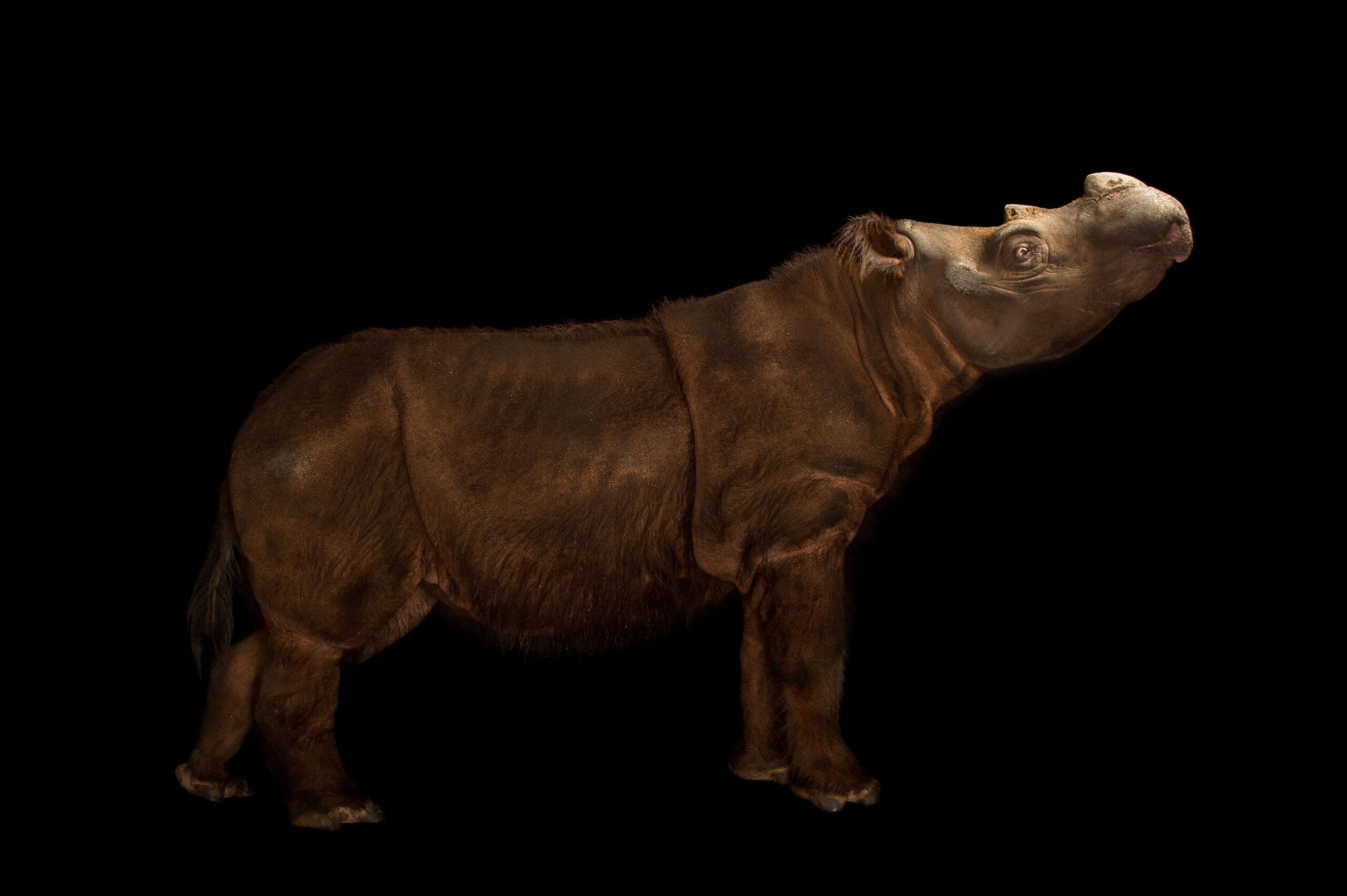
The Sumatran Rhinoceros is the closest living relative of the Woolly Rhino, which walked the Earth during the last Ice Age. Like their prehistoric cousin, Sumatran Rhinos are hairy. Unlike the Woolly Rhino, which is Extinct, Sumatran Rhinos can still be found in isolated pockets of rainforest in Indonesia on the island of Sumatra, though the species is fighting for survival. There was once a time when the Sumatran Rhinoceros could be found across Southeast Asia. Today, fewer than 80 individuals remain. Sumatran Rhinoceros are not herd animals. They spend most of their adult lives alone, ranging through the forest in search of food, and safe places to sleep. Decades of poaching, driven by the illegal wildlife trade and demand for rhino horn (a coveted ingredient in some traditional medicines), forced this species to the brink of extinction. Now, one of the greatest threats to the Sumatran Rhino’s survival is actually its own solitary nature — because there are so few animals left in the wild, and their remaining populations are so fragmented, it is difficult for males and females to find each other to breed in the wild. One of the ways scientists are working to save Sumatran Rhinos is through a conservation breeding program, with three centers: a 250 acre Sumatran Rhino Sanctuary, a sanctuary in Kalimantan and a new center in Aceh. Sumatran Rhinos still surviving in the wild are protected by Rhino Protection Units, extensions of law enforcement who monitor local wildlife populations and assist in investigations of wildlife crime.
At a glance
Taxa
Mammals
Geography
Indonesia
Status
Critically Endangered
Habitat
Tropical rainforest
Estimated Population
Fewer than 80 individuals
Threats
Small population; lack of breeding opportunities; infertility; hunting
Potential Recovery Actions
Increase conservation breeding population; advanced reproductive technologies; cloning; threat reduction