At a Glance
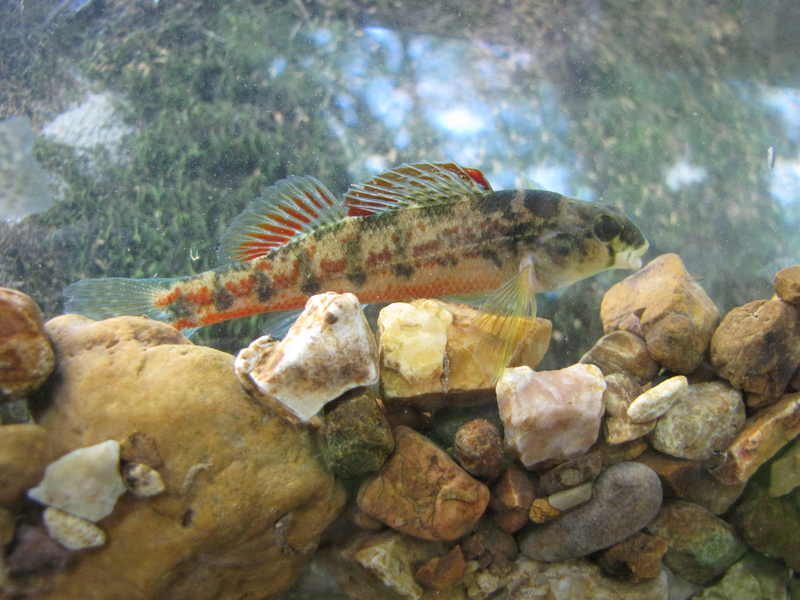
The Vermilion Darter doesn’t travel much! In fact this tiny fish that measures only two-to-three inches long, and only lives in the Turkey Creek drainage, a 13-mile area within the Mobile Basin in Alabama in the United States. Although the Vermilion Darter can only be found in about a dozen miles of streams, the Mobile Basin is a hotspot for freshwater fish, mussels and amphibians. A waterfall has kept the Vermilion Darter isolated from other darter species in the Black Warrior River. That isolation is likely what gave the Vermilion Darter its many colors, and its signature red stripe along its belly and fins.
As its name suggests, the Vermilion Darter typically swims quickly—which makes it look like its darting about—along the bottom of creeks and streams with fast-flowing, clean water, nibbling on the larvae of small invertebrates such as midges or craneflies. Due to its restricted habitat and need for clean and fast-flowing water with small gravel or sand beds, the darter is very sensitive to habitat changes.
The Vermilion Darter was officially described by science in 1992, nearly 30 years after scientists had first recorded it within Turkey Creek. A population survey in 2003 only found 107 Vermilion Darters in the wild, a dramatic decrease from five years earlier. Urbanization within the watershed has become a major threat to the species. Increased sediment, excess nutrients, and toxic pollutants entering the streams degrade its habitat quality and later stream condition. In addition, multiple impoundments have reduced water flow, blocked fish movement, and further isolated already fragmented populations of the species.
At a glance
Taxa
Fish
Geography
United States
Status
Critically Endangered
Habitat
Freshwater streams
Estimated Population
Unknown
Threats
Urban development, water pollution, sedimentation, habitat degradation
Potential Recovery Actions
habitat protection and management, monitoring and research