At a Glance
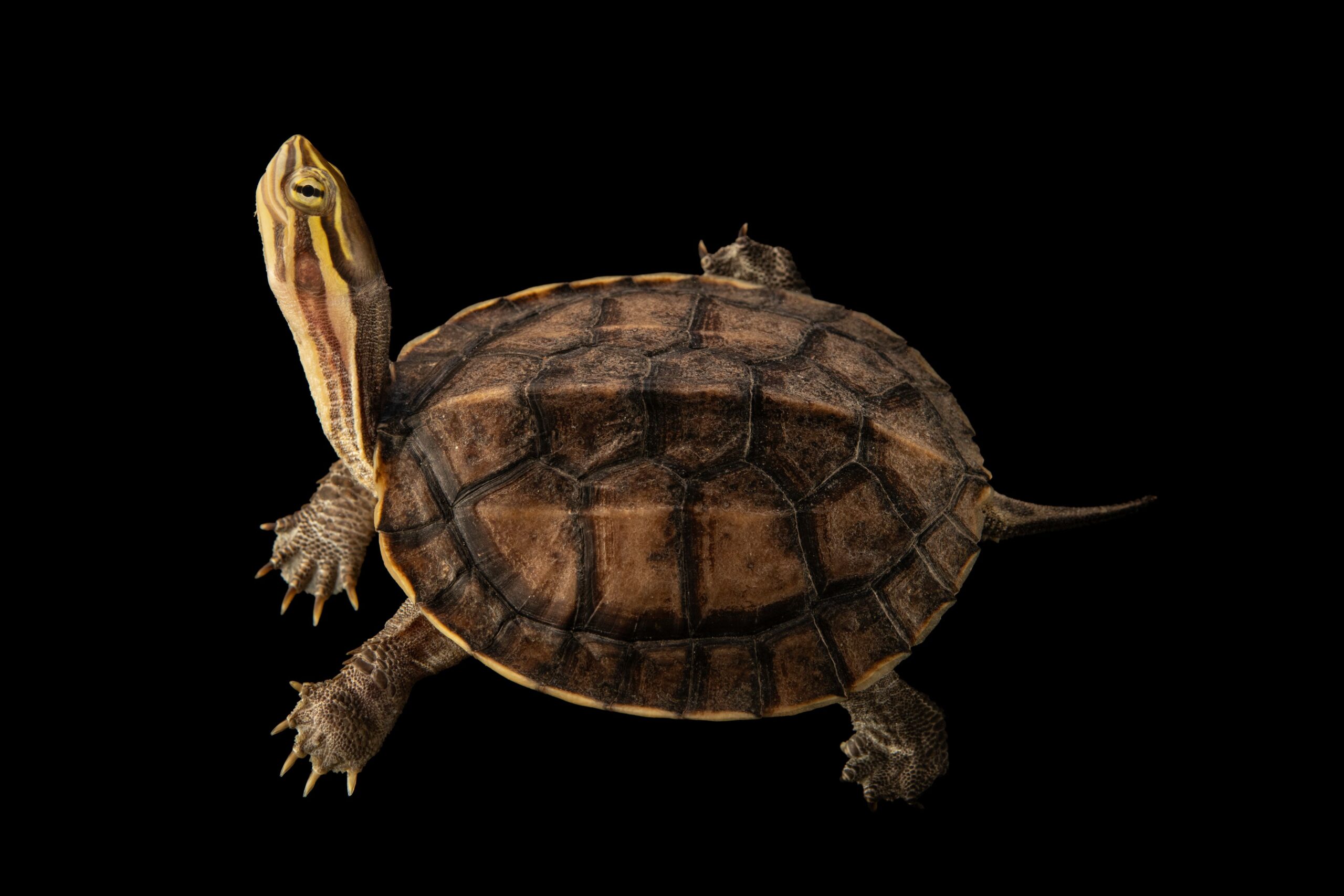
Vietnamese Pond Turtles have bright yellow stripes on their heads and dark brown or black shells. They live in central Vietnam in a small coastal wetland area between the Annamite Mountains and the South China Sea. Scientists are still learning and studying the Vietnamese Pond Turtle in the wild. The species was a common sight in the parts of Vietnam until the early 1980s, in fact local communities say that the turtles would sometimes wander into peoples’ homes or crush rice plants while they were moving around their wetland homes.
Scientists are still learning and studying the Vietnamese Pond Turtle, but there are not many turtles left in the wild to study. The population has decreased by 99% during the past 45 years. The turtles have been heavily collected for the illegal wildlife trade. The Vietnamese Pond Turtle is a target for the pet trade, for traditional medicine and for food. The demand was so high for the turtles that by the late 1990s the species’ numbers drastically dropped.
The other major threats to the Vietnamese Pond Turtle are the destruction of its habitat for agriculture and expanding urbanization. The water in the wetlands where the turtles live is increasingly drained and channeled for rice fields, as well as for urban water supply.
There is some good news for the species, zoos around the world have bred the Vietnamese Pond Turtle under human care and have built an insurance population that might one day support reintroduction efforts.
At a glance
Taxa
Reptiles
Geography
Vietnam
Status
Critically Endangered
Habitat
Freshwater
Estimated Population
Likely less than 50 mature individuals
Threats
Unsustainable exploitation for the illegal trade
Potential Recovery Actions
Strengthen protection in key sites; conservation breeding and reintroduction